Endangered
Pacific Sheath-Tailed Bat
Emballonura semicaudata
The Pacific sheath-tailed bat (Emballonura semicaudata) is a tiny insect-eating cave bat that once flew across Polynesia and Micronesia. It has vanished from island after island. The IUCN Red List rated it Endangered in 2021, with survivors in Fiji, Palau, the Mariana Islands and Micronesia.
How to recognise it
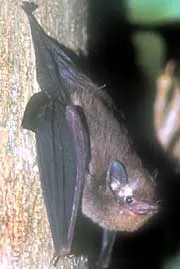
It's a very small bat, with a forearm about 45 mm long and a weight around 5.5 g, about as much as a US quarter. The fur is rich brown to dark brown above and paler below. The name comes from the tail, which pierces the tail membrane so that its tip sits free on the upper surface.
Four subspecies are recognised, from Palau, the southern Marianas, Chuuk and Pohnpei, and a western group covering Vanuatu, Fiji, Tonga and Samoa. A 2005 review suggested that some of these may prove to be separate species.
Where it lives
By day it roosts in caves, lava tubes, crevices and under overhanging cliffs, sometimes sharing space with cave swiftlets. It comes out around dusk to hunt insects, mostly in forest close to its roost. On Aguiguan in the Marianas it favoured larger caves.
The IUCN lists it as present in Fiji, Palau, the Federated States of Micronesia and the Northern Mariana Islands. It is possibly extinct in Samoa, American Samoa and Tonga, and extinct since 1500 on Guam and Vanuatu. Sources disagree about Vanuatu, and a US government review said the bat may never have lived there.
Pins are Wikidata “endemic to” fields. Orange dots, when present, are GBIF occurrence tiles — survey bias included.
How it lives
Colony sizes vary a lot. Large colonies seem fairly common in the Palau form, while the Mariana form tends to live in smaller groups. On Aguiguan, a 1995 to 2008 study found bats in only 7 of 95 caves, with one cave holding 333 bats in 2008 and the rest holding 1 to 64. Early observations suggest a single pup per litter, with births possibly timed to the start of the rainy season in June and July.
Why it is in trouble
The IUCN estimates a past decline of about 50 percent, and the trend is still downward. The clearest collapse is in American Samoa. Surveyors estimated about 11,000 bats in the mid-1970s, about 200 in 1988, and in 1993 caught one and saw three more. Typhoons Ofa (1990) and Val (1991) damaged the main roost caves at Anapeapea Cove, clearing the vegetation at the entrance and filling a cave with coral and fallen trees. No bats were reported in either cave in 1993. Surveys finishing in 2008 found none.
Causes named across the range include loss of forest and roost caves, storms, guano mining and other disturbance of caves, pesticides, and introduced predators such as cats and rats. In some island groups hunting is also suspected. Which of these mattered most on each island is still unclear.
What is being done
There is good news from Fiji. In January 2021 a rapid survey on Ovalau found three new cave roosts, reported by customary landowners. In 2023 an expedition to Vanua Balavu in the Lau group reported a roost that its leader estimated at 2,000 to 3,000 bats, which he called the largest of any bat species in the South Pacific. Local communities there have chosen not to exploit the cave.
The IUCN assessment lists site protection and management, habitat restoration, species recovery and reintroduction among the actions needed. Bat Conservation International reportedly named it one of 35 priority species worldwide in 2013.
Sources
Written for this catalog in our own words from the sources below, checked against them on 12 November 2026. Population figures are estimates and carry the year they were made. Status and assessment year: IUCN. 2026. The IUCN Red List of Threatened Species. Version 2026-1. iucnredlist.org.
- IUCN Red List assessment, Emballonura semicaudata (2021)
- US Fish and Wildlife Service species assessment, 2013 (American Samoa)
- Wiles and others 2011, Acta Chiropterologica, Aguiguan study
- Vakaciriwaqa and others 2023, Pacific Conservation Biology, Ovalau
- Conservation International, 30 October 2023
- Pacific sheath-tailed bat (Wikipedia)




