Endangered
Osteochilichthys longidorsalis
Osteochilus longidorsalis
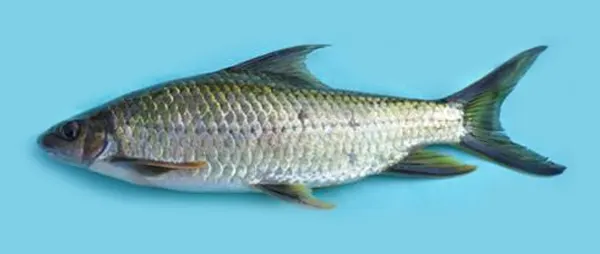
The hiffin carp, also called the long finned barb (Osteochilus longidorsalis), is a river fish found only in two rivers of Kerala, in the Western Ghats of southern India. The IUCN Red List assessed it as Endangered in 2011, and its stream habitat is still declining.
Names and identity
Rohan Pethiyagoda and Maurice Kottelat described the species in 1994 under the name Osteochilichthys longidorsalis, from Vettilapara on the Chalakudy River. The GBIF taxonomic backbone now places it in the genus Osteochilus, which is why both names turn up in the literature. It belongs to the carp family, Cyprinidae.
Common names include hiffin carp and long finned barb. In Malayalam, the language of Kerala, it is called Kuruva Paral, and the Red List also records the local names Aameen and Modon.
Where it lives
The species is endemic to India and, within it, to Kerala. It is recorded from the Chalakudy River, including the Parambikulam Tiger Reserve, and from the Periyar River, two separate systems draining the Western Ghats. The IUCN counts just two locations. Its extent of occurrence is about 2,570 square kilometres, but the area it actually occupies is only about 55 square kilometres.
It lives in permanent rivers and streams, at roughly 50 to 660 metres above sea level. It favours torrential, clear water with moderate tree cover, and a bed of boulders, cobbles and bedrock. The assessment calls it a habitat specialist that prefers pools, riffles and cascades.
Pins are Wikidata “endemic to” fields. Orange dots, when present, are GBIF occurrence tiles — survey bias included.
How it lives
It is a herbivore, feeding on plants, seeds and algae. Little else about its life is documented.
It is rare in the Chalakudy River, and catch rates at survey sites there are very low. The IUCN says no population information is available.
Why it is in trouble
The 2011 assessment could not say whether numbers are rising or falling, so the population trend is listed as unknown. The habitat, though, is judged to be declining, and the assessment projects a further decline of around 30 percent, citing habitat loss, exploitation and introduced species.
The listed threats include agro-industry farming, sewage, soil erosion and silt, tourism and recreation areas, and competition from unspecified introduced species. Several affect most of the range. In the Chalakudy the assessment also names destructive fishing, pollution and a proposed hydroelectric project. In the Periyar it names dynamiting and poisoning of fish.
Use matters too. Local communities catch the fish for food on the Chalakudy, and juveniles are exported for the international aquarium trade. A survey of Chalakudy landings from June 2019 to May 2020 recorded 68 finfish species and 68.5 tonnes of catch, and named this fish as one of two Endangered species among them. Gill nets took about 92 percent of the catch overall.
What is being done
Protection so far is thin. The assessment records no recovery plan, no monitoring scheme, no harvest management plan and no invasive species control. Conservation sites have been identified over part of the range, and the species occurs in at least one protected area.
Captive breeding and freezing of sperm (milt) have been developed at India's national fish genetic resources bureau, according to the assessment. The IUCN also calls for research on population, life history, ecology and exploitation, protecting the sites and surrounding habitat, controlling invasive species and raising awareness.
Sources
Written for this catalog in our own words from the sources below, checked against them on 12 November 2026. Population figures are estimates and carry the year they were made. Status and assessment year: IUCN. 2026. The IUCN Red List of Threatened Species. Version 2026-1. iucnredlist.org.




