Critically Endangered
Opisthostoma mirabile
Opisthostoma mirabile
Opisthostoma mirabile is a tiny land snail with a lidded shell, known only from limestone hills in the Kinabatangan valley of Sabah, on Borneo. The IUCN Red List has rated it Critically Endangered since 2004, because it reportedly lives on only a few square kilometres of rock that is being quarried.
What it is
This is an air-breathing snail with an operculum, a small lid that closes the shell opening, in the family Diplommatinidae. The British malacologist E. A. Smith described it in 1893.
A 2014 study of the genus Plectostoma, which raised it from a subgenus of Opisthostoma to a full genus, lists this snail in its DNA sampling table as Plectostoma mirabile. Some sources therefore use one name and some the other.
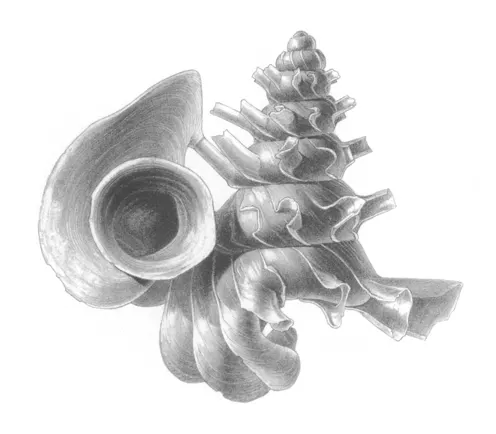
Its shell has not been described in the sources available. Snails in Plectostoma, its close relatives, are tiny, only a millimetre or two wide, with thin, intricately coiled shells.
Where it lives
It is known only from Sabah, Malaysia, where the IUCN lists lowland tropical moist forest as its habitat. It lives in the Kinabatangan valley on limestone and is reportedly absent from the surrounding ground that has no limestone. Its whole range is said to cover about 1.5 square kilometres of limestone hills.
The main population is reported on a single outcrop near Suan Lamba known as Gomanton Hill. Two smaller outcrops are said to have held populations of their own once.
Pins are Wikidata “endemic to” fields. Orange dots, when present, are GBIF occurrence tiles — survey bias included.
Why it is in trouble
Limestone is uncommon in Southeast Asia, and hills of it are quarried as raw material for cement and concrete. The IUCN assessment lists mining and quarrying as the threat to this snail, rates its 2004 population trend as decreasing, and gives no population size. Quarrying is reported to have wiped it out of the two smaller outcrops. Fires near the outcrops that dry the forest have reportedly added to snail declines in the area.
The risk is clear from a relative. Plectostoma sciaphilum lived on a single hill, Bukit Panching in Pahang, Peninsular Malaysia, and went extinct in the mid-2000s after a cement company quarried it.
What is being done
The Red List assessment records no conservation actions in place. No protection of the hill and no monitoring programme turned up in the sources reviewed. The assessment dates from 2004, so the situation may have changed since.
Sources
Written for this catalog in our own words from the sources below, checked against them on 12 November 2026. Population figures are estimates and carry the year they were made. Status and assessment year: IUCN. 2026. The IUCN Red List of Threatened Species. Version 2026-1. iucnredlist.org.




