Endangered
Obovaria subrotunda
Obovaria subrotunda
The round hickorynut (Obovaria subrotunda) is a small, almost circular freshwater mussel of eastern North America. It has vanished from three US states and most of its Canadian range. The IUCN Red List rated it Endangered in 2017, and the US listed it as threatened in 2023.
How to recognise it
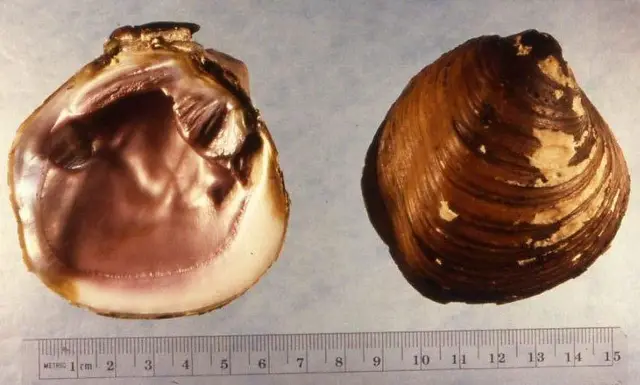
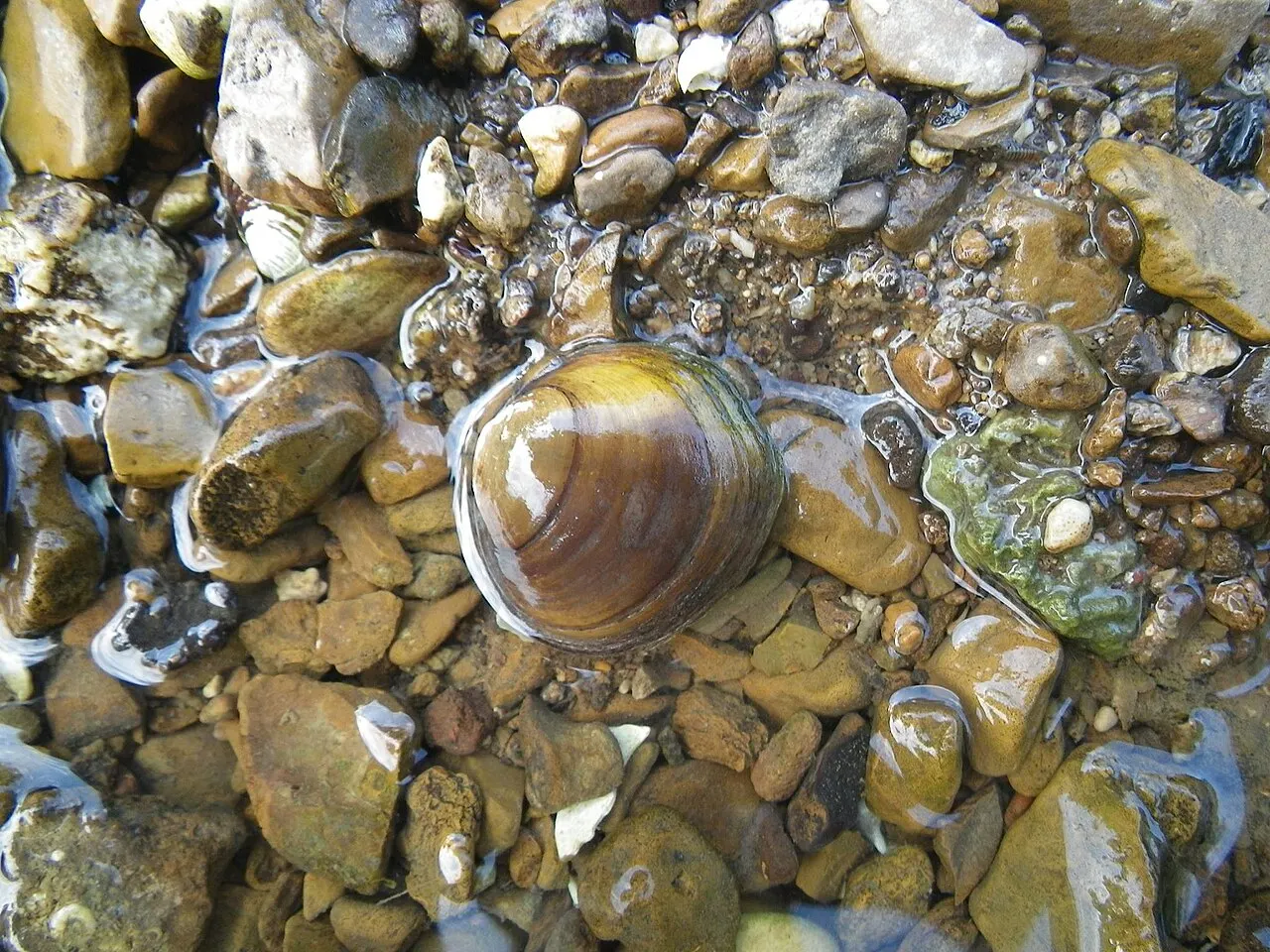
It lives up to its name. The shell is thick, solid and nearly circular, up to about 3 inches (7 cm) long, though most are under 2.4 inches. Adults are greenish-olive to dark brown, sometimes blackish with age, and some have a yellowish band. The foot is pale tan to pale pinkish orange.
Where it lives
It once occurred in 12 US states. It is now found in nine (Alabama, Indiana, Kentucky, Michigan, Mississippi, Ohio, Pennsylvania, Tennessee and West Virginia) plus Ontario, and is gone from Georgia, Illinois and New York. Most remaining populations are in the Ohio River basin, with the Lower Mississippi basin holding the fewest.
The mussel prefers sand, gravel and cobble bottoms in small streams up to large rivers, in water from under a foot deep to about 6.5 feet.
Pins are Wikidata “endemic to” fields. Orange dots, when present, are GBIF occurrence tiles — survey bias included.
How it lives
Adults filter algae, bacteria and tiny organic particles from the water and may live up to 15 years. Like most freshwater mussels, the larvae must spend time on a fish. They develop in the female's gill chamber and are released in packets, which darters bite open. The larvae then attach to the gills, head or fins of the host.
Five darters are known hosts in the United States: the variegate, frecklebelly, speckled, greenside and emerald darters. Only the greenside darter occurs in Canada, and the Canadian host has not been confirmed. Ontario names the greenside and eastern sand darters as possibilities.
Why it is in trouble
Dams and other barriers cut populations off from each other, and farming, mining, timber work and development degrade streams through silt and pollution. Dredging and harvest can kill mussels directly. Invasive zebra mussels, which attach to native mussels, have hit Canadian populations hard, and losses of host fish would also threaten the species.
The US Fish and Wildlife Service counts 297 populations historically and 69 known today, with 49 of those in poor condition. In Canada the mussel has disappeared from about 90 percent of its former range. Since 1996, live animals have been reported only from the Sydenham River and the Lake St. Clair area.
What is being done
The species was listed as threatened under the US Endangered Species Act in a rule published March 9, 2023 and effective April 10, 2023. Critical habitat covers 14 river units totalling about 921 river miles across eight states. In Ontario it is listed as Endangered, which brings automatic protection for the animal and its general habitat, and a recovery strategy dates from 2010.
Sources
Written for this catalog in our own words from the sources below, checked against them on 12 November 2026. Population figures are estimates and carry the year they were made. Status and assessment year: IUCN. 2026. The IUCN Red List of Threatened Species. Version 2026-1. iucnredlist.org.
- IUCN Red List assessment, Obovaria subrotunda (2017)
- US Fish and Wildlife Service species profile, round hickorynut
- US Fish and Wildlife Service FAQ on longsolid and round hickorynut listing (2023)
- Federal Register final rule 2023-03998 (API record)
- Ontario government, round hickorynut
- Canada recovery strategy for hickorynut and kidneyshell, chapter 2