Endangered
Sumatran slow loris
Nycticebus hilleri
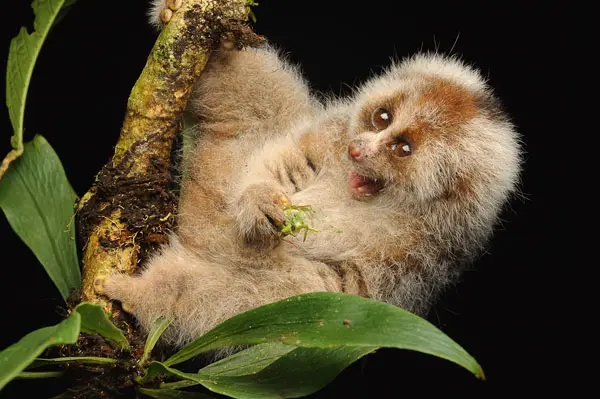
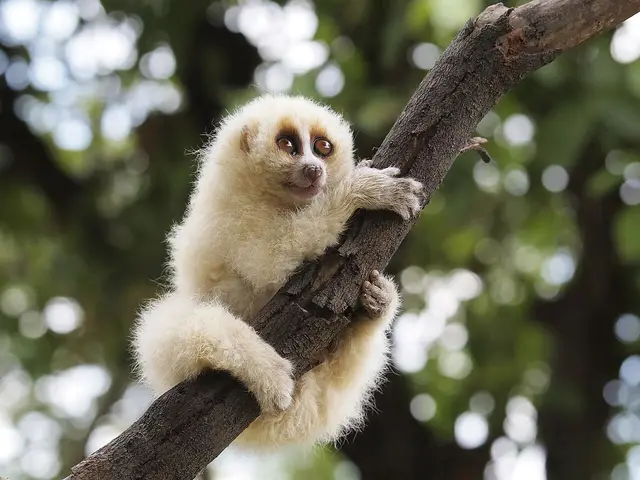
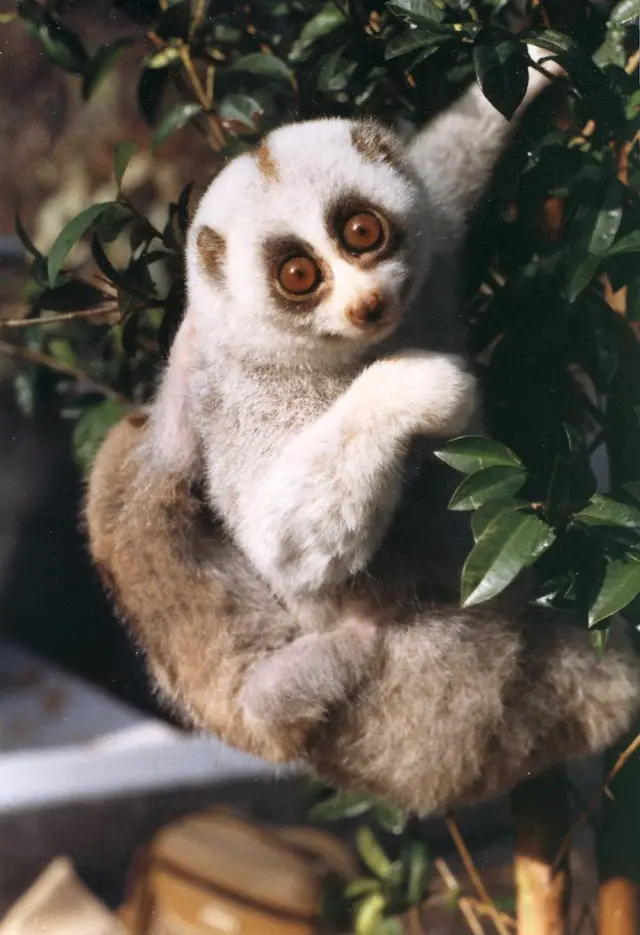
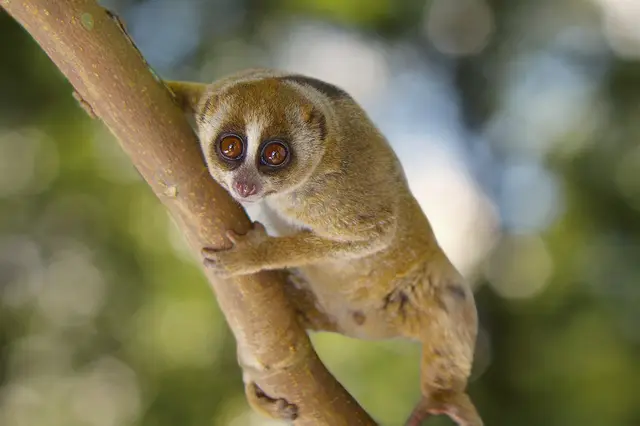
The Sumatran slow loris (Nycticebus hilleri) is a small, nocturnal, venomous primate found only on the Indonesian island of Sumatra. Long lumped in with the Sunda slow loris, it is now a species in its own right. The IUCN Red List assessed it as Endangered in 2020, with numbers declining.
How to recognise it
Like other slow lorises it has large, forward-facing eyes, woolly fur and only a stump of a tail. Slow lorises are venomous. They lick a secretion from a gland on the inner arm, mix it with saliva, and can deliver it in a bite that causes painful swelling and heals slowly. The toxin is mild and rarely fatal, though allergic reactions are possible.
The species was named for Hiram M. Hiller Jr., who collected the first specimen while exploring the East Indies in 1901. Stone and Rehn published the name in 1902. For many years it was treated as a junior synonym of the Sunda slow loris.
Where it lives
It lives only on Sumatra. The IUCN assessment records it from sea level up to about 600 m, in lowland and mountain moist forest, and also in degraded former forest, rural gardens and plantations. Two slow loris species occur on the island, and a report on the prosecution of loris traders in Oryx noted that how their ranges divide hasn't been documented.
Pins are Wikidata “endemic to” fields. Orange dots, when present, are GBIF occurrence tiles — survey bias included.
Why it is in trouble
The 2020 assessment lists three main pressures, each affecting most of the population and each tied to slow but significant decline: plantations replacing forest, more frequent and intense fires, and capture of the animals themselves. The population is severely fragmented.
Capture is driven by the pet trade. Dealers often pull or cut the front teeth so the animal can't bite, which causes heavy bleeding and frequently leads to dental infection. One 2017 case in Indonesia shows the trade at work. A Sumatran slow loris was advertised on Facebook on 30 August 2017 for 36 US dollars. On 23 September a trader was arrested with six more, and another trafficker with three. None of the nine had cut teeth, which suggests they'd been taken from the wild recently. In February 2018 the trader was sentenced to 3.5 years in prison and the other man to 3 years.
What is being done
Slow lorises have been on Indonesia's list of protected species since 1973, and all slow lorises have been in CITES Appendix I, which bars commercial international trade, since 2007. Indonesian law sets maximum penalties of five years in prison and a fine of 100 million rupiah. Open trade in markets and on social media still flourishes, and successful prosecutions like the 2017 case remain few.
Eight of the nine animals seized in 2017 were released about two weeks later in Bung Hatta Forest Park, near Padang. The IUCN assessment lists habitat and site protection, awareness work, trade management and species recovery among the measures needed, though no recovery plan or monitoring scheme was recorded as in place.
Sources
Written for this catalog in our own words from the sources below, checked against them on 12 November 2026. Population figures are estimates and carry the year they were made. Status and assessment year: IUCN. 2026. The IUCN Red List of Threatened Species. Version 2026-1. iucnredlist.org.