Endangered
Nososticta pilbara
Nososticta pilbara
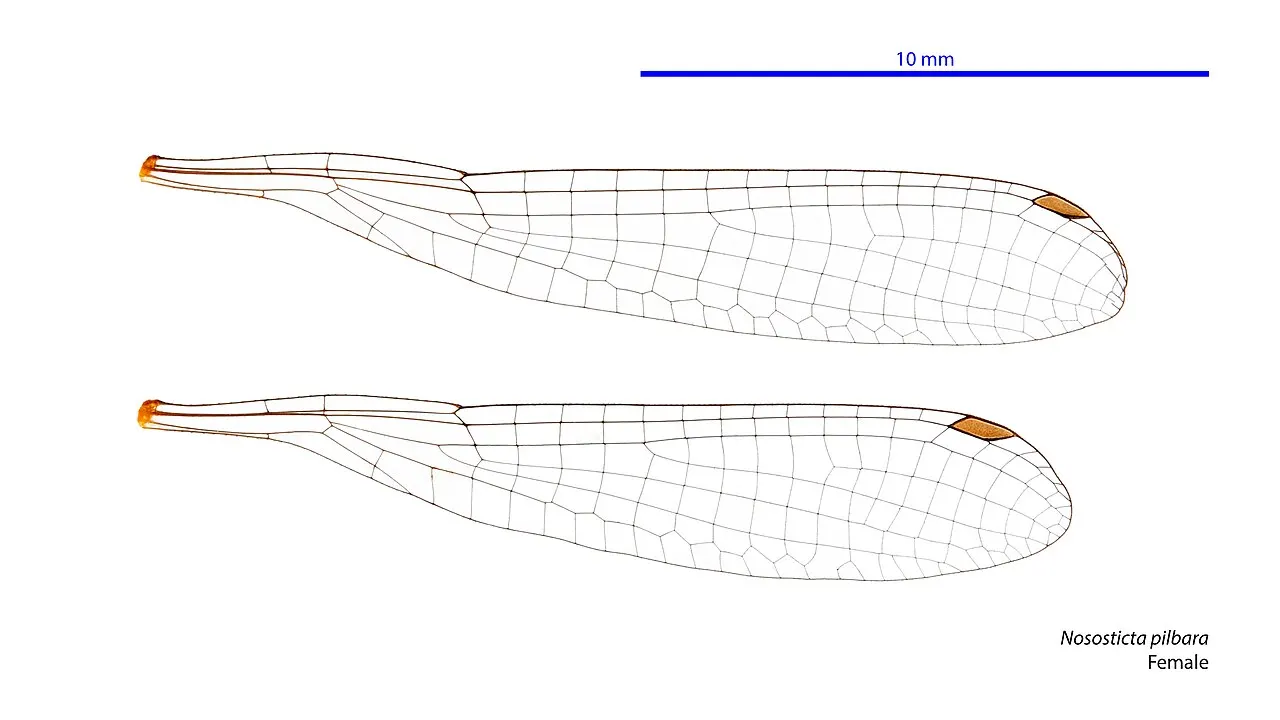
The Pilbara threadtail (Nososticta pilbara) is a small, slender damselfly, black with orange markings, known only from streams and pools in the Pilbara region of Western Australia. The IUCN Red List rated it Endangered in 2017, mainly because it lives in a tiny area where water and habitat are under pressure.
How to recognise it
It's a threadtail, a group of slim damselflies in the family Platycnemididae. This one is small and delicate, mostly black with orange markings.
Entomologist J.A.L. (Tony) Watson described it in 1969, first as a subspecies of Nososticta solida, and the species name simply points to the Pilbara, where the original specimens were collected. Detailed measurements and larval biology are not well documented in the sources available, so no further description is offered.
Where it lives
Only the Pilbara region of Western Australia is known to hold it. The IUCN assessment gives its habitat as permanent rivers, streams and creeks (including waterfalls) and as subtropical or tropical dry forest.
The numbers are small. The estimated extent of occurrence is about 3,316 square kilometres, but the area it actually occupies is only 100 to 200 square kilometres. The assessors counted a single location, and the species occurs in at least one protected area.
The Pilbara is arid, and permanent water is scarce. A 1986 to 87 article in Landscope magazine by Tony Start counted 33 dragonfly and damselfly species in the region, ten of them found nowhere else, with this species named among the endemics. Species whose larvae live only in permanent running water, he wrote, are rare and tied to a few streams.
Pins are Wikidata “endemic to” fields. Orange dots, when present, are GBIF occurrence tiles — survey bias included.
Why it is in trouble
Two threats are named in the assessment, both rated medium impact and affecting the whole species: abstraction of groundwater, for uses that are not specified, and shifting or altered habitat. Both act on the permanent water the species is recorded from. The area it occupies is recorded as still declining.
The population trend is listed as unknown, and no population estimate exists. Because the assessment counts only one location, a local change to the water could reach much of the species.
Groundwater pumping has hurt Pilbara dragonflies before. The Landscope article reported that pumping from the Millstream aquifer through a run of dry years had cut spring flows enough to threaten the rarest of the region's dragonfly and damselfly habitat.
What is being done
The assessment records no species-specific conservation action. The one protective factor listed is that the species occurs in at least one protected area.
In the 1986 to 87 article, Start described a monitoring program for dragonflies and damselflies at Millstream and extra bores to supplement natural springs there. The article does not say whether this species was covered, and no recent survey of it was found.
Sources
Written for this catalog in our own words from the sources below, checked against them on 12 November 2026. Population figures are estimates and carry the year they were made. Status and assessment year: IUCN. 2026. The IUCN Red List of Threatened Species. Version 2026-1. iucnredlist.org.




