Endangered
Western nesomys
Nesomys lambertoni
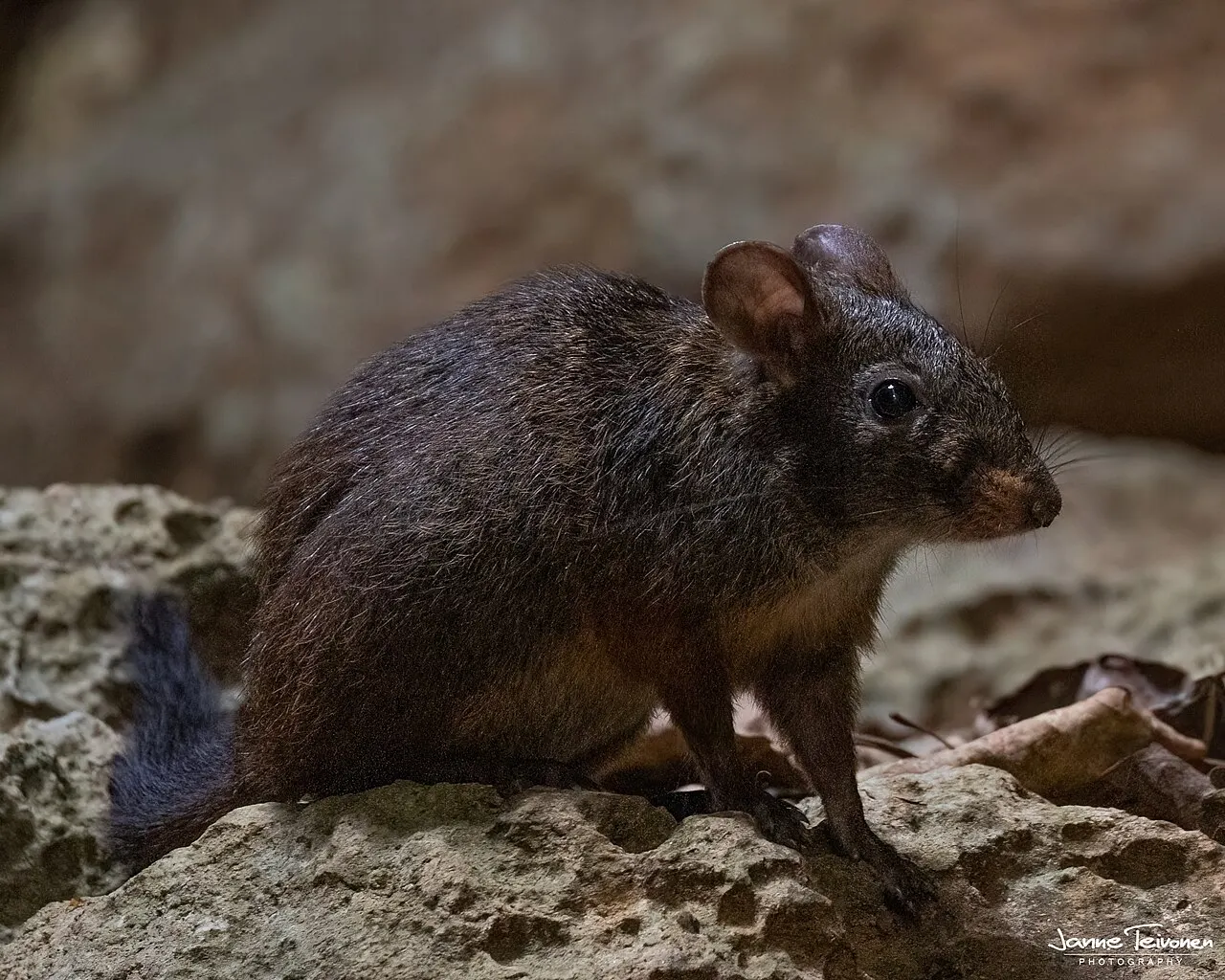
The western nesomys (Nesomys lambertoni), also called Lamberton's forest rat, is a large rodent known only from the limestone pinnacle country of Tsingy de Bemaraha in west-central Madagascar. The IUCN Red List rated it Endangered in 2016. Very little is known about how it lives.
How to recognise it
It is a big, ground-dwelling rat. The two individuals whose measurements are on record had a head and body length of 189 to 195 mm and weighed 225 to 243 g. Females carry three pairs of teats.
It belongs to the red forest rats (genus Nesomys), a Madagascar-only group of four species, one of them extinct. It was described by G. Grandidier in 1928 (some references give 1929), and for a long time its exact type locality was uncertain. A 2014 review placed it in tsingy habitat on the western edge of the Bemaraha Massif, in Antsalova District.
Where it lives
Its known range sits inside the Tsingy de Bemaraha World Heritage Site, in Melaky Region near Madagascar's west coast. The terrain is a maze of needle-sharp limestone spires above canyons. The rat lives in dry deciduous forest growing on this karst, at roughly 100 m above sea level, and dens in small caves and rock shelters.
The 2016 Red List assessment gives an extent of occurrence of about 2,470 square kilometres and treats the population as severely fragmented.
Pins are Wikidata “endemic to” fields. Orange dots, when present, are GBIF occurrence tiles — survey bias included.
How it lives
It is active on the ground and tends to be most active around dawn and dusk. Its diet hasn't been confirmed, but it is presumed to eat mainly seeds and fruit; its movements, home range and social life are undocumented. Based on limited information, a litter is a single young.
The IUCN lists the population trend as unknown, and the assessment gives no population size.
Why it is in trouble
Its known range is small, and the habitat is under pressure. The Red List names nomadic grazing, shifting agriculture and small-holder farming as threats, and the World Heritage Site is exposed to fire. The assessment records an ongoing decline in the area of habitat.
The assessment records conservation sites identified over the species' entire range, and site management is the conservation action listed for it.
Sources
Written for this catalog in our own words from the sources below, checked against them on 12 November 2026. Population figures are estimates and carry the year they were made. Status and assessment year: IUCN. 2026. The IUCN Red List of Threatened Species. Version 2026-1. iucnredlist.org.




