Endangered
Nelson's spiny pocket mouse
Heteromys nelsoni
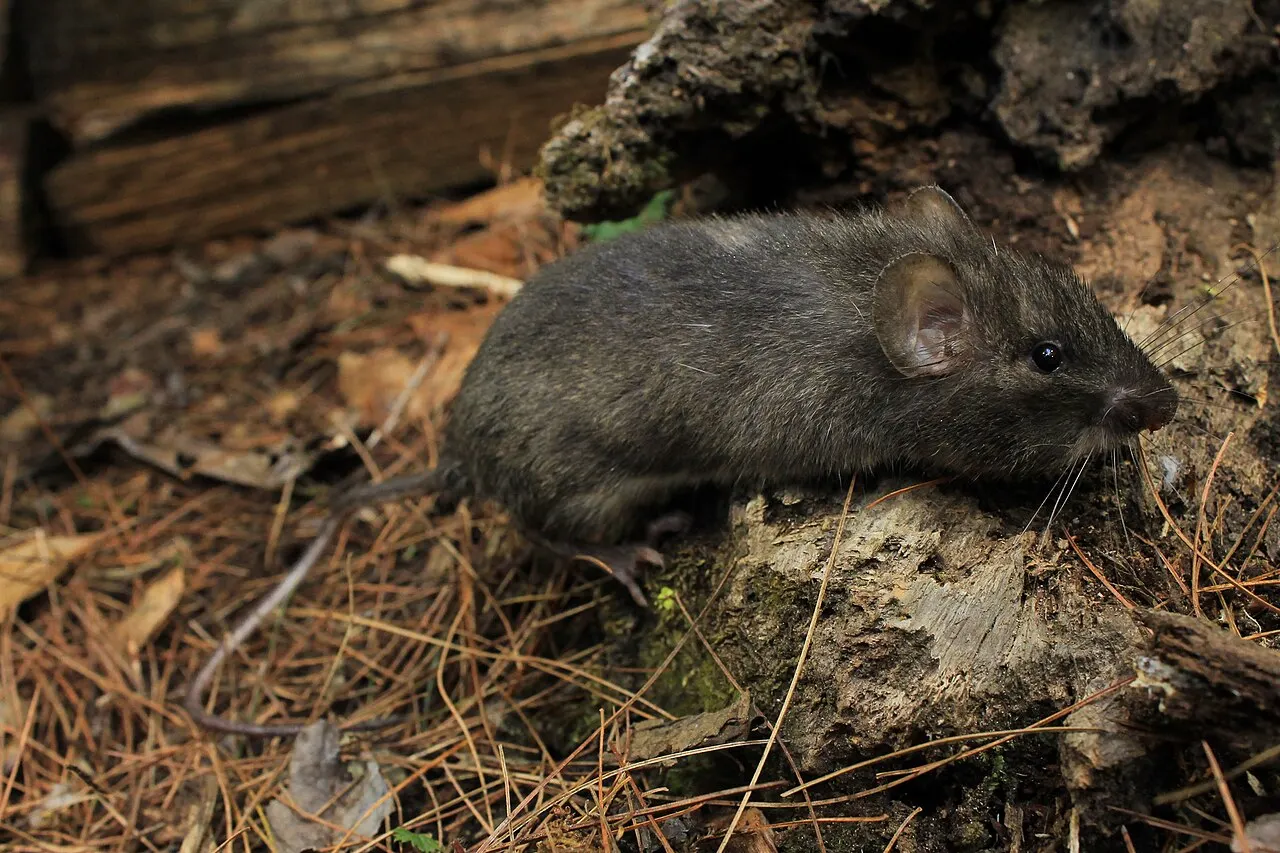
Nelson's spiny pocket mouse (Heteromys nelsoni) is a small rodent of high-elevation cloud forest in southern Chiapas, Mexico, and adjoining western Guatemala. The IUCN Red List rated it Endangered in 2025. Its known range is tiny, and for 121 years it went unrecorded at the place where it was first collected.
What kind of animal it is
It belongs to the family Heteromyidae, the pocket mice and kangaroo rats, and to the genus Heteromys, the spiny pocket mice. American zoologist Clinton Hart Merriam described it in 1902 from a specimen collected at Pinabete, in Chiapas, at about 8,200 feet (roughly 2,500 m).
Few details of its appearance or daily habits appear in the accessible literature, so this account says little about them. The Red List gives a generation length of about 2.4 years, a short span typical of a quick-breeding small rodent.
Where it lives
The IUCN assessment lists Mexico (Chiapas) and Guatemala, and gives its habitat as subtropical or tropical moist montane forest. A 2016 study in Mammalia describes it as restricted to cloud forests in the mountains of southern Chiapas and western Guatemala. Some older summaries call it a lowland forest animal, but the assessment's elevation limits, 2,480 to 2,850 m, place it in the mountains.
The Red List counts just three locations, within an estimated extent of occurrence of 482 square kilometres. Its population is not described as severely fragmented, yet the extent of occurrence and area of occupancy are both recorded as still declining. It occurs in at least one protected area.
Pins are Wikidata “endemic to” fields. Orange dots, when present, are GBIF occurrence tiles — survey bias included.
Lost and found
A team revisited Pinabeto, Chiapas, and caught five animals, 121 years after the species was last collected there. A 2019 paper in Mammalia described these animals by their measurements and confirmed the species by comparing their DNA against GenBank. It judged the isolated Pinabeto population likely to be vulnerable to extinction and called for more study of the species and of the region's cloud forests.
A 2016 genetic study in Mammalia used three mitochondrial genes to compare mice from two areas around Cerro Mozotal, Chiapas. It found low genetic diversity and concluded that the populations had gone through a very recent drop in numbers, a poor sign for long-term survival.
Why it is in trouble
The IUCN assessment lists habitat shifting and alteration, along with storms and flooding, among the threats, each rated low impact. The 2016 study blames modification of its habitat by heavy logging and cattle grazing, and suggests that climate change and other human pressures have probably cut the amount of suitable forest.
Whether the mouse itself is declining is unknown: the assessment records the population trend as unknown, and no population estimate exists, even though its range is shrinking.
What is being done
The only conservation action the assessment records is protection of the land and habitat where it lives, and it occurs in at least one protected area. The 2019 rediscovery paper calls for further research on its biology and ecology.
Sources
Written for this catalog in our own words from the sources below, checked against them on 12 November 2026. Population figures are estimates and carry the year they were made. Status and assessment year: IUCN. 2026. The IUCN Red List of Threatened Species. Version 2026-1. iucnredlist.org.
- IUCN Red List assessment (2025)
- Mammal Diversity Database, Heteromys nelsoni
- Wikipedia, Nelson's spiny pocket mouse
- Rediscovery of Heteromys nelsoni in its type locality after over a century (Mammalia 84, 2019), Crossref abstract
- Genetic variation in Heteromys nelsoni (Mammalia 81, 2016), Crossref abstract




