Critically Endangered
Namdapha flying squirrel
Biswamoyopterus biswasi
The Namdapha flying squirrel (Biswamoyopterus biswasi) is a large, nocturnal gliding rodent from Namdapha in Arunachal Pradesh, northeast India. For decades it was known from a single specimen collected in 1981. The IUCN Red List rated it Critically Endangered in 2016, and a possible sighting in 2022 awaits DNA confirmation.
How to recognise it
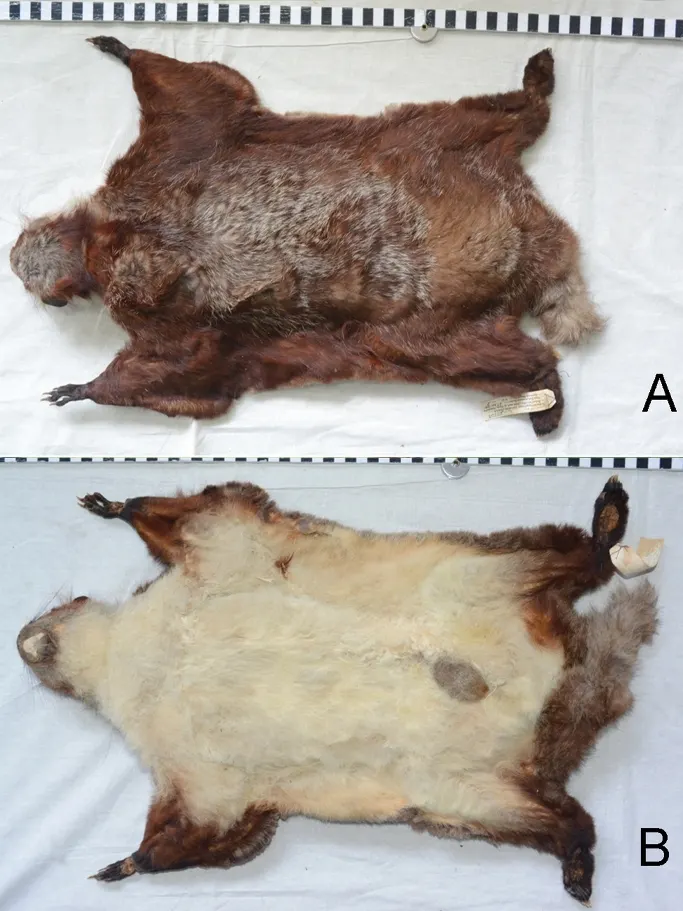
It's a big flying squirrel with reddish, grizzled fur, a pale grey crown, white underparts and an orange-tinted gliding membrane. The type specimen measured about 40.5 cm from head to vent, with a tail of about 60 cm.
It looks much like the red giant flying squirrel (Petaurista petaurista), which lives in the same park and is similar in size and colour. One Indian news explainer gives a prominent tuft of hair on the ears as the main way to tell them apart.
Where it lives
The squirrel is endemic to Arunachal Pradesh. S. S. Saha described it in 1981 from one animal collected in Namdapha, in the Dihing River area, and named it for Biswamoy Biswas, then head of the Zoological Survey of India. It was the first species in its genus. Two relatives have since been described, one from Laos in 2013 and one from China in 2018.
The IUCN treats it as occurring at a single location, with an area of occupancy of 10 to 100 square km and an elevation between 100 and 350 m. It lists subtropical or tropical dry forest as the habitat, while other descriptions mention tall Mesua ferrea forest on hill slopes. A canopy survey by the search team suggested it is probably a riverine species that lives close to rivers.
Pins are Wikidata “endemic to” fields. Orange dots, when present, are GBIF occurrence tiles — survey bias included.
How it lives
Very little is known. It reportedly eats young leaves and shoots in the upper canopy and depends on mature trees with a continuous canopy for food and gliding routes. It is nocturnal and stays high in the trees, which makes it hard to observe.
Why it is in trouble
The IUCN trend is decreasing, and the habitat in its small range continues to shrink. Listed threats include small-holder farming, hunting for food, storms and landslides. Other reports describe clearing for settlements, shifting agriculture and harvesting of rattan palm leaves for roofing.
Searches and a possible sighting
Several teams searched without success after 1981. Some zoologists suspected the squirrel had been mistaken for the red giant flying squirrel, or had died out. Earlier possible sightings turned out to be red giants when experts examined them.
The Indian conservation group Aaranyak, working with Re:wild's Search for Lost Species programme, ran 10 expeditions totalling 79 days. In April 2022 the team reported a sighting and photographed an animal it believed was the species. Experts reviewed the photos repeatedly, and the team leader said in 2023 that they were pretty sure but not certain. Confirmation needs fur, droppings or saliva for DNA comparison with the 1981 specimen, held at the Zoological Survey of India museum in Kolkata.
The species is on Re:wild's list of most wanted lost species and is listed under Schedule I of India's Wildlife (Protection) Amendment Act, 2022.
Sources
Written for this catalog in our own words from the sources below, checked against them on 12 November 2026. Population figures are estimates and carry the year they were made. Status and assessment year: IUCN. 2026. The IUCN Red List of Threatened Species. Version 2026-1. iucnredlist.org.




