Endangered
Mountain reedbuck
Redunca fulvorufula
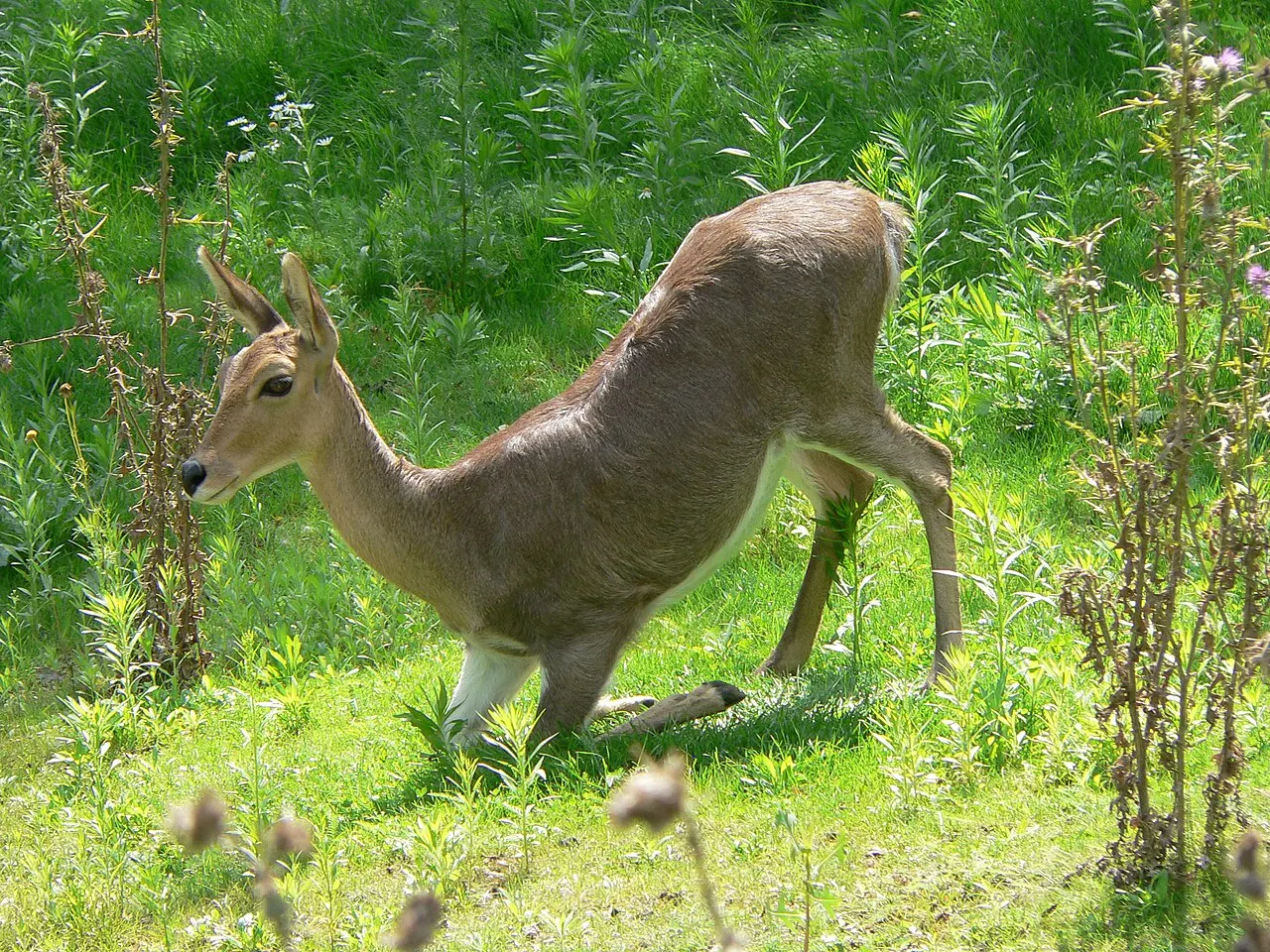
The mountain reedbuck (Redunca fulvorufula) is a small, grey antelope of rocky hills and high grassland, scattered across three separate parts of Africa. The IUCN Red List rated it Endangered in 2017, up from Least Concern in 2008, after evidence of a steep decline in the largest population.
How to recognise it
It stands about 75 cm at the shoulder and weighs around 30 kg. The coat is grey with a white belly, and the head and shoulders are reddish brown. Both sexes carry a dark scent patch under the ears.
Only males have horns. They are ridged, about 15 cm long and curve forward.
Where it lives
Three subspecies live in three separate areas: a southern form from the eastern Cape of South Africa to south-eastern Botswana, Chanler's mountain reedbuck in East Africa, and the Adamawa form near the Nigeria and Cameroon border. The IUCN lists 12 countries in all, from Lesotho and Eswatini to Ethiopia and South Sudan.
It favours ridges, hillsides and rocky ground between 1,500 and 5,000 m, with high-altitude grassland and shrubland. Water nearby matters, and scattered trees or bush often grow where it lives.
Pins are Wikidata “endemic to” fields. Orange dots, when present, are GBIF occurrence tiles — survey bias included.
How it lives
Mountain reedbuck are grazers, eating mostly grasses. They feed mainly in the early morning and evening, and sometimes at night. A group is usually six or fewer animals, with one adult male, several females and their young. Young males are pushed to the edge of the herd, where they form bachelor groups.
Breeding goes on all year, with a peak in summer and autumn. Gestation lasts about eight months and a female usually bears one young. Males hold territories of roughly 15 to 48 hectares and warn of danger with a shrill whistle.
How many are left
The total population was estimated at over 36,000 animals in 1999, mostly of the southern subspecies. That figure is now old. The 2017 assessment records the population as decreasing and estimates an overall reduction of 55 percent over three generations (about 15 years), driven by a sharp fall in the southern population in South Africa.
The two northern populations are much smaller. Chanler's form may be undercounted if it still lives in numbers on private land in Kenya.
Why it is in trouble
The IUCN lists hunting, where the animal is the target, as an ongoing threat, with nomadic grazing and housing development also named. Each is scored as low impact, but the cause of the decline isn't fully understood.
The Red List records use of the species for human food, sport hunting and specimen collecting, handicrafts, and in small numbers as pets or display animals.
What is being done
The IUCN says conservation sites have been identified across its whole range and that it occurs in at least one protected area. Recommended actions are site management and harvest management. Research needs listed are population trends, harvest level trends and taxonomy.
Sources
Written for this catalog in our own words from the sources below, checked against them on 12 November 2026. Population figures are estimates and carry the year they were made. Status and assessment year: IUCN. 2026. The IUCN Red List of Threatened Species. Version 2026-1. iucnredlist.org.




