Endangered
Montane Mouse Shrew
Myosorex blarina
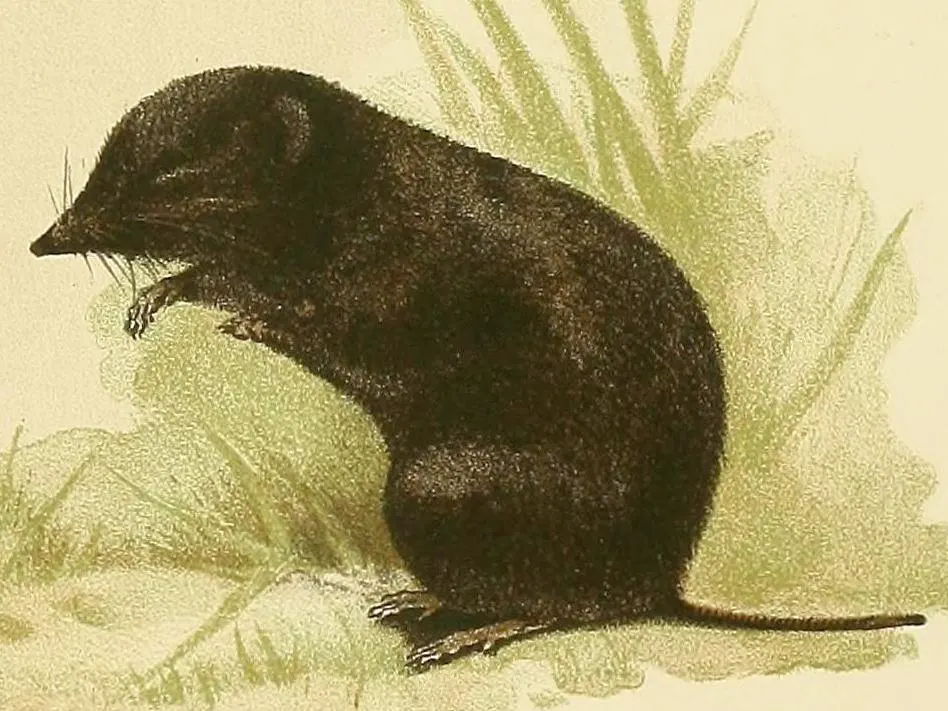
The montane mouse shrew (Myosorex blarina) is a small insect-eating mammal of the Rwenzori Mountains and neighbouring highlands of Uganda and the Democratic Republic of the Congo. The IUCN Red List assessed it as Endangered in 2021 and records a decreasing trend, though the reasons are not well understood.
What it is
Oldfield Thomas named the species in 1906 in the Annals and Magazine of Natural History, from a specimen collected in the Rwenzori Mountains. The holotype is held by the Natural History Museum in London. It belongs to the shrew family (Soricidae), in the subfamily of African mouse shrews, and the genus Myosorex.
It is also called the Rwenzori mouse shrew or mountain mouse shrew. Its appearance and habits are little documented in accessible sources, and no population size has been estimated.
Where it lives
The type locality is the Mubuku Valley in the Rwenzori Mountains, at about 3,048 m. The IUCN assessment lists Uganda and the Democratic Republic of the Congo, gives an elevation range of roughly 1,890 to 4,000 m, and counts one to five locations. Habitats named are tropical moist montane forest and wetlands such as bogs, marshes and swamps.
A separate 2016 national assessment for Uganda described the species as known from only one protected area, Rwenzori Mountains National Park, with an extent of occurrence of about 996 square kilometres in the country.
Pins are Wikidata “endemic to” fields. Orange dots, when present, are GBIF occurrence tiles — survey bias included.
Why it is in trouble
The 2021 assessment records continuing decline in the area the species occupies and lists small-holder farming and shifting agriculture among the threats, turning forest and wetland into cropland. It describes the population as not severely fragmented.
The Uganda national assessment called the shrew uncommon and apparently declining, noted that its forest is relatively well protected, and said the reasons for the decline are not understood. It listed forest degradation at lower altitudes as a threat.
What is being done
The main protection is Rwenzori Mountains National Park in Uganda, the only protected area where the species is recorded there. The IUCN assessment records conservation sites identified over the entire range and lists site and area management as the action needed. Little else has been published, and the shrew has received almost no dedicated study.
Sources
Written for this catalog in our own words from the sources below, checked against them on 12 November 2026. Population figures are estimates and carry the year they were made. Status and assessment year: IUCN. 2026. The IUCN Red List of Threatened Species. Version 2026-1. iucnredlist.org.




