Critically Endangered
Mictocaris halope
Mictocaris halope
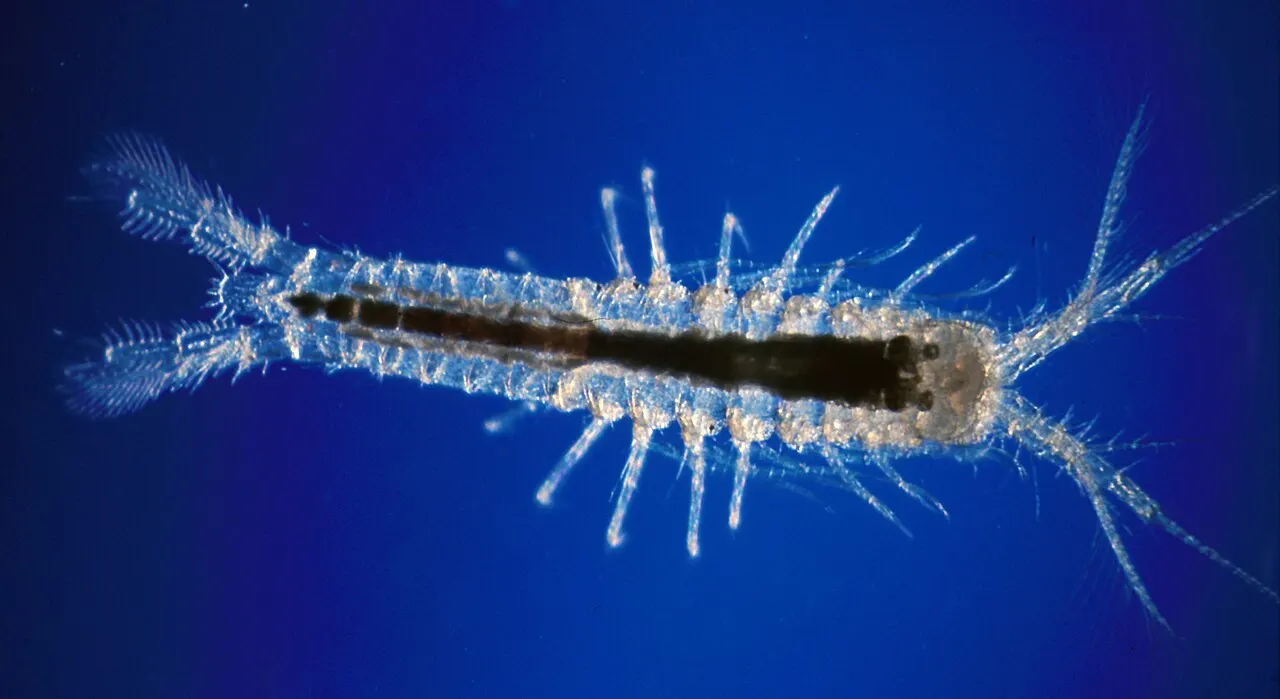
Mictocaris halope is a tiny, blind, colourless crustacean found only in a handful of flooded sea caves in Bermuda. Adults reach about 3.5 mm. It is the only member of its genus and family. The IUCN Red List assessed it as Critically Endangered in 2014.
How to recognise it
Adults are 3 to 3.5 mm long, slender and colourless. The head carries eyestalks and a beak-like rostrum, but the animal has no working eyes. It is the sole species in the genus Mictocaris and the family Mictocarididae, and it is sometimes treated as the only living member of the order Mictacea.
Thomas Bowman and Thomas Iliffe described it in 1985, the year cave divers found it.
Where it lives
It is an anchialine animal, living in seawater-filled caves that receive no daylight. Divers first found it in Crystal Cave. It is also recorded from Green Bay Cave (the type locality, in Hamilton Parish), Roadside Cave and Tucker's Town Cave, and from passages near Harrington Sound.
The IUCN treats the whole population as one location, with an estimated extent of occurrence of about 10 square kilometres and an area of occupancy of 1 square kilometre. Records come from depths of roughly 6 to 22 metres, in the dark inner parts of the caves.
Pins are Wikidata “endemic to” fields. Orange dots, when present, are GBIF occurrence tiles — survey bias included.
How it lives
Little is known. It spends most of its time swimming, and is only occasionally seen resting or crawling on rock. Females carry eggs in a pouch formed by plates at the base of the legs, and the young hatch lacking their last pair of appendages. Mating has never been seen.
What it eats is unknown. It reportedly has strong jaw muscles, and one reference suggests it may strain plant particles from the water.
Why it is in trouble
The animal is very sensitive to the quality of its cave water. The IUCN names sewage, recreational activities and mining and quarrying as threats, and describes the population as severely fragmented with ongoing decline in area and in subpopulations. Bermuda's environment department points to quarrying that breaks apart caves, and to rubbish, sewage and chemicals that foul the water.
The species is protected under Bermuda's Protected Species Act, along with 20 other cave invertebrates. A management plan for Bermuda's critically endangered cave fauna was published in 2014.
Sources
Written for this catalog in our own words from the sources below, checked against them on 12 November 2026. Population figures are estimates and carry the year they were made. Status and assessment year: IUCN. 2026. The IUCN Red List of Threatened Species. Version 2026-1. iucnredlist.org.




