Endangered
Melanopsis etrusca
Melanopsis etrusca
Melanopsis etrusca is a small freshwater snail confined to a few thermal, mineral-rich streams in southern Tuscany, Italy. The IUCN Red List rated it Endangered in 2026, recording a declining population in a tiny, fragmented range with an area of occupancy of about 20 square kilometres.
How to recognise it
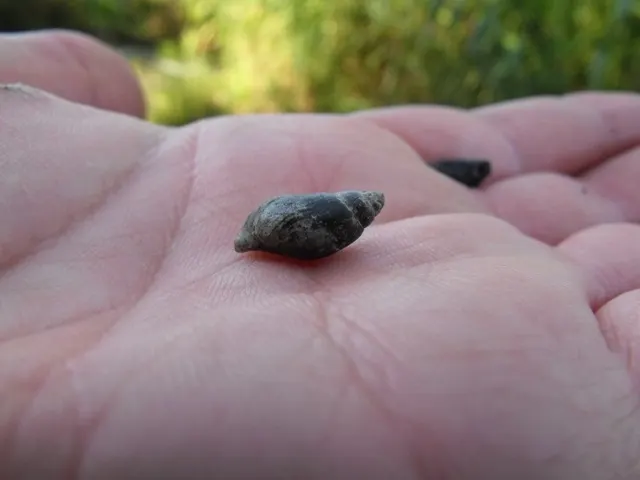
It is a small snail, about 12 millimetres long according to one conservation project. Its genus was widespread across the Mediterranean and central Europe in the warm, humid periods of the Miocene and Pliocene. Ice-age cycles removed it from most of that range, and M. etrusca is regarded as a relict that survived in warm springs.
Where it lives
It is endemic to Italy, living in the upper reaches of streams fed by permanent thermo-mineral springs in the provinces of Livorno and Grosseto in Tuscany, between about 50 and 400 metres above sea level. The assessment gives an area of occupancy of 20 square kilometres and an extent of occurrence of 279, spread over three to five locations.
A 2021 study in Conservation Physiology names five surviving populations: Venturina, Aronna, Bruna, Poggetti Vecchi and Roselle. Their water differs sharply. Roselle stays at 35 to 38 degrees Celsius all year, Aronna sits at 19 to 23, and Bruna swings from about 12 in winter to 27 in summer.
Pins are Wikidata “endemic to” fields. Orange dots, when present, are GBIF occurrence tiles — survey bias included.
How it lives
A 2017 study in Invertebrate Biology found that water pH and temperature best explained where the snail lives and how it grows. Snails in streams constantly above 30 degrees grew faster and had a shorter life cycle than those in cooler streams, which showed seasonal growth. In the hottest population, snails spend long periods out of the water. Their diet reflects the local film of algae and other organisms on the stream bed, and plant fragments dominate it.
Why it is in trouble
Tuscany's springs have been heavily used. A 2020 genetic study in Conservation Genetics reported that the snail was once known from 11 or possibly 12 populations, and that half have vanished through overuse of thermal springs for spas, drainage, and pollution from farming and mining. The assessment adds tourism and recreation areas, groundwater abstraction for farming and housing to the list, and records continuing decline in range, area and subpopulations.
At Poggetti Vecchi, human-caused drying of the stream still threatens the population.
What is being done
The species is protected under Tuscan regional law and is a target species in regional biodiversity planning. The assessment lists site protection and management among the actions in place.
A project by the conservation group Friend of the Earth with the Florence natural history museum La Specola set up captive breeding at the Mondo Marino aquarium in Massa Marittima, aiming to release snails into improved sites. The project page does not report whether any release has happened. Researchers suggest heat-adapted populations hold the best chance of recolonising after a collapse.
Sources
Written for this catalog in our own words from the sources below, checked against them on 12 November 2026. Population figures are estimates and carry the year they were made. Status and assessment year: IUCN. 2026. The IUCN Red List of Threatened Species. Version 2026-1. iucnredlist.org.
- IUCN Red List assessment, Melanopsis etrusca (2026)
- Bartolini and Giomi 2021, Conservation Physiology 9(1)
- Bartolini et al. 2017, Invertebrate Biology, abstract (via Europe PMC and Crossref)
- Neiber et al. 2020, Conservation Genetics, abstract (via Europe PMC)
- Friend of the Sea, Save the Snails
- Melanopsis etrusca, species article




