Critically Endangered
Megalagrion oceanicum
Megalagrion oceanicum
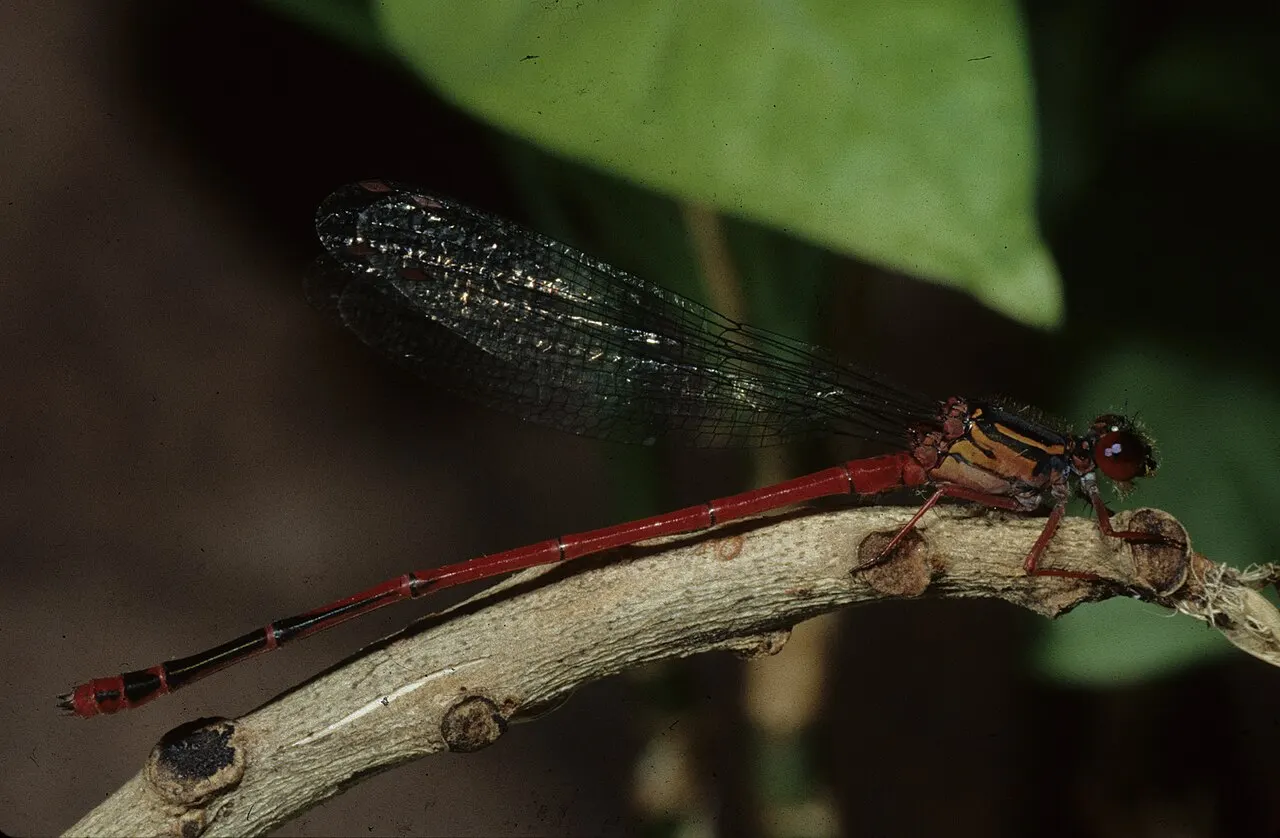
The oceanic Hawaiian damselfly (Megalagrion oceanicum) is a large, red and black damselfly found only on the island of Oahu in Hawaii. The IUCN Red List assessed it as Critically Endangered in 2020. It now hangs on in a handful of fast, clear streams on the wet side of the Koolau Mountains.
How to recognise it
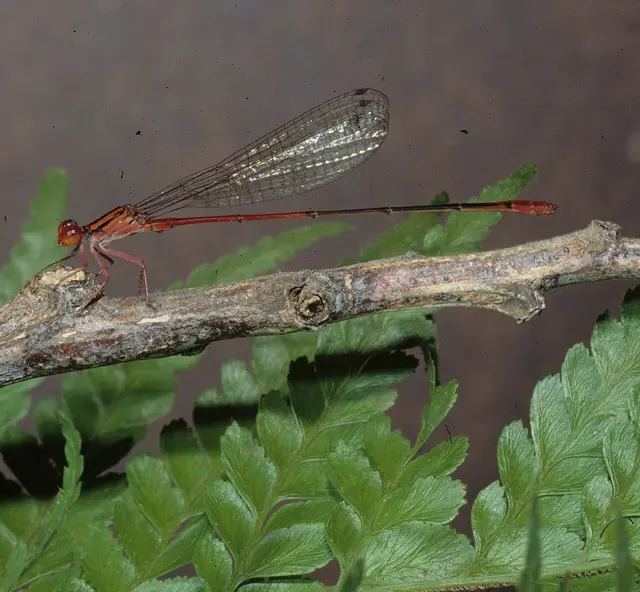
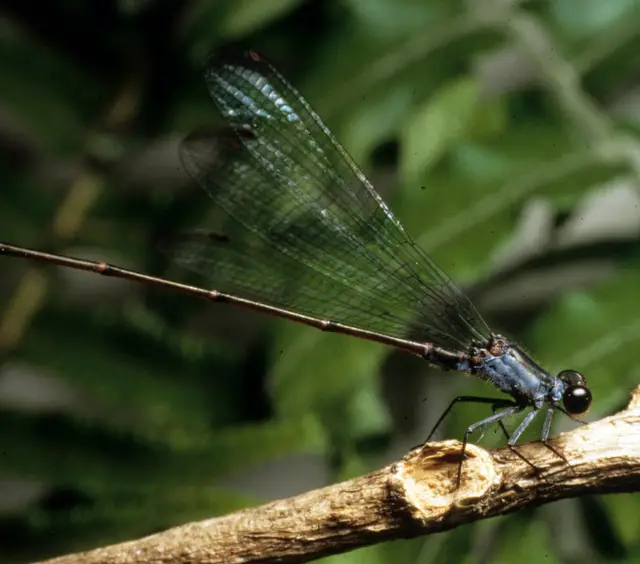
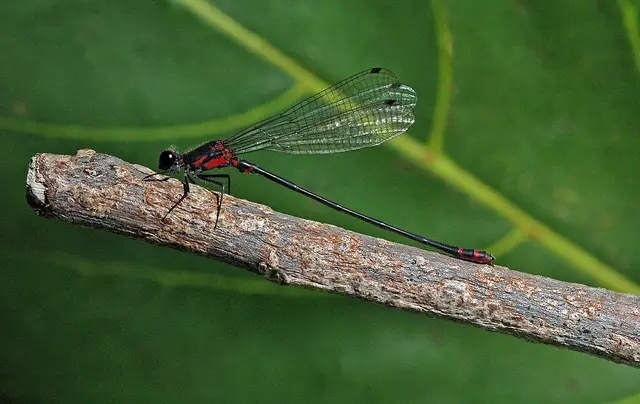
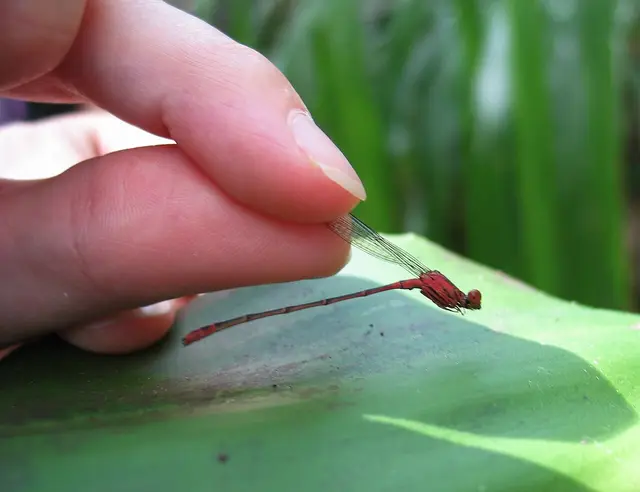
This is a big damselfly by Hawaiian standards. Adults measure roughly 47 to 50 mm in length, with a wingspan of about 51 to 55 mm. Both sexes carry black stripes. Males are bright red, females pale green.
Its flight is a good clue too. Compared with other Oahu damselflies it is a strong, fast flier along flowing stretches of stream, and it is bold. When disturbed, adults often shoot up into the forest canopy over the stream or waterfall. The young (called naiads) are large as well, with long grasping legs and dagger-like gills.
Where it lives
The species is endemic to Oahu. It once lived on both sides of the Koolau range and in the Waianae Mountains, but it has been lost from about 16 general localities, including the Waianae Mountains and all leeward Koolau streams.
A U.S. Fish and Wildlife Service review begun in 2018 lists 12 sites on the windward Koolau side, all above about 100 m elevation, including Kahawainui, Kaluanui, Makaua, Waihee and Kahaluu streams. The IUCN assessment, which counts seven drainages, puts the area it actually occupies at about 40 square km, within a range of roughly 80 square km, and describes the habitat as permanent rivers and streams.
Pins are Wikidata “endemic to” fields. Orange dots, when present, are GBIF occurrence tiles — survey bias included.
How it lives
Naiads live in swift, clear water, usually among rocks and gravel in riffles and on small cascades on waterfalls. They can swim but mostly crawl through gravel or submerged plants. Older naiads often forage out of the water itself, and have been seen on wet moss, damp rock walls and seeps.
The federal review says little new has been learned about its biology since the species was listed, and it found no population size estimate. The IUCN says there are probably fewer than 1,000 individuals. A survey in May 2011 in upper Kaluanui Stream, at 600 to 685 m, found one adult. The young were located only in a single rocky tributary below a big cascading spring.
Why it is in trouble
Introduced predators are the main problem. Nonnative fish are blamed for wiping Hawaiian damselflies out of almost all of their former lowland sites on Oahu. The naiads hide under stones and mats of moss and algae, but that does not save them from fish. As a result the damselfly survives only in stream sections above waterfalls, steep gradients, dry stretches or diversions, where those fish can't reach. Bullfrogs and ants also prey on it.
Habitat loss adds to the pressure. Stream diversion, channelization, drained aquifers, wells, feral pigs, invasive plants, landslides, floods and drought all affect the stream corridors it needs. Its low numbers and small ranges make flooding a particular risk. The IUCN lists the population as decreasing and severely fragmented.
What is being done
The species was listed as endangered under the U.S. Endangered Species Act on 18 September 2012, and critical habitat has been identified on perennial streams and fast-flowing riffles on Oahu. The 2018 review recommended no change in status and called for targeted surveys, protecting the remaining populations, a recovery plan, and management of nonnative predators. The IUCN lists site and habitat protection and management as the conservation actions needed.
Sources
Written for this catalog in our own words from the sources below, checked against them on 12 November 2026. Population figures are estimates and carry the year they were made. Status and assessment year: IUCN. 2026. The IUCN Red List of Threatened Species. Version 2026-1. iucnredlist.org.