Critically Endangered
Meandrina meandrites
Meandrina meandrites
The maze coral (Meandrina meandrites) is a stony coral that builds domed heads and plates on Caribbean and Gulf of Mexico reefs, with winding ridges across its surface. The IUCN Red List moved it to Critically Endangered in 2022 because of a steep, disease-driven decline.
How to recognise it
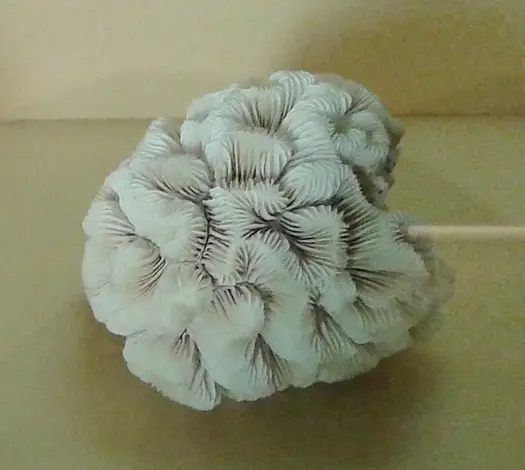
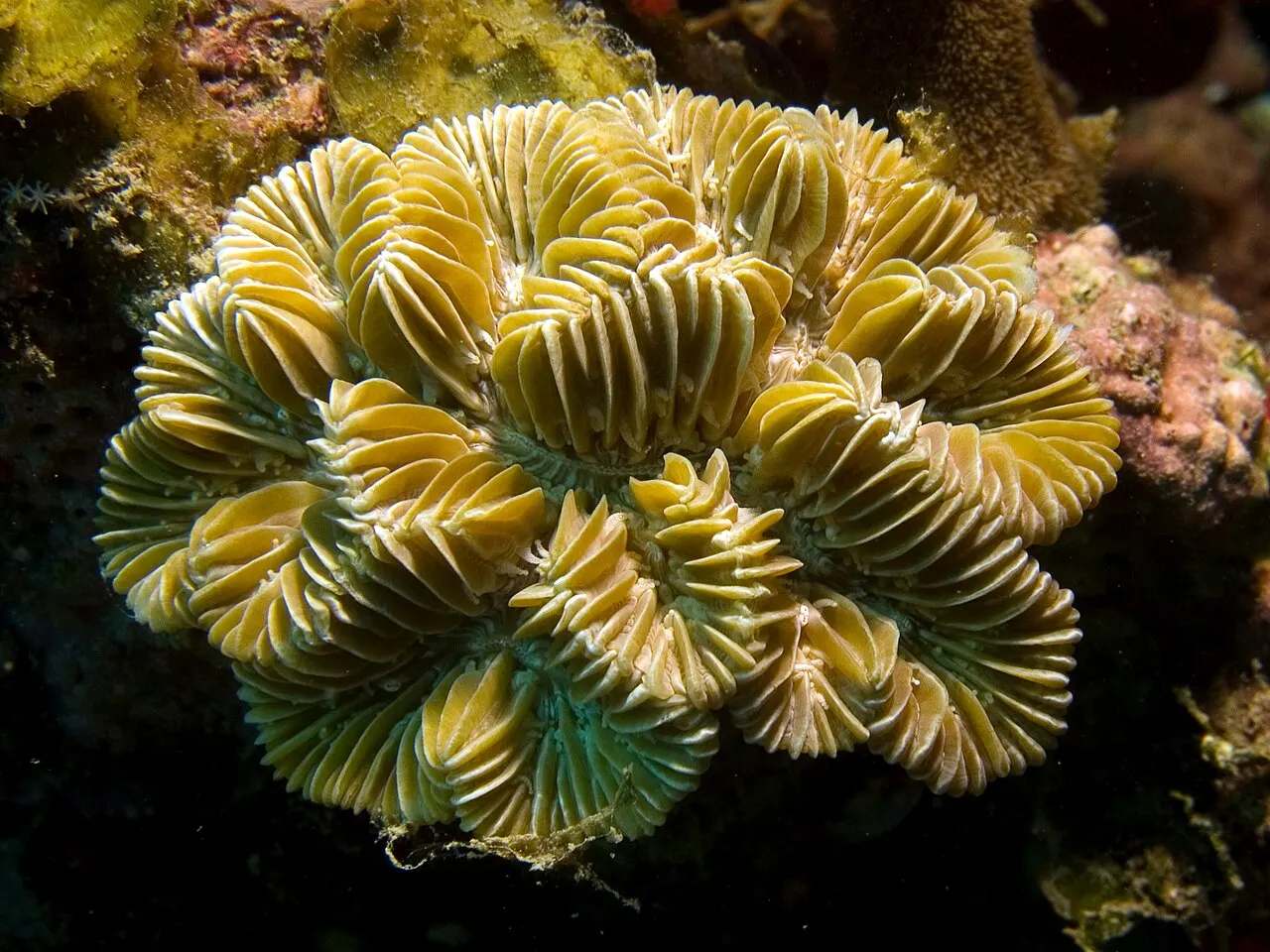
Maze coral grows as a hemispherical head or a thick flat plate, and big colonies can reach nearly a metre across. Fine ridges wind across the surface between the cups (corallites), like the paths of a garden maze. Each cup is roughly 1 to 2 cm wide, and a slight groove runs along the crest of the walls.
The large polyps come out only at night, when they cover the skeleton and hide the pattern. Small colonies can look quite different. Some form loose cones that sit unattached on sand or mud away from reefs, and they can be mistaken for young rose coral.
Where it lives
The species ranges across the Caribbean Sea, the Gulf of Mexico, Florida, the Bahamas and Bermuda. The IUCN lists about three dozen countries and territories, from Mexico and Belize down to Colombia and Venezuela and out through the island chains to Barbados and Bermuda.
It lives mainly on the seaward slopes of reefs and also on back slopes, and the Red List records it from coral reef and rocky reef habitat. Depths run from about 0.5 m to 80 m, with most colonies between 8 and 30 m. It tolerates silty, cloudy water better than many corals, and it is generally the coral seen most often in the deeper part of its range.
Pins are Wikidata “endemic to” fields. Orange dots, when present, are GBIF occurrence tiles — survey bias included.
How it lives
Maze coral is a broadcast spawner. Colonies release sperm and eggs into open water after dark, and fertilisation happens at sea. Wild spawning has been recorded only in Bonaire and Curaçao, from September to December, mostly 11 to 20 nights after the full moon. No published observations of wild spawning in Florida existed as of 2021.
Colonies from the lower Florida Keys, kept in tanks at the Florida Aquarium, gave a close look. A 2021 study in Frontiers in Marine Science reported that in 2019 and 2020 they released gametes within roughly an hour of sunset. Some colonies released sperm one year and eggs the next, which the study described as the first observation of hermaphroditism in this species.
Why it is in trouble
For most of the Red List's history this coral was rated Least Concern. It was reportedly seen as fairly secure because it recovers from bleaching and produces plenty of young colonies. That changed with stony coral tissue loss disease, first reported near Miami in 2014. The disease strips the thin living tissue from a colony, and small colonies often die within weeks to months. Its cause is still unknown.
It spread through the wider Caribbean between 2018 and 2020, reaching places such as Jamaica, Mexico, the Dominican Republic and Belize. Maze coral is among the species most susceptible to it. Multi-year monitoring in Florida, cited in the 2021 study, found an 88 percent drop in maze coral abundance, with surviving colonies shifting to smaller sizes.
The 2022 Red List assessment is based on a projected decline (criterion A3c) and records the population as decreasing. The IUCN also lists storms, coastal development, shipping, tourism, sediment runoff, temperature extremes and some small-scale harvesting as pressures.
What is being done
The coral occurs in at least one protected area, and marine parks across its range give some shelter from direct damage, though not from disease. In Florida, the Florida Coral Rescue Project moves colonies of disease-susceptible corals into land-based holding facilities. It aims to collect at least 200 individuals and 50 genotypes of each high-priority species, and the maze corals in the spawning study were held at the Florida Aquarium's conservation centre in Apollo Beach.
Since the disease, viable breeding colonies in Florida sit farther apart, and fertilisation is generally limited beyond about 30 to 40 m of separation. The same study argued that keeping broodstock together in one facility can promote cross-fertilisation, mainly with pillar coral in mind. The IUCN lists captive breeding, a genome resource bank and habitat restoration among the actions in place or needed.
Sources
Written for this catalog in our own words from the sources below, checked against them on 12 November 2026. Population figures are estimates and carry the year they were made. Status and assessment year: IUCN. 2026. The IUCN Red List of Threatened Species. Version 2026-1. iucnredlist.org.