Endangered
Manipur bush rat
Hadromys humei
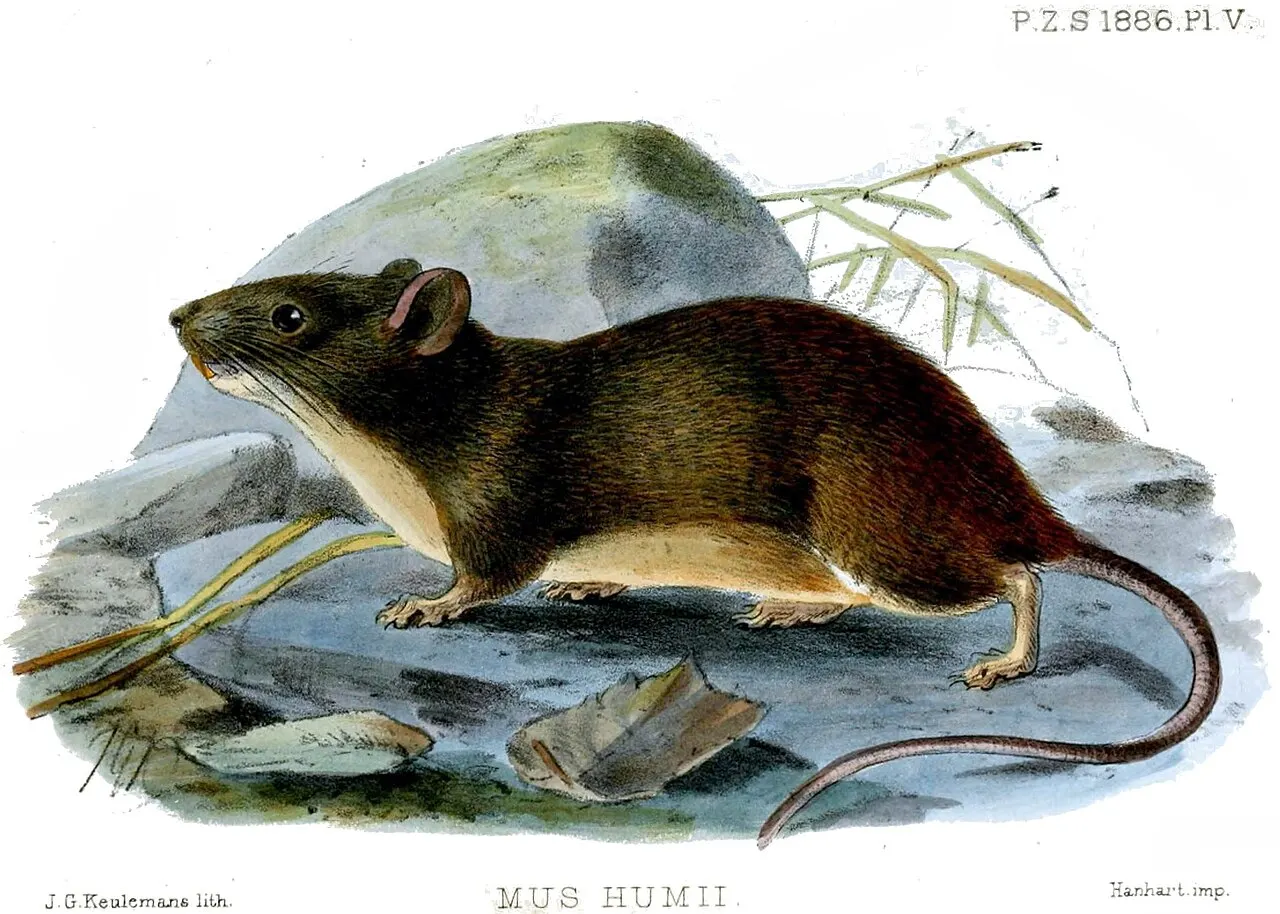
The Manipur bush rat (Hadromys humei) is a small, burrowing rodent known from a few hill localities in northeast India. The IUCN Red List rated it Endangered in 2016. A recent review reports no confirmed wild record since 1945, so it may be lost rather than just rare.
How to recognise it
Oldfield Thomas described the rat in 1886 as grizzled grey above, turning rufous toward the rump, with a yellowish or orange belly. The tail is well haired and two-toned. A striking detail is the short fifth toe on the front foot, which makes the foot look three-toed at first glance.
Head and body reportedly measure roughly 95 to 140 mm, and weight is given as 41 to 77 g. The largest recorded specimen, a female, had a body of 125 mm and a tail of 106 mm. The name honours Allan Octavian Hume, and the species is also called Hume's rat.
Where it lives
The Red List treats it as endemic to India and records it from three locations at about 900 to 1,300 m. Known localities include Moirang, Bishnupur, Imphal, Senapati and Karong in Manipur, plus Angarakhata in Assam, which lies far lower at about 100 to 200 m in the foothills. Thomas described the species from four animals, two males and two females, collected at Moirang in 1881.
The Red List lists moist lowland forest as its habitat. Historical observations in Manipur link it to oak parkland and scrub on dry hills, with tall grass over loose, rocky soil. Other accounts add evergreen and moist deciduous forest, including secondary growth, so the picture is unsettled. Populations from Yunnan, China, were assigned to a separate species, Hadromys yunnanensis, in 1987.
Pins are Wikidata “endemic to” fields. Orange dots, when present, are GBIF occurrence tiles — survey bias included.
How it lives
It is nocturnal and spends much of its time underground, which makes it hard to detect. Earlier observations suggest it feeds mainly on tender shoots and leaves. Little else is documented about its breeding or daily habits.
Pleistocene fossils of the genus are reported from Thailand, and a related species is known from fossils in northern Pakistan, so the rat is considered a probable relict of a once wider group.
Why it is in trouble
The 2016 assessment was made under range-size criteria. It records severe fragmentation, continuing decline in the area occupied, and a decreasing trend. Listed pressures are small-holder farming and use of the animal for food. Fire has reportedly also played a part. No population size is given.
A review in the Journal of Lost Species by Sourav Gupta, Ramie H. Begum, M. Firoz Ahmed and Shyamkant S. Talmale, reported by the news site EastMojo in September 2026, says the last confirmed wild record comes from field work in Manipur in 1945. It found no targeted field surveys since the historical collections, and no genetic study of the rat. The gap between the Manipur and Assam elevations needs investigation, and what is called H. humei may include more than one species.
What is being done
The rat is on Schedule I of India's Wildlife (Protection) Amendment Act, 2022, but it has never been reported from a protected area within its historic range. The Red List names site protection as the action needed.
The review calls for targeted surveys near the old localities, especially Bishnupur and Senapati in Manipur and Angarakhata in Assam, using live traps, pitfall traps, camera traps and night searches, with September to December suggested as the best period. It also calls for a modern revision of the genus, and describes the rat as considered lost but not proven extinct.
Sources
Written for this catalog in our own words from the sources below, checked against them on 12 November 2026. Population figures are estimates and carry the year they were made. Status and assessment year: IUCN. 2026. The IUCN Red List of Threatened Species. Version 2026-1. iucnredlist.org.




