Endangered
Magdalena Rat
Xenomys nelsoni
The Magdalena rat (Xenomys nelsoni) is a nocturnal, tree-climbing rodent found only in the dry forests of Jalisco and Colima on Mexico's Pacific coast. The IUCN Red List rated it Endangered in 2025. It is the only species in its genus, and it is still poorly known.
How to recognise it
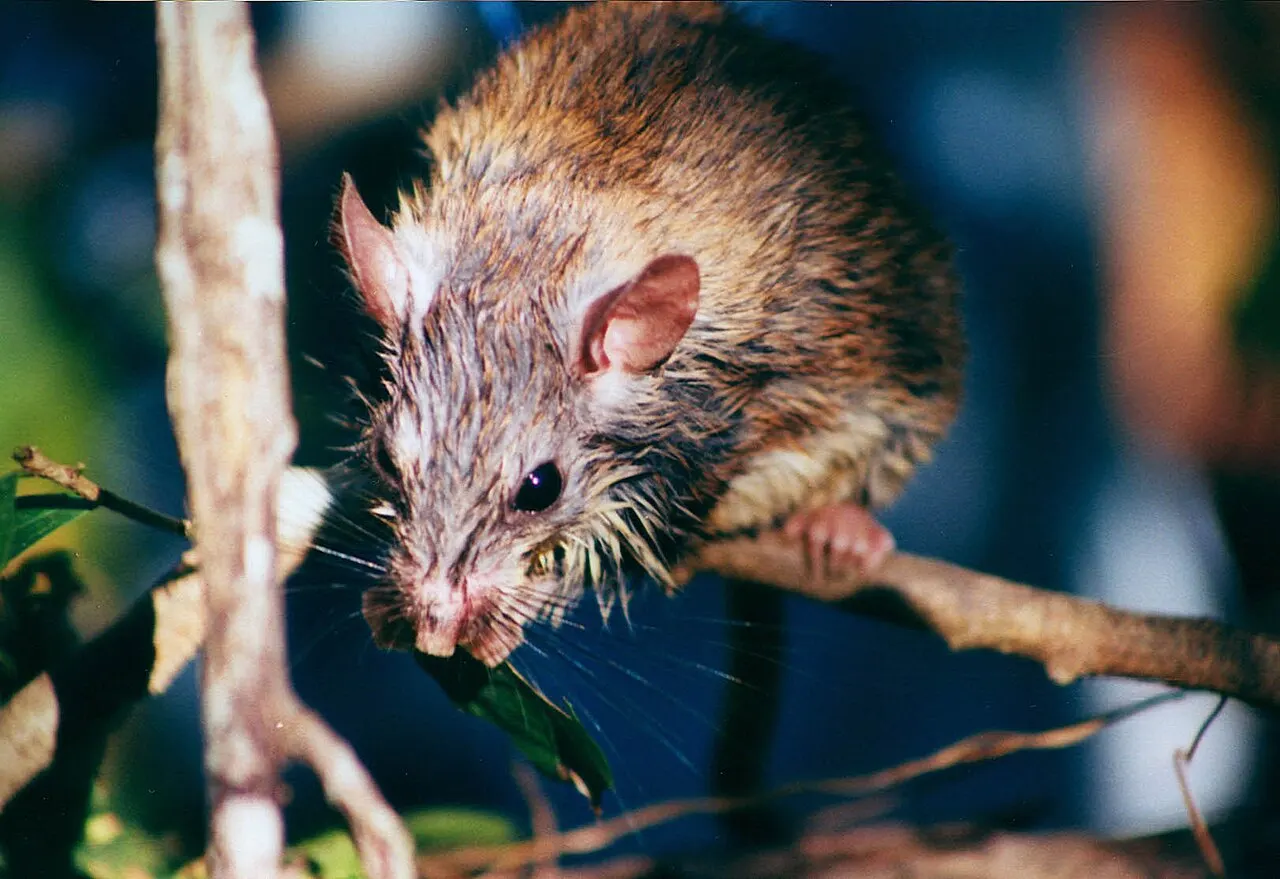
It is a fairly sizeable rodent, reportedly about 30 to 34 cm long including a 14 to 17 cm tail, and averaging roughly 113 g. The fur is cinnamon to yellowish brown above and creamy white below, and the tail is dark brown, scaly and hairy.
White spots over the eyes and behind the ears, plus white fur on the cheeks, are the distinctive markings.
Where it lives
The species is endemic to Mexico. It has only ever been collected in Jalisco and Colima, from sea level up to about 450 m, in tropical dry forest, semi-deciduous forest and thorn forest with a closed canopy and plenty of vines. The IUCN estimates its range at about 5,200 square km and counts two locations.
The first specimen was collected by E. W. Nelson on 21 March 1892 at Hacienda la Magdalena in Colima, a place renamed Pueblo Juarez after the Mexican Revolution. That is where the common name comes from. A 2023 review in Revista de Biologia Tropical tallied 69 specimens and sightings from 26 localities (13 in each state) over 129 years, and the only protected area with records is Chamela-Cuixmala Biosphere Reserve.
Pins are Wikidata “endemic to” fields. Orange dots, when present, are GBIF occurrence tiles — survey bias included.
How it lives
Magdalena rats are arboreal and active at night. They reportedly move along branches and vines, mostly 1 to 4 m off the ground, and sleep by day in round nests of grass and kapok fibre built in tree hollows. They keep latrines in hollows or at branch forks.
Breeding is reported from late May to November, with one or two young at a time. Much else, including home range and social life, has been little studied. The region has a hot, strongly seasonal climate, averaging about 25 C with roughly 890 mm of rain a year and no rain at all in the driest four months.
Why it is in trouble
Mexico's dry forests have shrunk by about 70 percent from their original extent, and their annual deforestation rate is among the highest of any ecosystem in the country. Farming, overgrazing and growing human settlements have replaced much of the forest, and much of the remainder has become citrus, palm and banana plantations. Of the 26 localities with records, 14 no longer have conserved dry forest, including the original Hacienda Magdalena site, now a village of about 2,500 people surrounded by crops.
The 2023 review modelled where the species could live and found that the suitable area shrinks by about half once current land cover is taken into account. The IUCN estimates the population has fallen by around 50 percent in the past, reports a continuing decline, and gives a total of roughly 30,000 animals (an estimate, 2025). Mexico's national list classes it as Threatened.
What is being done
Protection is thin. The 2023 review found only about 1.5 percent of the rat's predicted range lies inside a protected area, and Chamela-Cuixmala is the only reserve with confirmed records. The IUCN says the species occurs in at least one protected area and estimates 11 to 20 percent of the population is covered.
The 2023 review called for more surveys in unexplored forest, including northern Chamela-Cuixmala and parts of coastal Michoacan where the animal might also live, and for new reserves that link the remaining forest patches.
Sources
Written for this catalog in our own words from the sources below, checked against them on 12 November 2026. Population figures are estimates and carry the year they were made. Status and assessment year: IUCN. 2026. The IUCN Red List of Threatened Species. Version 2026-1. iucnredlist.org.




