Critically Endangered
Louisiana pearlshell
Margaritifera hembeli
The Louisiana pearlshell (Margaritifera hembeli) is a small freshwater mussel found only in clear, shallow headwater streams in central Louisiana. The IUCN Red List rated it Critically Endangered in 2012. Its larvae must ride on a host fish, and adults can't cope with silt or damming.
How to recognise it
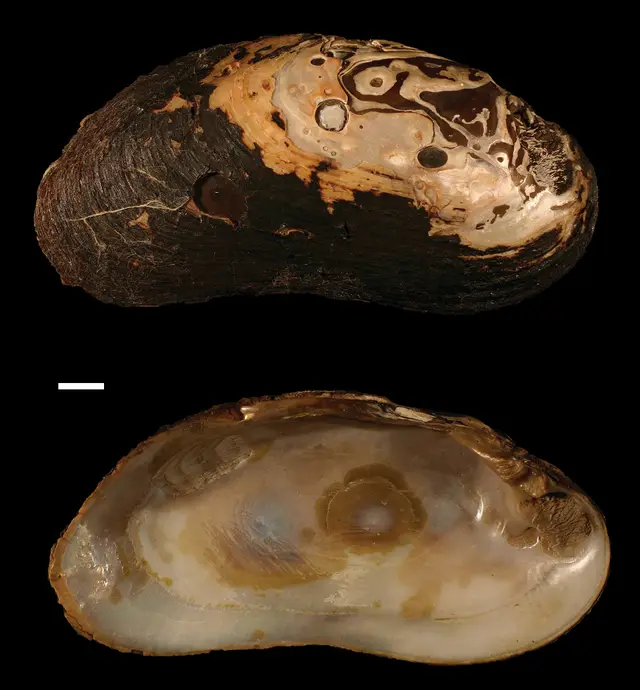
It's an oblong, kidney-shaped mussel. Large adults reach about 10 cm long, 5 cm high and 3 cm wide. The outside is brown to black, and the inside (the nacre) is white to purple and pitted. Males and females look alike.
Where it lives
The species is found only in central Louisiana, in headwater streams across four watersheds in Grant and Rapides parishes. Much of its range lies in Kisatchie National Forest, with some populations on private land. It once also occurred in Arkansas, but it has been lost from every Arkansas waterway.
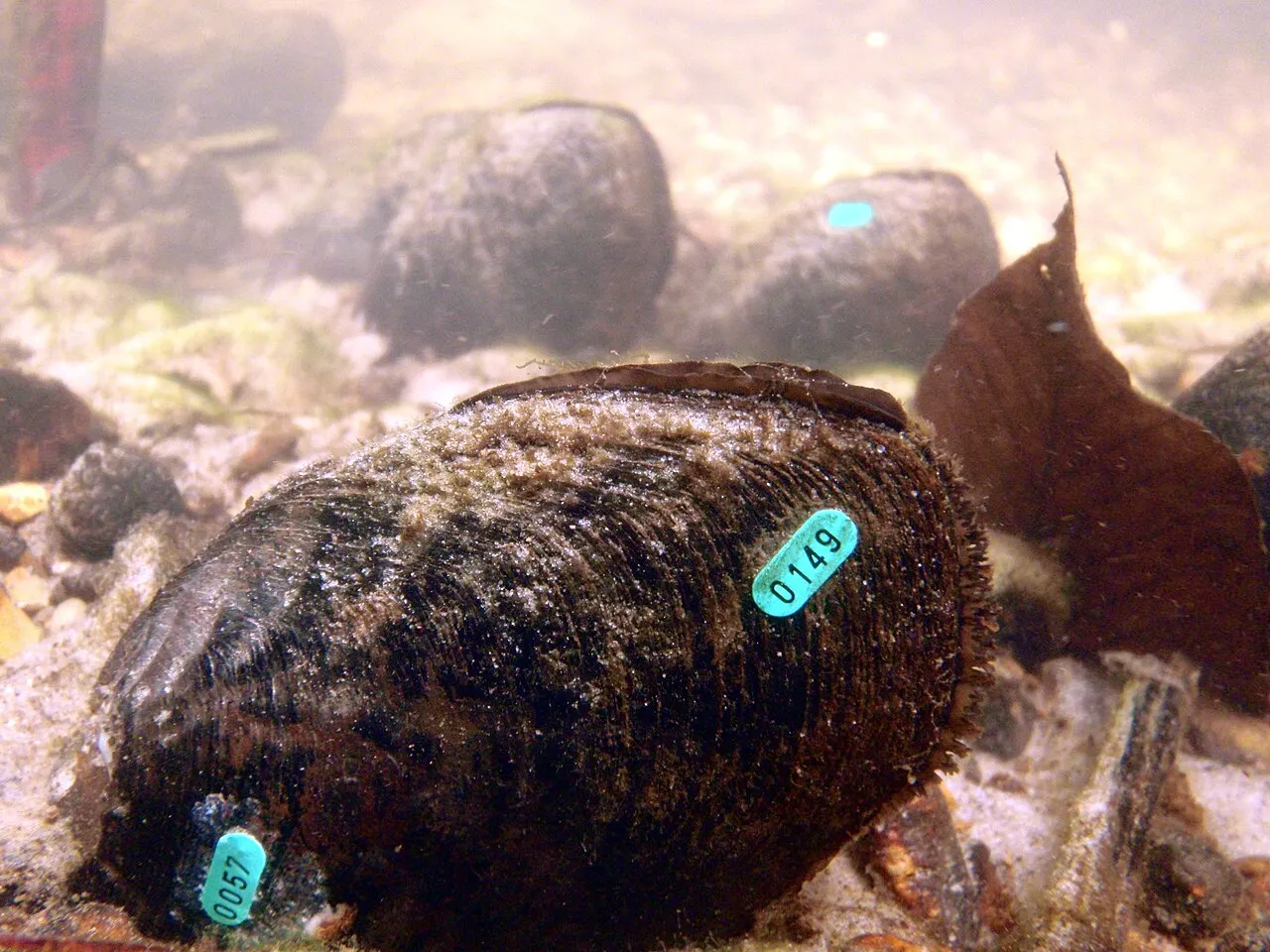
It favours spring-fed, clear, moderately swift streams less than about 5 m wide, with a sandy bed and rocky outcrops. Adults are usually found in shallow water, roughly 30 to 60 cm deep. They are rarely found in deep pools with silty bottoms.
Pins are Wikidata “endemic to” fields. Orange dots, when present, are GBIF occurrence tiles — survey bias included.
How it lives
Like other freshwater mussels, it feeds by drawing water over its gills and filtering out food such as diatoms, algae, detritus and bacteria. Females brood their young on the gills and release tiny larvae called glochidia, which must attach to a host fish quickly or die. Metamorphosis on the fish takes about a month. The young mussel then settles on the streambed and can crawl with its foot if it lands somewhere unsuitable.
Host fish have been hard to pin down. Striped shiner, redfin shiner, golden shiner and brown madtom have been reported as hosts, based on larvae found on wild-caught fish. Only the grass pickerel is documented as a host that produces juveniles in captivity. Age at maturity is uncertain, with recent literature pointing to about 5 years. Freshwater mussels in general can live 50 years or more.
Why it is in trouble
Mussels that stay in one stretch of stream for life can't flee bad conditions. Silt from logging, road maintenance and grazing smothers the bed. Dams, including beaver dams, flood the shallow flowing habitat it needs. In the early 1980s a beaver dam reportedly flooded a stretch of stream and wiped out a large population. A genetic study also found low variation in the species, which may leave it less able to adapt to change.
The IUCN assessment lists mining and quarrying, sedimentation and dams as ongoing threats, and records a decreasing population. It puts the global population at about 10,000 mussels in two locations. That figure matches a 1985 estimate, so it is old.
What is being done
The US listed the mussel as endangered in 1988 and moved it down to threatened in 1993. A recovery plan was completed in 1990, and new populations and much higher numbers have been found since. A status assessment was completed in 2019. The IUCN notes a recovery plan, a monitoring scheme and conservation sites identified across the whole range.
Kisatchie National Forest controls beavers and sets streamside buffers to cut silt from logging. The Forest Service and the Air Force must formally consult the US Fish and Wildlife Service before actions that could harm the species or its habitat. The Natchitoches National Fish Hatchery has also estimated the wild breeding season from observations of females.
Sources
Written for this catalog in our own words from the sources below, checked against them on 12 November 2026. Population figures are estimates and carry the year they were made. Status and assessment year: IUCN. 2026. The IUCN Red List of Threatened Species. Version 2026-1. iucnredlist.org.