Critically Endangered
Lobocheilos lehat
Lobocheilos lehat
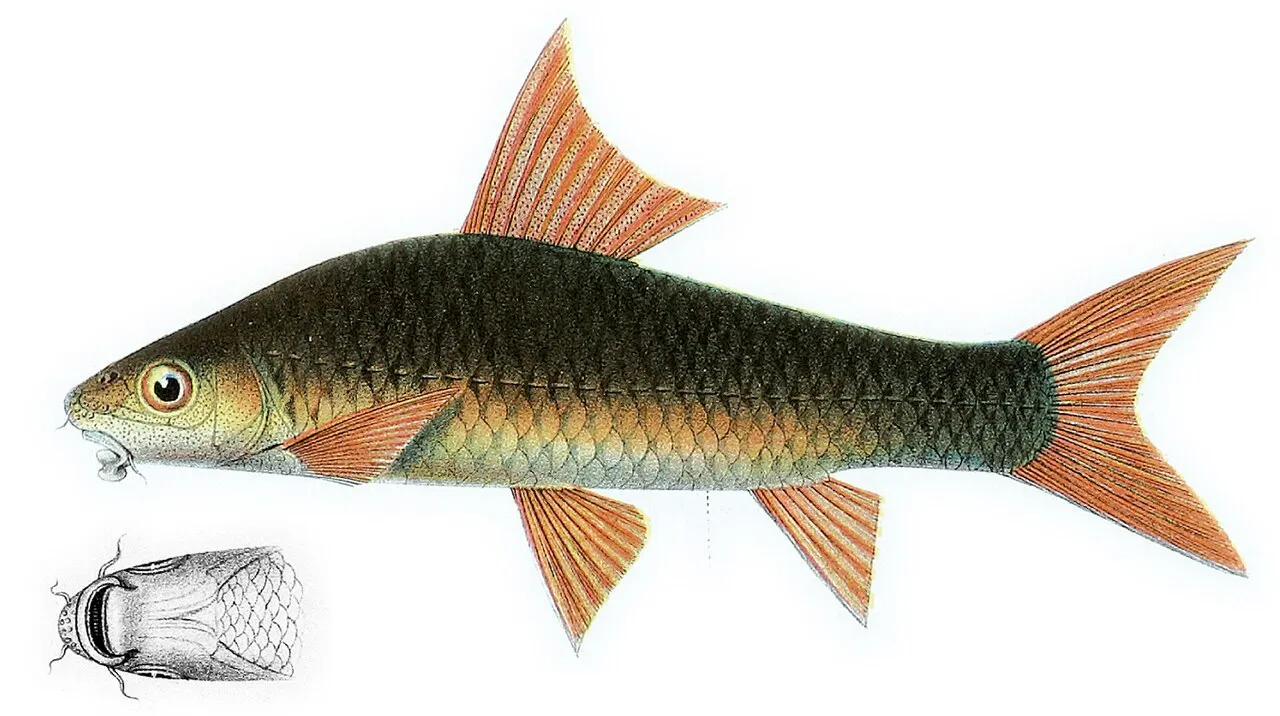
Lobocheilos lehat is a freshwater carp relative known only from Java, Indonesia, where it was described in 1858. The IUCN Red List rated it Critically Endangered (Possibly Extinct) in 2020. It has not been recorded since its original discovery, so nobody can say whether any survive.
How to recognise it
It belongs to the carp family (Cyprinidae) and to Lobocheilos, a group of Asian river fishes. The largest recorded length is 22.5 cm. FishBase lists 4.5 scale rows between the lateral line and the start of the dorsal fin, and 12 scales around the narrow part of the tail. It carries 4 barbels, the whisker-like feelers near the mouth.
The Dutch naturalist Pieter Bleeker described it in 1858. A 2008 synopsis of the genus in Java, Sumatra and Borneo by Kottelat and Tan is the main reference FishBase cites for the species.
Where it lives
Java is the only place it has been reported. The Red List treats Indonesia as its only country and lists the fish as possibly extinct there. Its habitat is permanent rivers and streams. Very little else about its biology has been written down.
Pins are Wikidata “endemic to” fields. Orange dots, when present, are GBIF occurrence tiles — survey bias included.
Why it is in trouble
Java is heavily populated, and its streams take the strain. The Red List assessment lists housing and urban areas, commercial and industrial development, small-holder farming, sewage, herbicides and pesticides, and soil erosion and silt as ongoing threats. Several are rated as causing rapid declines.
The assessment gives a population size of 0 to 50 and a decreasing trend. That range reflects how little is known as much as any count. The fish qualifies as Critically Endangered under criterion D, which covers very small populations.
What is being done
The assessment records no conservation actions in place. The research it lists as needed covers population size, distribution and trends, and taxonomy. Until living fish are found in a Javan river, there is no known population to protect.
Sources
Written for this catalog in our own words from the sources below, checked against them on 12 November 2026. Population figures are estimates and carry the year they were made. Status and assessment year: IUCN. 2026. The IUCN Red List of Threatened Species. Version 2026-1. iucnredlist.org.




