Endangered
Little Colorado spinedace
Lepidomeda vittata
The Little Colorado spinedace (Lepidomeda vittata) is a silvery minnow under 10 cm long that lives only in a few clear streams of eastern Arizona. The IUCN Red List rated it Endangered in 2014. Its streams are drying and filling with introduced fish, and the surviving groups are small and scattered.
How to recognise it
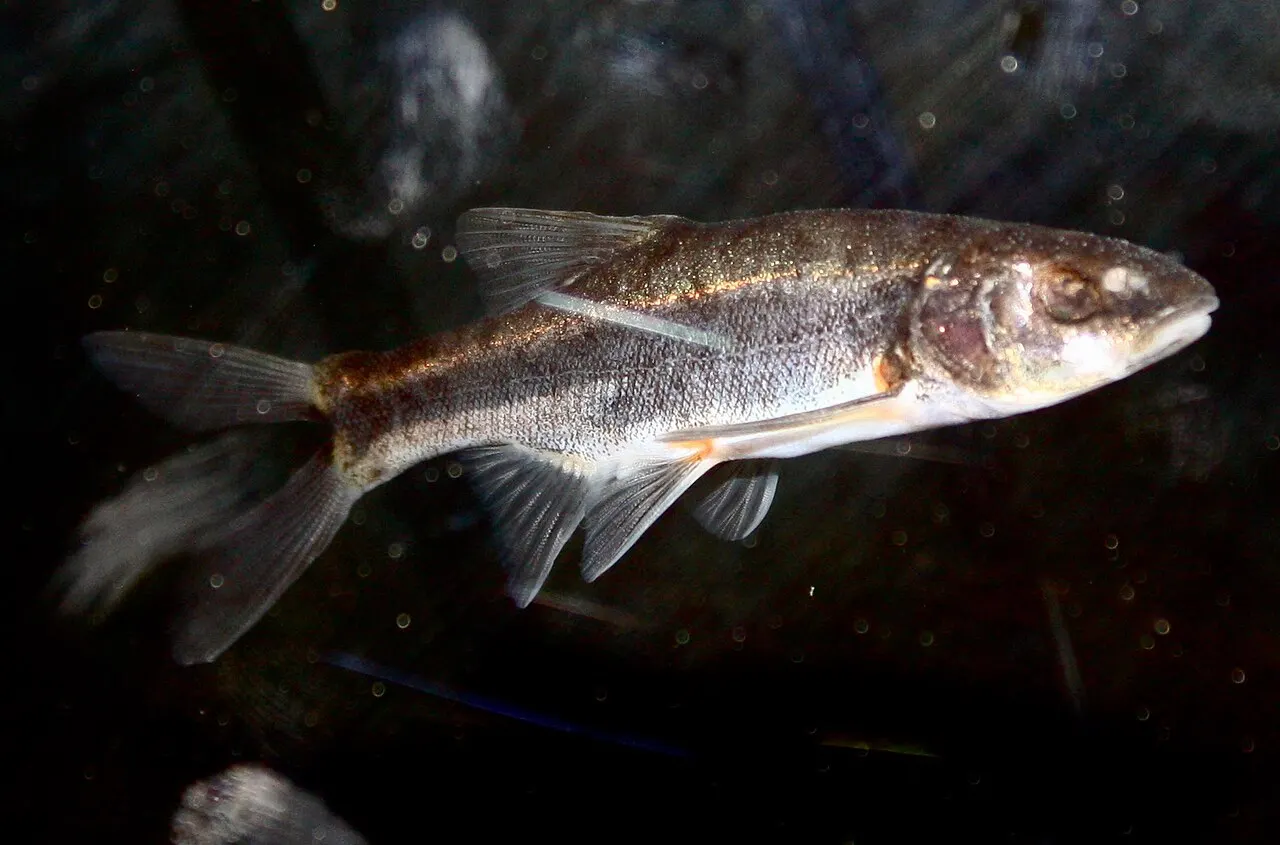
This is a small minnow, usually under 10 cm long. The sides are silvery, the back olive, bluish or lead grey, and the belly sometimes white. The second spine of the dorsal fin is strong, which sets it apart from other spinedaces. It typically has more than 90 scales along the lateral line and eight anal fin rays.
In the breeding season males get a watery yellow to red-orange flush at the base of the paired fins and on parts of the belly.
Where it lives
Edward Cope described the species in 1874 from the Little Colorado River in Apache County, Arizona. It is found nowhere else: the Little Colorado River and its north-flowing tributaries in Coconino, Navajo and Apache counties, at about 1,000 to 3,000 m. Old records from the Zuni River watershed in New Mexico are possible but unproven.
It disappeared from much of its former range, with many losses between 1939 and 1960, and it is considered gone from Silver Creek and its tributaries. Today it survives in separate pockets in the East Clear Creek watershed, Chevelon Creek and the headwaters of the Little Colorado River, including Nutrioso and Rudd creeks.
Pins are Wikidata “endemic to” fields. Orange dots, when present, are GBIF occurrence tiles — survey bias included.
How it lives
Spinedace favour clear pools with slow to moderate current, fine gravel, and rocks or undercut banks for cover. They are found in water 0.16 to 1.3 m deep, most often around 0.6 m, where temperatures run from roughly 14 to 26 degrees Celsius. They avoid deep, heavily shaded pools and open shallows, while young fish gather in turbulent riffles 10 to 25 cm deep.
Adults are omnivores, eating midge and other fly larvae, filamentous algae and small crustaceans, and they switch foods as supply changes. They spawn heavily in early summer and off and on until early autumn, scattering 650 to 5,000 eggs over the bottom, plants or debris. They tolerate big daily swings in pH, dissolved gases and temperature. Numbers change sharply from year to year, probably with drought and rainfall.
Why it is in trouble
Water is the heart of it. Surface and groundwater pumping, drought and climate change shrink perennial flows. A 2019 draft recovery plan amendment cites a 2005 modelling estimate that, with current regional pumping, base flow in lower Chevelon Creek would fall to zero in 60 years. It adds that the strongest spinedace population left in that creek lies in the stretch expected to lose surface water.
Introduced fish add pressure. Rainbow trout and green sunfish prey on spinedace, and non-native crayfish compete with them. High-severity wildfire and damage to headwater meadows by hoofed animals are further risks. The Nutrioso Creek population was described in 2019 as vulnerable and in need of immediate management because of non-native fish and habitat loss tied to water management.
What is being done
The US Fish and Wildlife Service listed the spinedace as threatened, with critical habitat, in 1987, and a recovery plan was approved in 1998. Arizona Game and Fish stocked spinedace into Willow Creek and three side canyons from 2013 to 2018, and further sites have been picked for translocation. National forest managers have run projects to cut wildfire risk and closed some roads in the East Clear Creek watershed.
The state wildlife agency also owns and manages some key stretches, including the lower reach of Chevelon Creek. Recovery criteria call for at least five viable populations in each of three genetic lineages, 15 in all, and for a refuge population for each lineage. The state's abstract counted six or seven viable populations.
Sources
Written for this catalog in our own words from the sources below, checked against them on 12 November 2026. Population figures are estimates and carry the year they were made. Status and assessment year: IUCN. 2026. The IUCN Red List of Threatened Species. Version 2026-1. iucnredlist.org.




