Critically Endangered
Liparia
Alosa macedonica
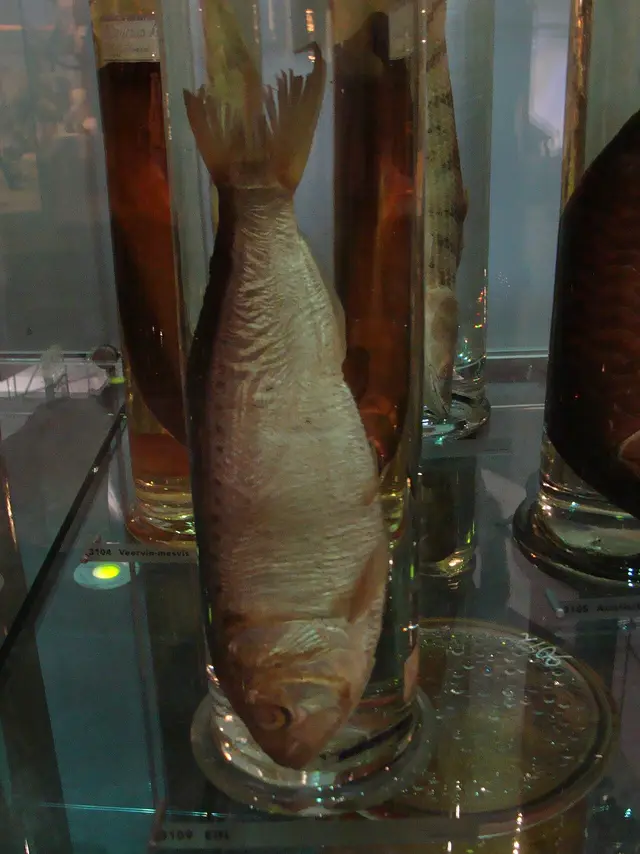
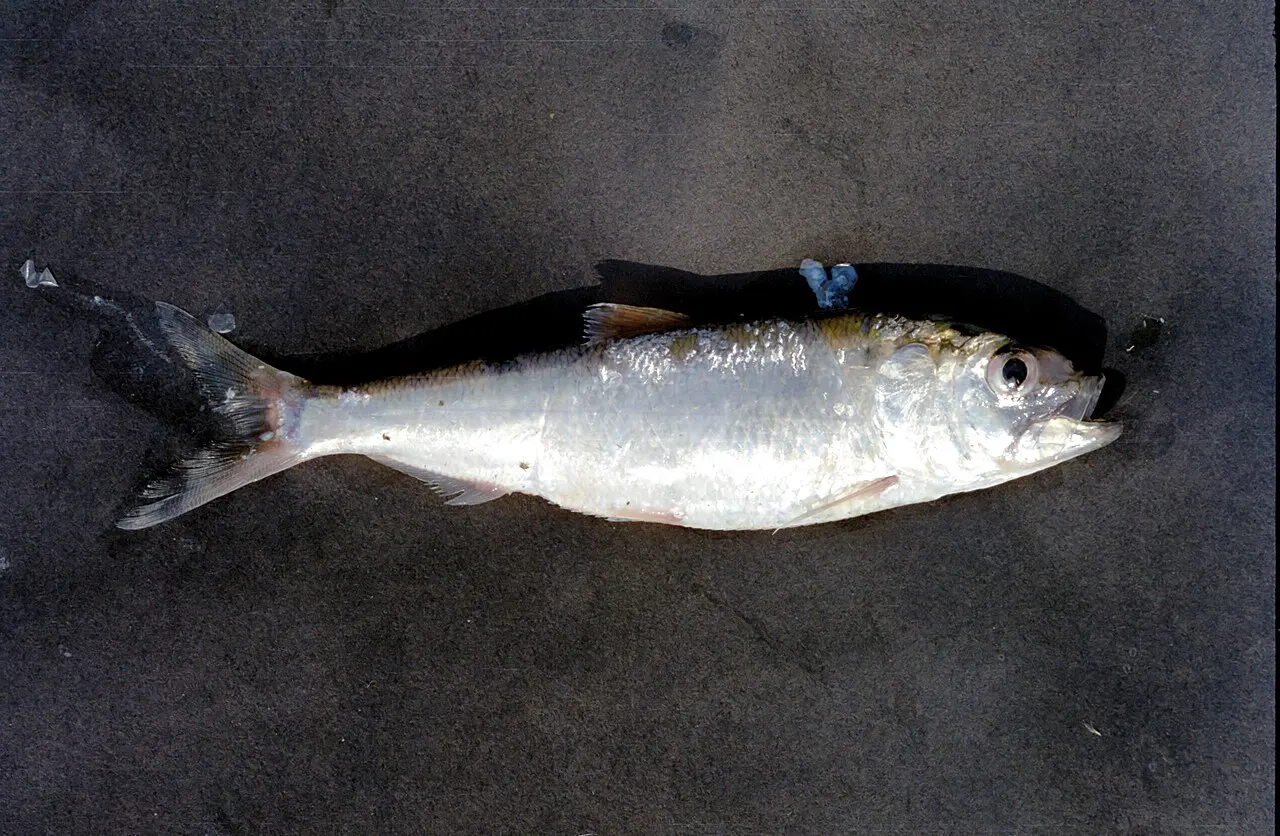
The Macedonian shad, or liparia (Alosa macedonica), is a small landlocked shad that lives in just one lake in northern Greece, Lake Volvi, and spends its whole life in fresh water. The IUCN Red List rated it Critically Endangered in 2024, with a single location, a shrinking habitat and an unknown population trend.
How to recognise it
It's a small relative of the herrings. Most fish measure about 18 to 23 cm, though a maximum of 35 cm (fork length) has been reported. In a 1995 to 1996 study of the Lake Volvi population, Platon Kleanthidis found that females outgrew males after age 2. The largest fish he sampled was a 6-year-old female of about 21 cm.
Fish biologists separate shads by counting. This species has 106 to 128 gill rakers, and it has teeth on two bones in the roof of the mouth, the palatine and the vomer.
Where it lives
The only confirmed population is in Lake Volvi, in the Mygdonia basin of northern Greece. Decio Vinciguerra described the fish in 1921 from this lake, which was then called Lake Besikia. A claim that it also lived in neighbouring Lake Koronia has never been confirmed. Koronia dried out in the 1990s, and any fish there went with it.
The Red List counts Volvi as a single location. It also records the whole population as sitting inside protected areas, with 91 to 100 percent of it covered.
Pins are Wikidata “endemic to” fields. Orange dots, when present, are GBIF occurrence tiles — survey bias included.
How it lives
It's a fish of open water. In summer it schools in the warm upper layers and gathers in shallow water near shore, and in winter it moves to deeper water. Zooplankton, mostly copepods and water fleas, make up most of its diet. Bigger fish also take insect larvae and small fish, including a goby and a bitterling.
Spawning runs from mid-June to mid-August, starting once the water reaches about 19 to 20 degrees C. Females in the 1995 to 1996 study carried between roughly 5,000 and 61,000 eggs each. Eggs are shed in batches near the shore over gravel or coarse sand. Fish in the study matured at age 1, and growth was slow, which Kleanthidis linked to crowding and competition for food.
Why it is in trouble
A species that lives in one lake has little margin. The Red List names several pressures that apply across the whole lake: invasive pumpkinseed sunfish, Prussian carp and common carp, falling water levels from groundwater pumping for farms and households, and pesticide and herbicide runoff. Other changes to the lake add to this, and the area of suitable habitat is still shrinking.
The population trend is listed as unknown. The fishery is small and of low commercial value, and the 1995 to 1996 study judged the stock under-fished, so catching the fish doesn't seem to be the problem.
What is being done
The lake lies inside protected areas, and the Red List lists site and area management among the conservation actions. But it also records no recovery plan, no systematic monitoring scheme, no captive population and no programme to control invasive species. Those are the obvious gaps.
Sources
Written for this catalog in our own words from the sources below, checked against them on 12 November 2026. Population figures are estimates and carry the year they were made. Status and assessment year: IUCN. 2026. The IUCN Red List of Threatened Species. Version 2026-1. iucnredlist.org.