Critically Endangered
Limia sulphurophila
Limia sulphurophila
The sulphur limia (Limia sulphurophila) is a small livebearing fish known only from springs in the Lake Enriquillo basin of the Dominican Republic. The IUCN Red List assessed it as Critically Endangered in 2021, with an unknown population trend. Its name means sulphur-loving, after the spring where it was first collected.
How to recognise it
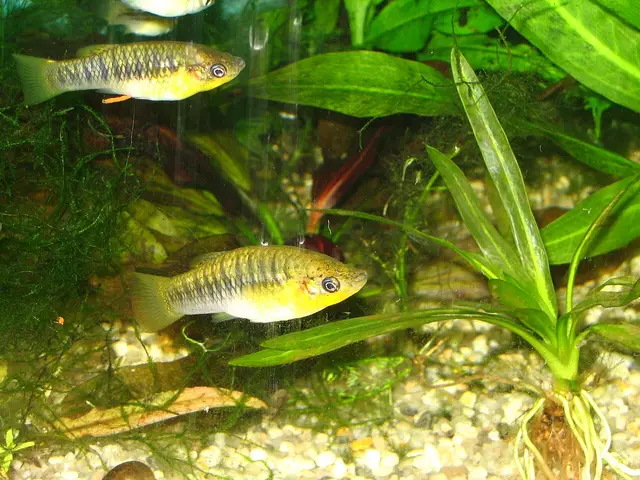
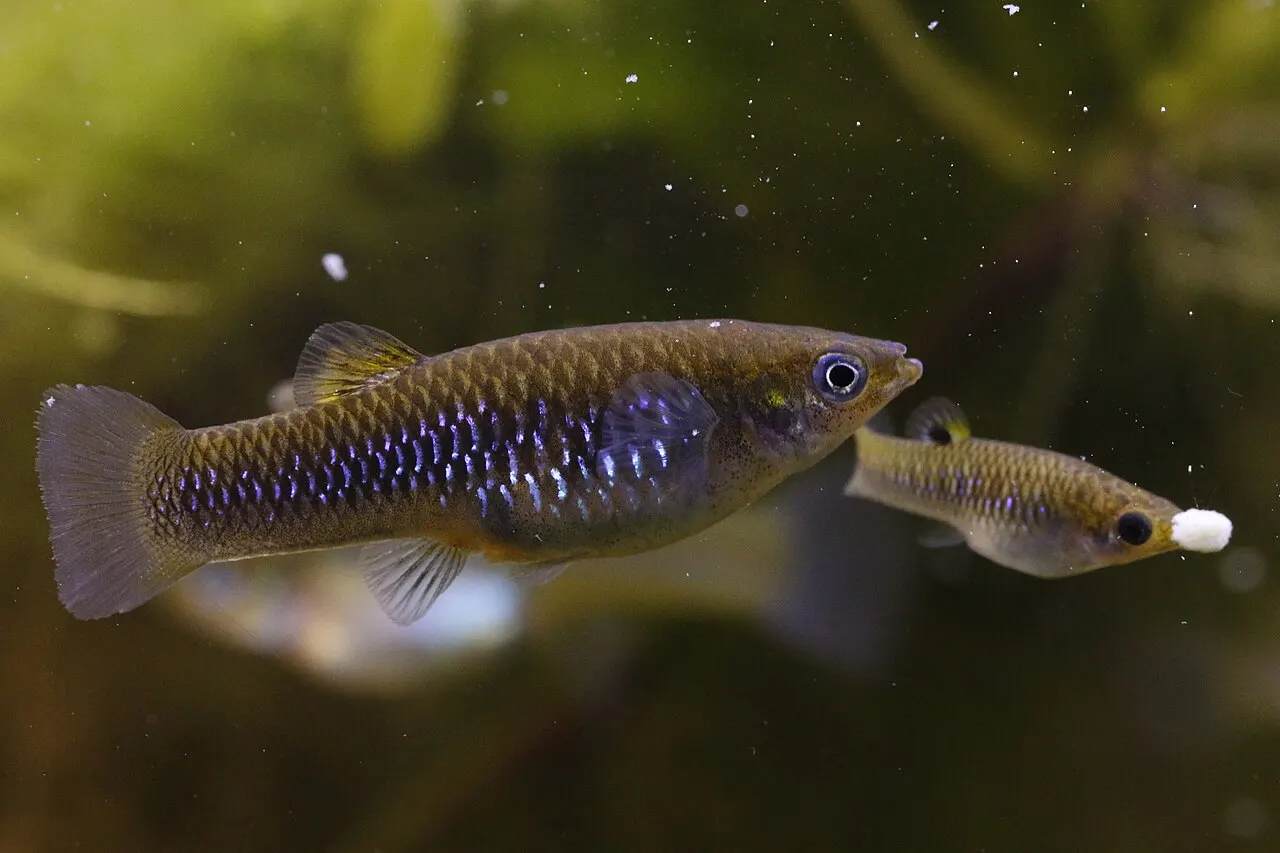
Adults and juveniles are pale brown, darker on the back and pale grey on the belly. A broad black band runs along each side from the pectoral fins to the tail, and bluish-purple scales glint here and there along the flanks.
Females and young fish usually have a round black spot at the base of the dorsal fin, though it often fades or disappears in older animals. Males carry a gonopodium, the modified anal fin that livebearers use to mate, and adult males typically develop a yellow to orange dorsal fin, with orange sometimes spreading to the tail and the front of the belly.
The tail fin is broadly rounded. That shape separates it from a close relative, Limia melanonotata, which shares some of its waters.
Where it lives
The species was described in 1980 from a specimen collected in 1978 at a sulphur spring at Balneario La Zurza, about 5 km west-northwest of Duverge in Independencia Province. Fish matching the description have since been recorded from several springs in the Lake Enriquillo basin, although how those populations relate to each other still needs study.
It lives in lowland freshwater karst springs. The water there is hard and alkaline, rich in carbonate salts, and the bottom is sandy to gravelly, sometimes covered in algae and aquatic plants.
The IUCN puts the area it actually occupies at about 4 square km, within a range of roughly 12 square km, spread over one to three locations. Its habitat is listed as freshwater springs and oases.
Pins are Wikidata “endemic to” fields. Orange dots, when present, are GBIF occurrence tiles — survey bias included.
Why it is in trouble
A fish confined to a few springs has little room for error. The Red List names soil erosion and sedimentation, small-holder farming and grazing, and tourism and recreation areas among the ongoing pressures. Storms and flooding are also listed, with the assessment judging them to affect the whole range. Small-scale harvest that catches the fish unintentionally is another listed threat.
The assessment records a continuing decline in the area the fish occupies. It does not give a population size, and the trend in numbers is unknown, so nobody can say how many are left.
What is being done
Very little is in place yet. The 2021 assessment records no recovery plan, no monitoring scheme and no captive population, and it is unknown whether any of its springs lie inside a protected area. Site protection and captive breeding are the two conservation actions the assessment lists as needed.
Sources
Written for this catalog in our own words from the sources below, checked against them on 12 November 2026. Population figures are estimates and carry the year they were made. Status and assessment year: IUCN. 2026. The IUCN Red List of Threatened Species. Version 2026-1. iucnredlist.org.