Endangered
Lestoidea lewisiana
Lestoidea lewisiana
The Mount Lewis bluestreak (Lestoidea lewisiana) is a dark damselfly of rainforest streams, known only from Mount Lewis in far north Queensland, Australia. The IUCN assessed it as Endangered in 2017 because of its tiny range, listing fire, tourism and development among the threats.
How to recognise it
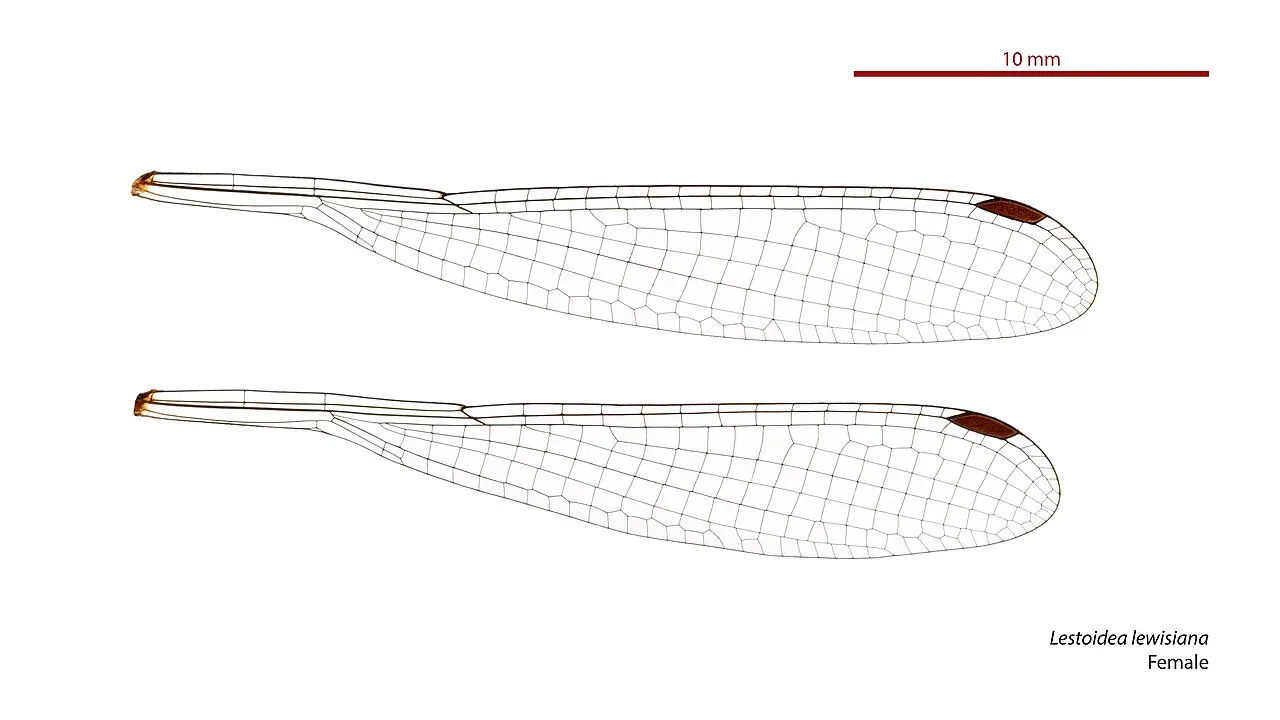
It is a medium to large damselfly, dark brown to black with dull orange to greenish markings. Most of its relatives in the genus have a pale spot at the base of each antenna, but this species lacks it. Theischinger separated it from its relatives by the shape of the male appendages at the tip of the abdomen and by the structure of the female thorax behind the head.
Where it lives
Its distribution is very restricted: it is known only from Mount Lewis in north-east Queensland, where it lives along rainforest streams. The IUCN counts 2 to 4 locations, treats its range as restricted, and lists moist forest and permanent rivers and streams as its habitats.
Mount Lewis National Park, a 278.6 square kilometre reserve near Julatten in Far North Queensland, takes its name from the mountain and lies partly in the Wet Tropics bioregion.
Pins are Wikidata “endemic to” fields. Orange dots, when present, are GBIF occurrence tiles — survey bias included.
How it lives
Little has been published about this species itself. The four species in the genus Lestoidea are all confined to north-east Queensland and live in rainforest streams, and the larvae of the genus are flat-bodied with sac-like gills at the tail end.
Why it is in trouble
The species was only recognised in 1996, when Gunther Theischinger described it during a revision of the genus. Before that, specimens from Mount Lewis were generally identified as the common bluestreak, Lestoidea conjuncta. All of its known range is a single mountain.
The IUCN lists increasing fire frequency or intensity, tourism and recreation areas, housing and urban areas, and habitat shifting and alteration as threats, along with one threat of unknown motivation. The population trend is unknown. No conservation actions are listed for the species.
Sources
Written for this catalog in our own words from the sources below, checked against them on 12 November 2026. Population figures are estimates and carry the year they were made. Status and assessment year: IUCN. 2026. The IUCN Red List of Threatened Species. Version 2026-1. iucnredlist.org.




