Endangered
Broadfin shark
Lamiopsis temminckii
The broadfin shark (Lamiopsis temminckii) is a coastal requiem shark of the northern Indian Ocean, named for its broad pectoral fins. It is caught as bycatch and for meat, liver oil and fins. The IUCN Red List assessed it as Endangered in 2021, with a decreasing population.
How to recognise it
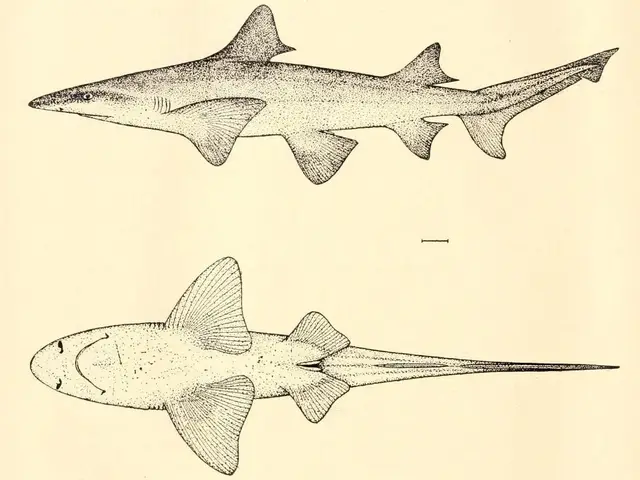
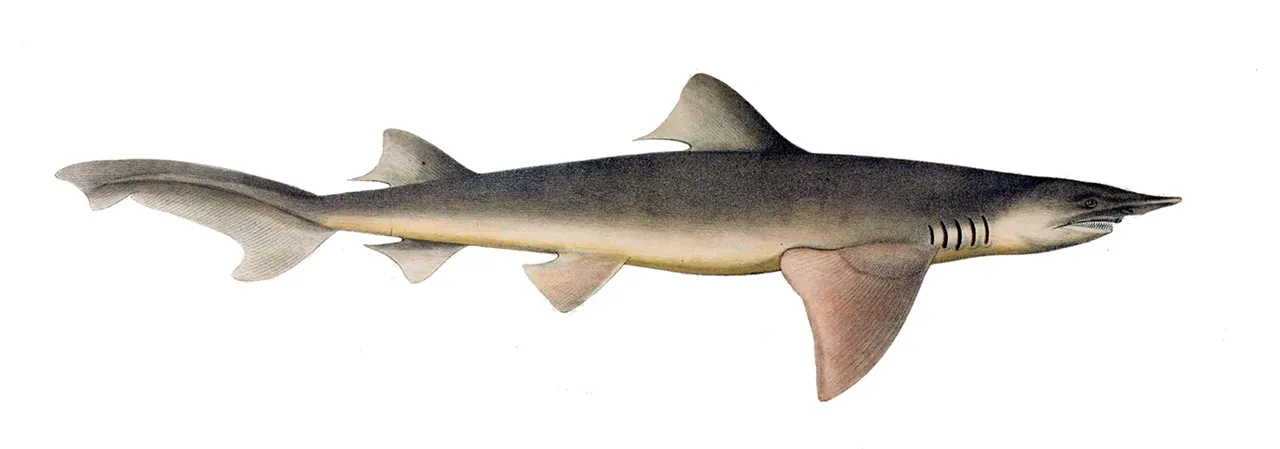
It is a medium-sized whaler shark, grey or yellowish-grey above and paler below, with no conspicuous markings. The pectoral fins are broad, which gives the species its name. Females grow larger than males. FishBase gives a maximum of about 208 cm for females and 160 cm for males, while some accounts put the female maximum nearer 175 cm.
Müller and Henle described it in 1839, and it honours Coenraad Temminck, director of the natural history museum in Leiden. Only one other species is placed in its genus, the Borneo broadfin shark (Lamiopsis tephrodes).
Where it lives
The IUCN lists the shark as present in India, Pakistan, Bangladesh and Myanmar, with presence in Thailand and Indonesia uncertain. It stays in shallow inshore water, down to about 50 m, over sandy, sandy-mud and muddy bottoms and in estuaries. It is recorded from the Bay of Bengal off Bangladesh.
Older books and websites place it across the Indo-West Pacific, with records from Sarawak, Indonesia and China. A 2016 redescription in Zootaxa, based on specimens from the northeastern Arabian Sea, reports that the western Pacific populations had been found to be a separate species and that the true broadfin shark is restricted to the northern Indian Ocean. FishBase notes that L. tephrodes was resurrected from synonymy.
Pins are Wikidata “endemic to” fields. Orange dots, when present, are GBIF occurrence tiles — survey bias included.
How it lives
It gives birth to live young. FishBase reports litters of 4 to 8 pups after a gestation of roughly 8 months, and newborns measure about 40 to 65 cm. Births are most common between March and September. A study of 214 stomachs found crustaceans the commonest food, followed by bony fish and cephalopods. The IUCN puts a generation at about 6.5 years.
It is a little-known inshore shark and is not known to be dangerous to people.
Why it is in trouble
The main threat is fishing. The IUCN scores unintended catch by small-scale and subsistence fishers as the biggest pressure, affecting more than 90 percent of the range, and unintended catch by large-scale fisheries as affecting most of it. Both cause slow, significant declines, and the IUCN estimates a past reduction of 50 to 79 percent, based on levels of exploitation. The meat is eaten fresh or dried and salted, the liver goes into oil, and fins reportedly enter the shark fin trade. Coastal housing and industrial development add smaller pressure.
The shark was once common off Indonesia, in the Arabian Sea and off India's west coast, and has declined. Juveniles are reportedly taken in numbers in late summer, when births overlap with seasonal closures of mechanised fishing.
Because the two broadfin species were long treated as one, older catch records and population figures may mix them. Some references still say the assessment needs revision after the split. The IUCN has since published separate 2021 assessments for the two species, both Endangered.
What is being done
Little targeted protection exists. The IUCN records no recovery plan, no monitoring scheme and no identified conservation sites. It lists harvest and trade management, site protection, national-level policies and species recovery as actions needed, and calls for research on population trends, harvest levels, life history and fishing livelihoods. FishBase lists the species on CITES Appendix II, although the IUCN assessment records no international trade controls.
Sources
Written for this catalog in our own words from the sources below, checked against them on 12 November 2026. Population figures are estimates and carry the year they were made. Status and assessment year: IUCN. 2026. The IUCN Red List of Threatened Species. Version 2026-1. iucnredlist.org.