Critically Endangered
Kampango
Bagrus meridionalis
The kampango (Bagrus meridionalis) is a large predatory catfish found only in Lake Malawi, Lake Malombe and the upper Shire River in southeast Africa. It is prized as food. The IUCN Red List rated it Critically Endangered in 2019 after catch rates in the southern lake fell by more than 90 percent in ten years.
How to recognise it
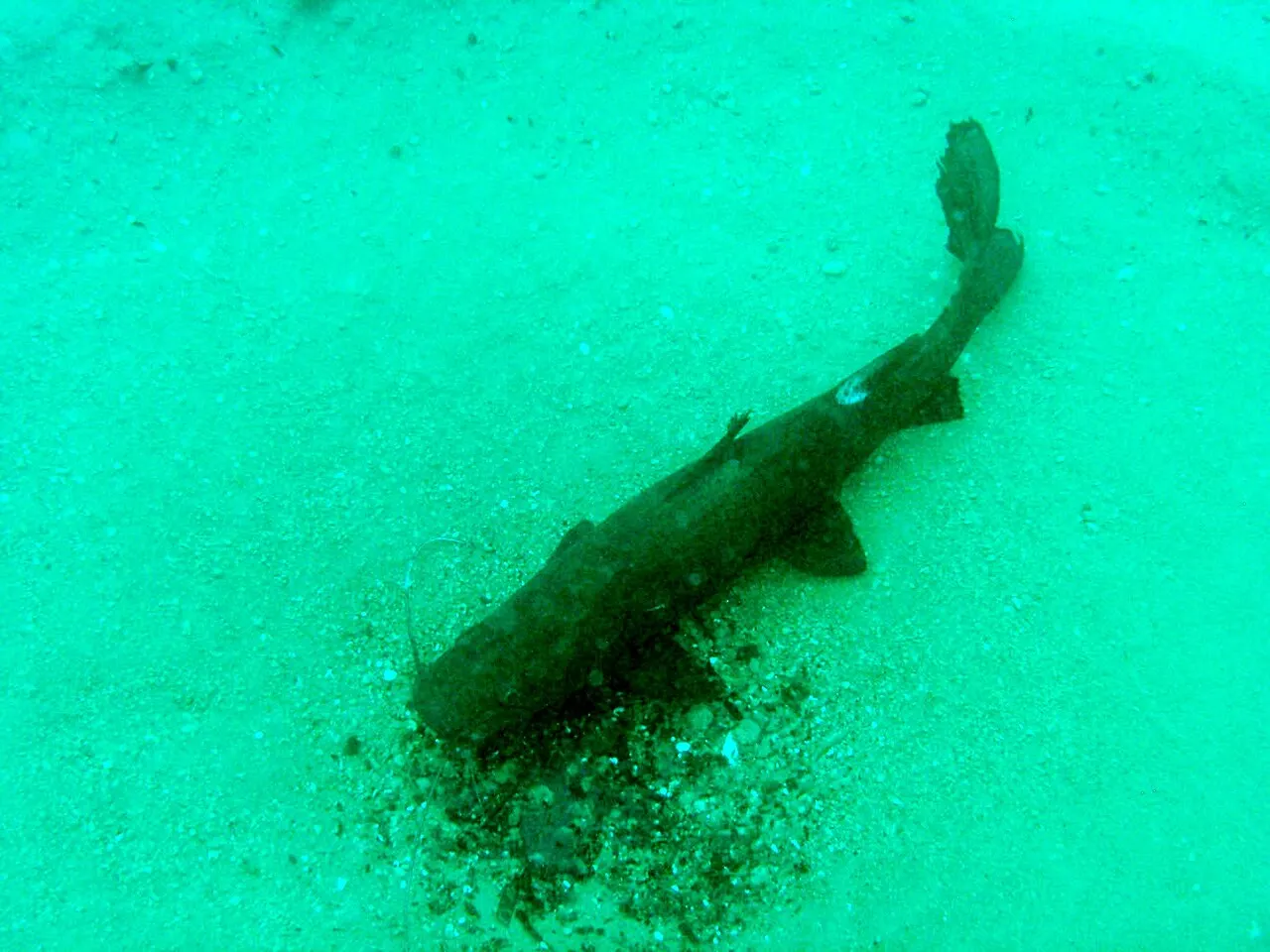
Adults are blackish, while young fish are grey with dark spots. It is among the biggest fish in the Lake Malawi basin. The IUCN gives a maximum of 100 cm, while FishBase lists up to 150 cm and a top published weight of 9.5 kg. A common adult length is about 42 cm, and females tend to be larger than males.
It is a bagrid catfish, described by Albert Günther in 1894.
Where it lives
The kampango is native to Lake Malawi, the nearby Lake Malombe and the upper Shire River. The IUCN lists it as present in Malawi, Mozambique and Tanzania. It prefers rocky ground in water shallower than 50 m, but it occurs over sand and mud too, and as deep as the lake has enough oxygen. Juveniles have rarely been recorded in the lower Shire River.
Pins are Wikidata “endemic to” fields. Orange dots, when present, are GBIF occurrence tiles — survey bias included.
How it lives
By day it hides in caves among the rocks. It hunts around dusk and dawn, mostly taking small bottom-dwelling cichlids. Breeding runs through the year with a peak from December to March.
The male digs a shallow nest in the sand, often near rocks, and the female lays several thousand eggs. Both parents guard the eggs and young, though sources differ on how the work is split. Newly hatched young eat unfertilised eggs the female provides, plus invertebrates found around the nest. They stay guarded until about 12 cm, and many are taken by egg-eating and fry-eating cichlids before then.
It has odd relationships with other fish. Some cichlids release their own young among the kampango's brood, and the combined guard seems to improve survival. A small cichlid, Pseudotropheus crabro, picks parasites and dead tissue off the catfish. Another catfish, Bathyclarias nyasensis, slips its eggs into kampango nests, and its young are raised by the kampango parents.
Why it is in trouble
Fishing is the main cause. The kampango was once one of the most widespread and common fish in its range, and it is highly prized as food. It is caught mostly on lines, and also in nets, in deep water near places such as Cape Maclear, Salima and Nkhata Bay. The IUCN also notes gill nets, longlines and bottom trawling in the southern lake, and a newer, expanding fishery in Mozambique.
Catch rates in the southern lake fell from 20 kg per boat per day in 2006 to 1.8 kg in 2016, and the IUCN estimates a population reduction of about 90% over that decade. Similar declines are recorded in Mozambique. The IUCN says the population is still declining and lists small-scale and large-scale harvest as the only threats. It matures at about three years of age, though some estimates say four.
What is being done
The IUCN reports no targeted conservation actions for the kampango and recommends harvest management and monitoring of population trends. The species occurs in at least one protected area, but only an estimated 1 to 10 percent of the population falls inside one. The assessment rates the cause of the decline as reversible.
Sources
Written for this catalog in our own words from the sources below, checked against them on 12 November 2026. Population figures are estimates and carry the year they were made. Status and assessment year: IUCN. 2026. The IUCN Red List of Threatened Species. Version 2026-1. iucnredlist.org.




