Endangered
Japanese topeshark
Hemitriakis japanica
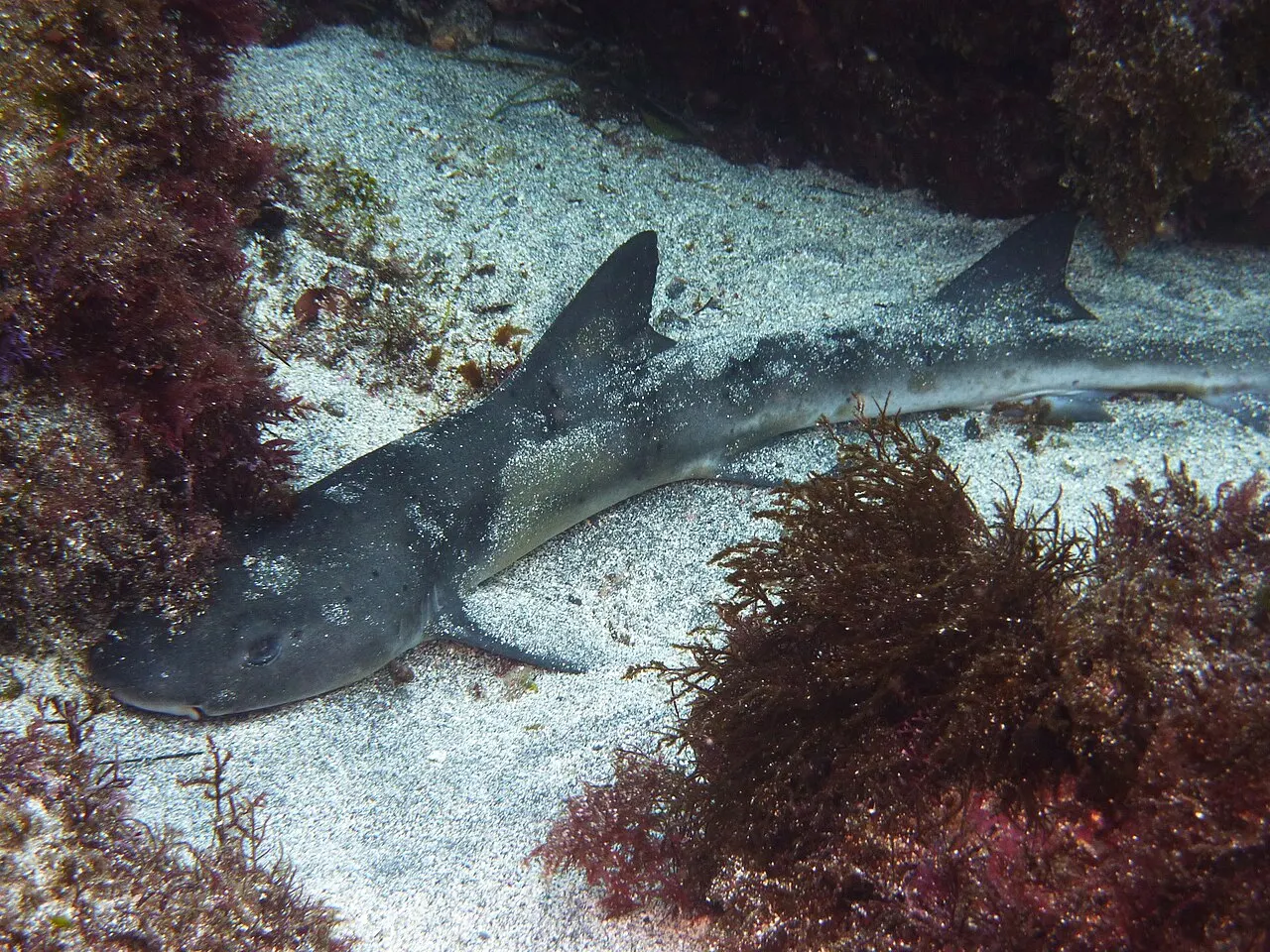
The Japanese topeshark (Hemitriakis japanica) is a small houndshark that lives near the sea floor of the north-west Pacific, from southern Japan to Korea, Taiwan and China. The IUCN Red List assessed it as Endangered (published 2021), down from Least Concern in 2009, because heavy fishing is suspected to have cut its numbers.
How to recognise it
It's a bottom-dwelling houndshark in the family Triakidae. Females are the bigger sex and reach about 120 cm in total length, while males top out near 110 cm. Newborn pups measure about 20 to 21 cm. Sources disagree on the size at which it matures, with estimates from roughly 80 to 102 cm.
Its catch is often confused with smoothhound sharks in landing records, which is one reason there is so little data specific to this species. It is harmless to people.
Where it lives
The species is native to the north-west Pacific. The IUCN lists records from Japan, South Korea, North Korea, Taiwan and China. Old records from Ambon in Indonesia and from New Caledonia are doubtful.
It lives on the continental shelf close to the sea floor, over sand, sandy mud and mud, from very shallow water to about 100 m. FishBase gives a depth range of 20 to 345 m.
Pins are Wikidata “endemic to” fields. Orange dots, when present, are GBIF occurrence tiles — survey bias included.
How it lives
Its diet has not been studied in detail, but it is presumed to eat small fishes, squid and octopus, and crustaceans. Females give birth to between 8 and 22 pups, with an average near 10, and the cycle is reportedly annual. Embryos are nourished by yolk rather than a placenta, which is why FishBase lists the shark as ovoviviparous.
Females reportedly mature at 4 to 6 years, and the oldest reported age is about 15. The IUCN puts generation length at 10 years. It isn't known to gather in groups.
Why it is in trouble
Fishing is the main driver. The topeshark is caught in trawls, longlines, set nets and gillnets, and the meat is kept and sold for food. Small mesh sizes take many young fish. The IUCN's 2021 assessment treats the pressure as affecting the whole range, and records a suspected population reduction of 50 to 79 percent over about three generations (roughly 30 years), which is why the species qualifies as Endangered under criterion A2d.
Coastal housing and commercial development add pressure in part of the range. There are no long-term abundance records for this shark alone, so the picture is pieced together from local reports. It was once common in Taiwan but is now rare in markets there and in South Korea, and it is thought to be very rare in China. Around southern Japan it has reportedly turned up more often as bycatch, partly because a preferred smoothhound became scarce.
What is being done
No management plan or recovery plan exists for the species itself, and it is not covered by international trade controls. It does occur in at least one protected area. Broader fishing rules exist in its range, including seasonal closures, trawl restrictions and gear rules in China, Taiwan and Japan, though none is aimed at this shark.
The IUCN lists species recovery, trade and harvest management, and site protection as needed actions, and asks for research into its population size, trends, harvest, trade and life history.
Sources
Written for this catalog in our own words from the sources below, checked against them on 12 November 2026. Population figures are estimates and carry the year they were made. Status and assessment year: IUCN. 2026. The IUCN Red List of Threatened Species. Version 2026-1. iucnredlist.org.




