Critically Endangered
Iglica soussensis
Iglica soussensis
Iglica soussensis is a tiny freshwater snail that lives underground in wells of the Souss Plain in southern Morocco. It is known only from one well near Agadir. The IUCN Red List rated it Critically Endangered in 2010, and no one has recorded how many exist.
How to recognise it
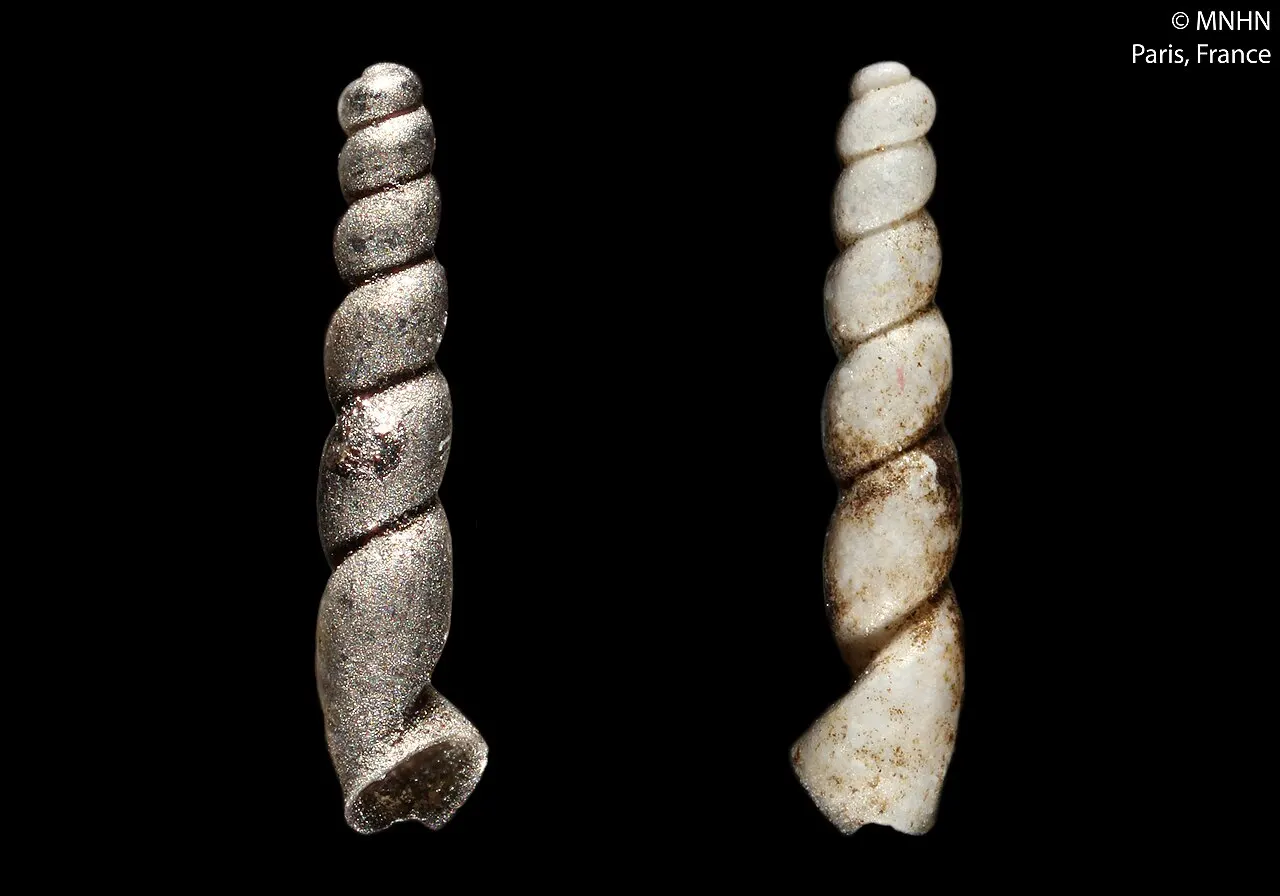
This is a snail you'd need a microscope to appreciate. The shell is about 2.1 mm tall and 0.4 mm wide, tall and narrow with a high spire and wide seams between the whorls. The oval opening, about 0.4 mm high, is detached from the body whorl and has a simple lip.
It was formally described in 2017 by Mohamed Ghamizi and Mokhtar Boulal in a short paper in the journal Ecologica Montenegrina, and belongs to the family Moitessieriidae.
Where it lives
It is a stygobiont, an animal restricted to groundwater. It is endemic to Morocco and known from a single location, a well in the village of Ait Msia near Agadir in the Souss Plain. The IUCN reportedly describes the site as a well at Tamait Izder, south of the Souss River and north of Temsia. The assessment lists freshwater springs and oases as its habitat and counts one location.
The only other endemic Moroccan Iglica is Iglica seyadi. Iglica soussensis is considered closest to Iglica tellinii, though the two differ in several features.
Pins are Wikidata “endemic to” fields. Orange dots, when present, are GBIF occurrence tiles — survey bias included.
Why it is in trouble
With one known site, a single event affecting that well could threaten the whole species. The Red List assessment, made in 2007 and published in 2010, lists two ongoing threats, both scored as low impact. One is of an unrecorded type, and the other is groundwater abstraction for an unknown use. The population trend is recorded as unknown, and the population isn't considered severely fragmented.
What is being done
The assessment lists national and sub-national level action, awareness and communications, and site management among conservation actions, and the research it records is on population trends. It doesn't say what has actually been done at the well, and no population estimate exists.
Sources
Written for this catalog in our own words from the sources below, checked against them on 12 November 2026. Population figures are estimates and carry the year they were made. Status and assessment year: IUCN. 2026. The IUCN Red List of Threatened Species. Version 2026-1. iucnredlist.org.




