Endangered
Idionyx galeata
Idionyx galeata
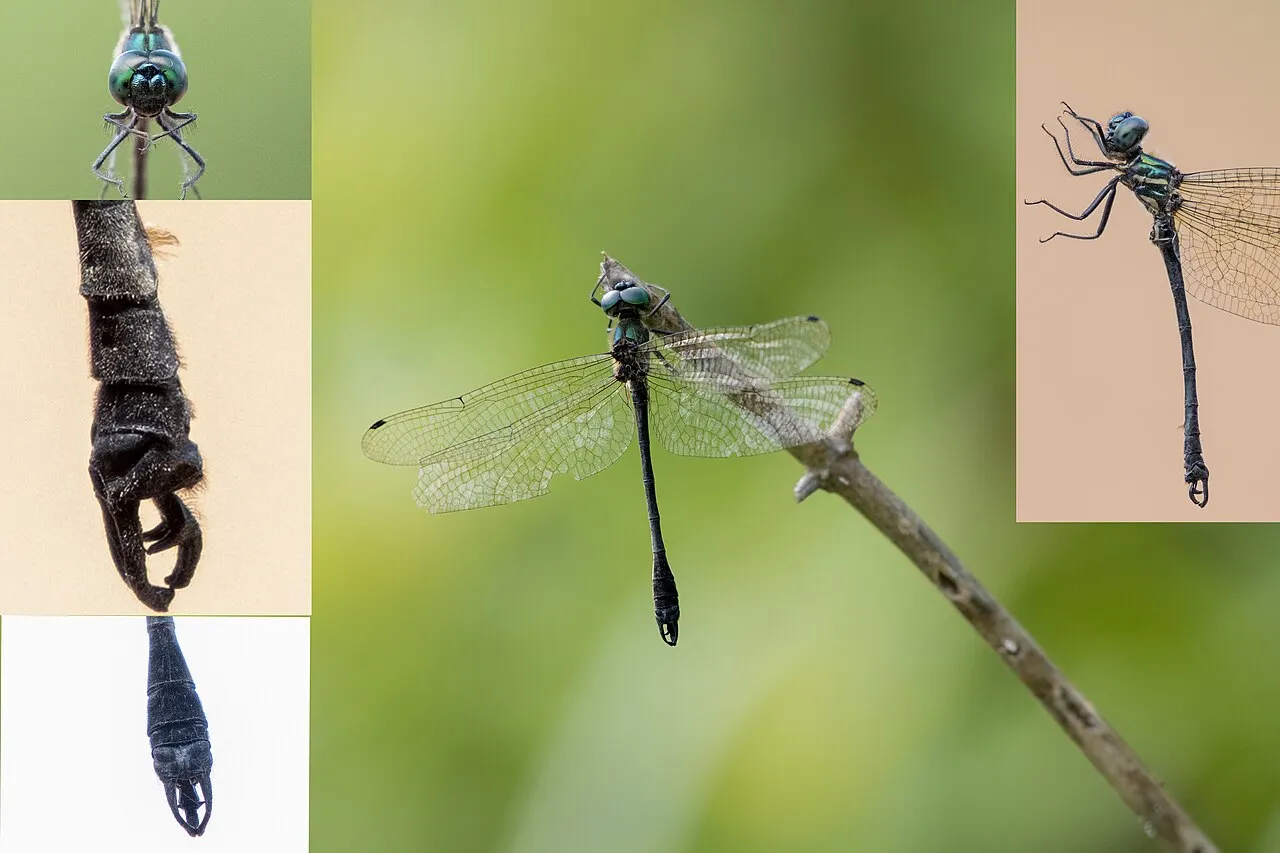
Idionyx galeata (usually written Idionyx galeatus) is a medium-sized dragonfly known only from the Western Ghats of southwestern India. The IUCN Red List rated it Endangered, in an assessment published in 2011. It has emerald-green eyes and a metallic green thorax, and it flies over fast forest streams.
How to recognise it
Frederic Charles Fraser described this dragonfly in 1924. It's reportedly medium-sized, with emerald-green eyes and a metallic green thorax with a golden sheen. It lacks a humeral stripe but has yellow stripes along the sides of the thorax. The abdomen is black, with yellow on the lower edges of the second segment.
Males are told by the shape of their black anal appendages, and females by a distinctive vesicle.
Where it lives
It is known only from Kodagu, South Canara, Wayanad and the Nilgiris, all in the Western Ghats. The Red List records it in the Indian states of Karnataka, Kerala and Tamil Nadu and counts four locations. It gives an extent of occurrence of 6,000 and an area of occupancy of 450 (square kilometres).
Habitats listed are permanent rivers and streams and subtropical or tropical moist montane forest.
Pins are Wikidata “endemic to” fields. Orange dots, when present, are GBIF occurrence tiles — survey bias included.
How it lives
It reportedly flies low over coffee bushes and along ferny banks, and is found over torrent streams and open patches of forest on hilltops. It makes short circling flights close to the ground, in early morning and late evening. A 2022 checklist of Kerala dragonflies in the Journal of Threatened Taxa calls it a rare forest insect.
Why it is in trouble
The Red List names herbicides and pesticides as the one listed threat, with ecosystem degradation as the stress. The Endangered rating, under criteria B2ab(iii), reflects a small area of occupancy, few locations and declining habitat quality. The population trend is unknown.
The same Kerala checklist calls it the only Endangered dragonfly or damselfly among the species it lists. The assessment records no conservation measures.
Sources
Written for this catalog in our own words from the sources below, checked against them on 12 November 2026. Population figures are estimates and carry the year they were made. Status and assessment year: IUCN. 2026. The IUCN Red List of Threatened Species. Version 2026-1. iucnredlist.org.




