Endangered
Helix texta
Helix texta
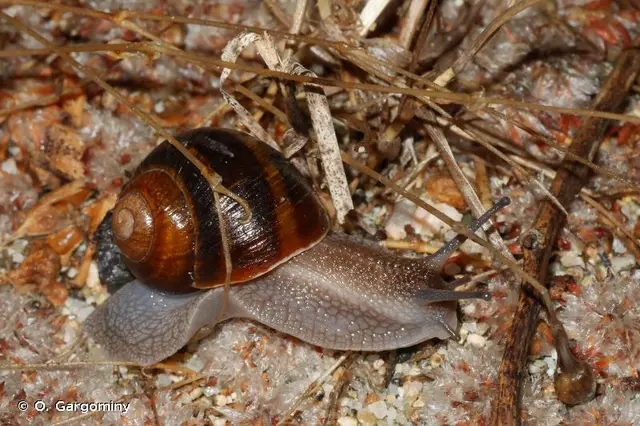
Helix texta is a large, edible land snail found only in Israel, mostly in the cool north around Mount Hermon. The IUCN Red List assessed it as Endangered in 1996, and that remains its only assessment. Its shell can reach 55 mm across, which makes it the largest snail in the country.
How to recognise it
This is a large helicid snail, the family that includes the familiar garden and edible snails of Europe. The shell reaches about 55 mm in diameter, which makes it the biggest land snail recorded in Israel. Its eggs are small by comparison, about 5.5 mm across.
A name that has changed
The name Helix texta was published by Mousson in 1861 and is the one used in the Red List. Several references now treat it as a synonym of Helix pachya, a species described by Bourguignat in 1860, and the Red List itself lists texta as an invalid name under pachya. The GBIF database goes a step further and treats both names as synonyms of Helix nucula.
Databases therefore disagree about which name is accepted. Older papers and the Red List entry use texta, while newer ones may say pachya.
Where it lives
The Red List records it as endemic to Israel, with no other country. It is reportedly found in the high northern part of the country, typically along the Hermon ridge. A 1990 population study of the snail describes it as endemic to the Mediterranean regions of Israel.
Pins are Wikidata “endemic to” fields. Orange dots, when present, are GBIF occurrence tiles — survey bias included.
How it lives
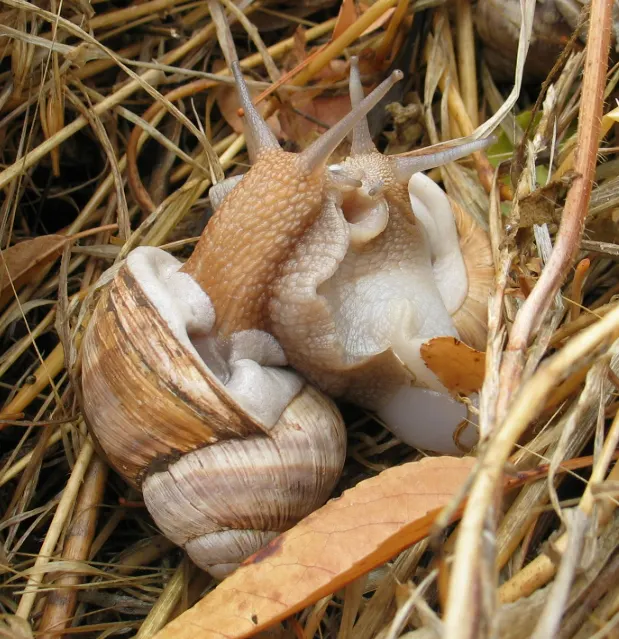
Adults become active with the first autumn rains and stay active through the wet season, then spend roughly six months buried in the ground through the dry summer. A cold snap down to 0 degrees C can end their activity even in the middle of winter. The snails reportedly feed and mate in autumn, usually mate for the first time about a year after hatching, and live several years.
Young snails have a hard time. In the 1990 study, about 90 percent died in their first year, killed by winter cold or summer drought. Wild boar prey heavily on adults: in December 1986 they ate roughly half the adults in the study area within a few days. Young and subadult snails then grew quickly. The study proposed that adults slow the growth of juveniles through a chemical in their mucus.
Irregular boar predation, plus swings in juvenile survival, makes the age structure of the population lurch from year to year. That differs from the pattern described for European Helix species.
Why it is in trouble
The 1996 Red List entry lists the snail as Endangered under criterion A1ce, a test from the older Red List system that deals with population reduction. It gives no population estimate, no list of threats and no conservation actions, so it is hard to say how many remain or what is driving any decline.
The assessment is about 30 years old. The Red List has no separate assessment for Helix pachya, so the snail has not been reassessed under the newer name.
Sources
Written for this catalog in our own words from the sources below, checked against them on 12 November 2026. Population figures are estimates and carry the year they were made. Status and assessment year: IUCN. 2026. The IUCN Red List of Threatened Species. Version 2026-1. iucnredlist.org.