Endangered
Gyraulus trapezoides
Gyraulus trapezoides
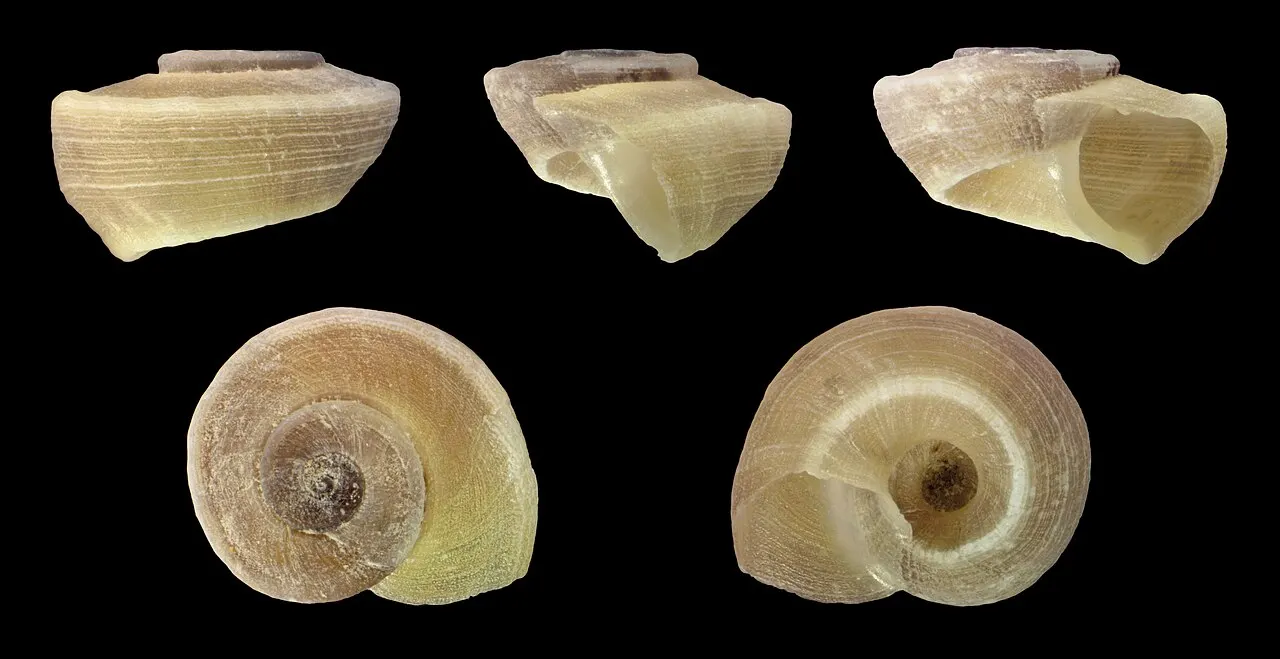
Gyraulus trapezoides is a small freshwater snail in the ram's horn family (Planorbidae), known only from Lake Ohrid on the North Macedonian shore. It was described by Poliński in 1929. The IUCN Red List rated it Endangered in 2026, citing a tiny range and worsening water quality.
Where it lives
All 14 GBIF records for the species come from Lake Ohrid in North Macedonia. Most are preserved museum specimens collected between 1953 and 1983, with the largest group from the 1970s. Localities include the lakeshore off several hotels in the stonewort (Chara) meadows, Sveti Naum, and a spot about 4 km south of Ohrid. One 1983 specimen was taken at 6 to 15 m depth.
The IUCN lists permanent freshwater lakes as its habitat, gives a depth range of about 5 to 15 m, and counts only 2 locations. It estimates the area of occupancy at 20 square km and the extent of occurrence at 21 square km. North Macedonia is the only country of occurrence on record.
Lake Ohrid is one of the oldest lakes on Earth, with sediments possibly 3 to 5 million years old, and it is shared with Albania. Of the 68 freshwater snail species recorded in its basin, about 50 live nowhere else. This snail is one of them.
Pins are Wikidata “endemic to” fields. Orange dots, when present, are GBIF occurrence tiles — survey bias included.
What is known about its life
Very little has been published on its biology. Its diet, breeding and lifespan are undocumented in the sources available, and no population count exists. The IUCN lists the population trend as unknown.
A subspecies, robustonudus, was named by Hadžišče in 1959. MolluscaBase lists it with an uncertain status.
Why it is in trouble
The IUCN names three ongoing pressures, each affecting the majority of the species' range: sewage, nutrient loads, and soil erosion with sedimentation. It also records a continuing decline in the area of habitat.
Monitoring of the lake itself points the same way. Sediment cores reportedly show phosphorus in Lake Ohrid rising about 3.5 times over the past century, with household wastewater the largest source.
What is being done
No species-specific conservation actions are recorded. The IUCN lists habitat trend monitoring as a research need, and it records that the species is not covered by any international legislation or trade control. Whether it occurs in a protected area is listed as unknown, although the North Macedonian side of the lake has been a World Heritage site since 1979.
Sources
Written for this catalog in our own words from the sources below, checked against them on 12 November 2026. Population figures are estimates and carry the year they were made. Status and assessment year: IUCN. 2026. The IUCN Red List of Threatened Species. Version 2026-1. iucnredlist.org.




