Endangered
Guadeloupe Big-eyed Bat
Chiroderma improvisum
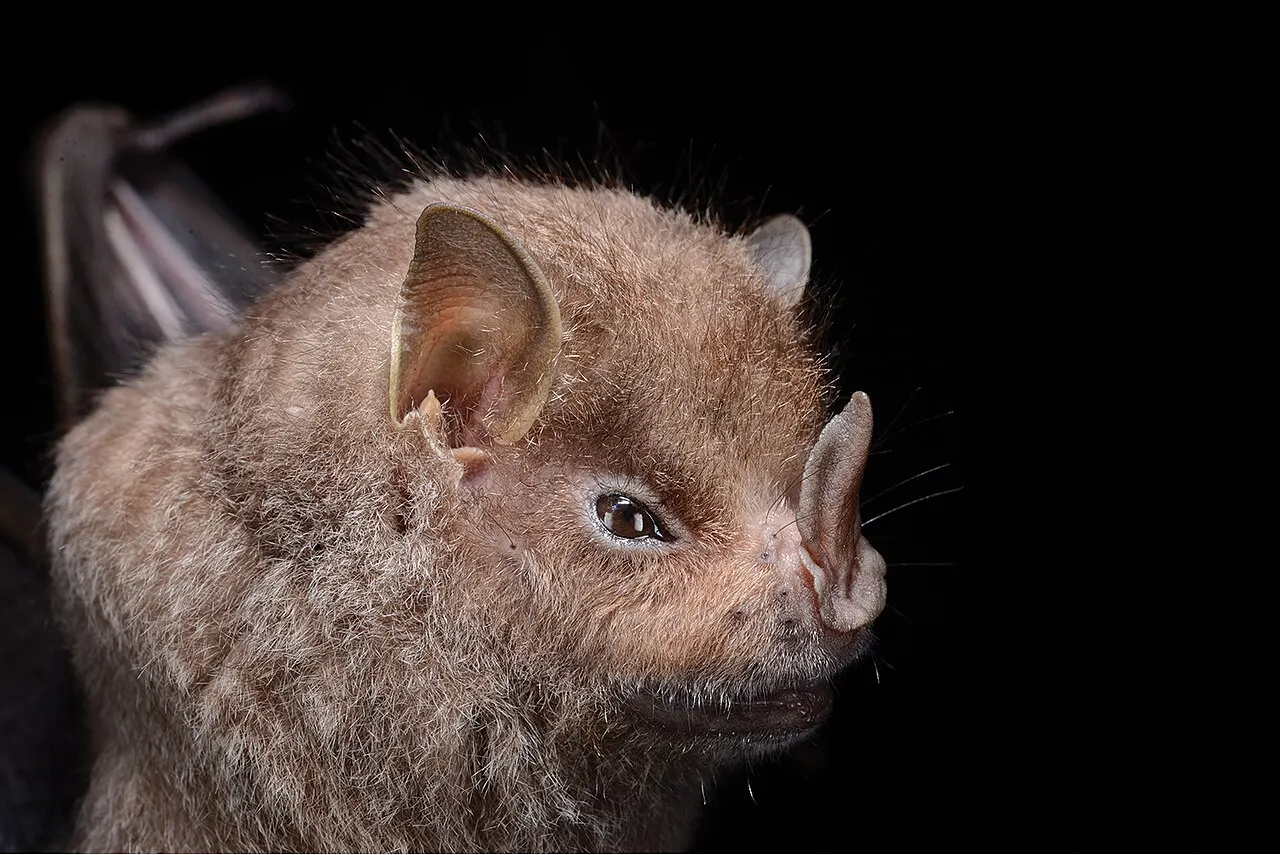
The Guadeloupe big-eyed bat (Chiroderma improvisum) is an extremely rare fruit bat of the Lesser Antilles, recorded on Guadeloupe and Montserrat, with further records from St Kitts. It is the largest bat in its genus. The IUCN Red List assessed it as Endangered in 2016.
How to recognise it
It's the largest member of its genus, Chiroderma. Body length is about 85 to 88 mm and the forearm about 57 mm. The fur is woolly and pale brownish-grey with dark tips, the belly is greyer with white-tipped hairs, and some individuals have a thin white stripe down the back. The eyes are remarkably large, which gives the group its name.
Where it lives
It was described in 1976 by Robert Baker and Hugh Genoways from a specimen collected in July 1974 at Baie-Mahault on Basse-Terre, Guadeloupe. The name improvisum means unexpected, because nobody expected a Chiroderma there. It has since been recorded on Montserrat, and a Montserrat bat guide also lists St Kitts and Nevis. A 2016 capture on St Kitts reportedly extended the known range by about 80 km.
The Red List counts just two locations, an extent of occurrence of about 4,900 square kilometres and an area of occupancy of about 1,000. Its listed habitat is subtropical or tropical moist lowland forest. The same guide says the places where it has been caught show no consistent pattern.
Pins are Wikidata “endemic to” fields. Orange dots, when present, are GBIF occurrence tiles — survey bias included.
How it lives
It eats fruit, and Montserrat survey work lists it among the island's fruit-eating bats. Almost nothing is known about breeding, apart from a lactating female reportedly caught in July. A 1994 DNA study reportedly placed the hairy big-eyed bat as its closest relative.
Why it is in trouble
Storms and volcanic activity are the listed threats. Montserrat took Hurricane Hugo in 1989, Hurricane Luis in 1995 and eruptions of the Soufriere Hills volcano from 1995 onward, and a study of its bats describes a low point in bat diversity there between 1995 and 2002. Hurricane Hugo reportedly destroyed about 90 percent of the species' population.
On Montserrat the last record before 2008 reportedly dated from 1984, and fears of local extinction eased when animals were caught again that year. It may have disappeared from parts of Guadeloupe. The Red List records a continuing decline in area, extent of occurrence and area of occupancy, and lists the population trend as unknown. The species was rated Endangered in 1996, Vulnerable in 2008, and Endangered again in 2016.
What is being done
The assessment lists no specific conservation actions. It records only that the species occurs in at least one protected area.
Sources
Written for this catalog in our own words from the sources below, checked against them on 12 November 2026. Population figures are estimates and carry the year they were made. Status and assessment year: IUCN. 2026. The IUCN Red List of Threatened Species. Version 2026-1. iucnredlist.org.




