Critically Endangered
Fijian Monkey-faced Bat
Mirimiri acrodonta
The Fijian monkey-faced bat (Mirimiri acrodonta) is a large fruit bat known only from the cloud forests of Taveuni, Fiji, and it is the country's only endemic mammal. The IUCN Red List rated it Critically Endangered in 2019, with an estimated 200 to 1,000 animals left.
How to recognise it
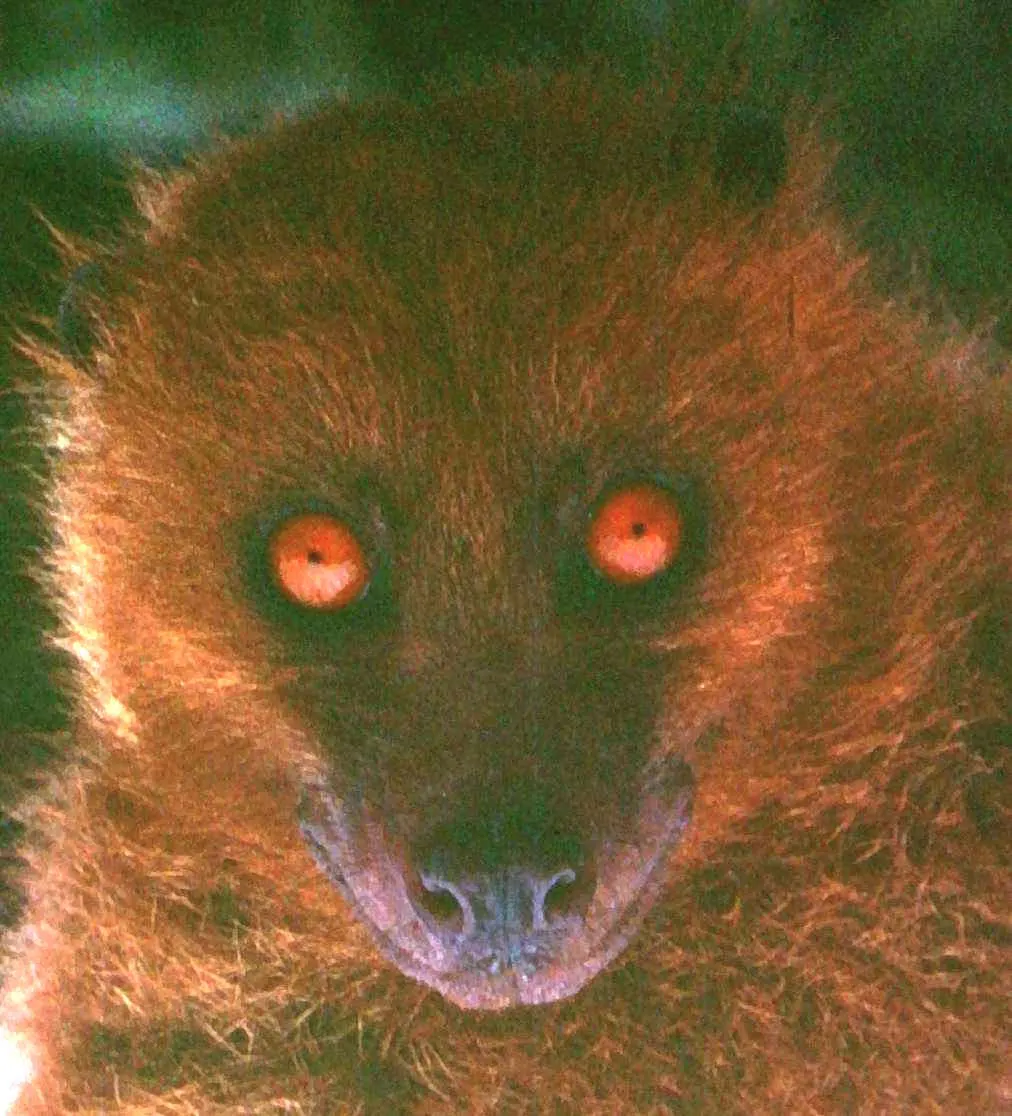
It's a heavy-set fruit bat with thick tan fur that can hide the ears, orange eyes and no tail. Weights recorded run from about 222 to 362 g, and the forearm measures roughly 120 mm. Its wings attach nearer the spine than in many related bats.
The species was first described in 1978 as a member of the flying fox genus Pteralopex. It was later moved, on genetic grounds, to its own genus, Mirimiri (2005), and it is the only species in it. It's sometimes called the Fijian flying fox.
Where it lives
The bat was found in 1976 by William and Ruth Beckon in old-growth cloud forest on Des Voeux Peak, which rises to 1,195 m on Taveuni. The Red List treats the whole species as living at a single location, between about 815 and 1,190 m, in montane tropical moist forest.
The bat may also occur on Vanua Levu, Fiji's second largest island, but that has never been confirmed. A netting effort in ridge-top forest at 650 m on Vanua Levu, part of a 2008 to 2011 study, did not catch one.
Pins are Wikidata “endemic to” fields. Orange dots, when present, are GBIF occurrence tiles — survey bias included.
How it lives
Very little is known, because so few have been caught. A 2014 paper in Oryx described a pregnant female netted at 815 m near Des Voeux Peak in May, only the sixth recorded capture of the species. When released, she flew into a tall tree and crawled into a large clump of epiphytes, plants that grow on branches. Others have been seen taking refuge in epiphyte clumps in the canopy too.
Pregnant and lactating females have been recorded in May, which points to a breeding season around then. Its teeth suggest a diet of tough plant material, but its actual diet hasn't been documented.
Why it is in trouble
With one small area of habitat, a single disaster could do real harm. The Red List names storms and flooding as a threat, and Cyclone Tomas passed directly over Taveuni near the May breeding period, which the Oryx paper said may have been devastating for pregnant and lactating bats. The paper also lists habitat loss and fragmentation from agriculture, urban development, encroachment and pollution, and climate change.
Over 4,440 mist-net hours across Taveuni and Vanua Levu in the 2008 to 2011 study produced just the one bat. A 2012 field survey reportedly failed to find any. The 200 to 1,000 estimate is therefore a rough one, and the Red List treats the trend as decreasing.
What is being done
The bat's forest lies within the Taveuni Forest Reserve, but that offers little protection, since many of Fiji's forest reserves have been converted to mahogany plantations. A species conservation plan was developed with Conservation International support in 2011. Its priorities include making the reserve a national park and better understanding the bat's ecology.
The Red List lists site protection and site management as the actions needed. The 2014 Oryx paper called a captive-breeding programme highly desirable, and Bat Conservation International placed the species among its 35 priority bats in 2013.
Sources
Written for this catalog in our own words from the sources below, checked against them on 12 November 2026. Population figures are estimates and carry the year they were made. Status and assessment year: IUCN. 2026. The IUCN Red List of Threatened Species. Version 2026-1. iucnredlist.org.




