Critically Endangered
Eusmilia
Eusmilia fastigiata
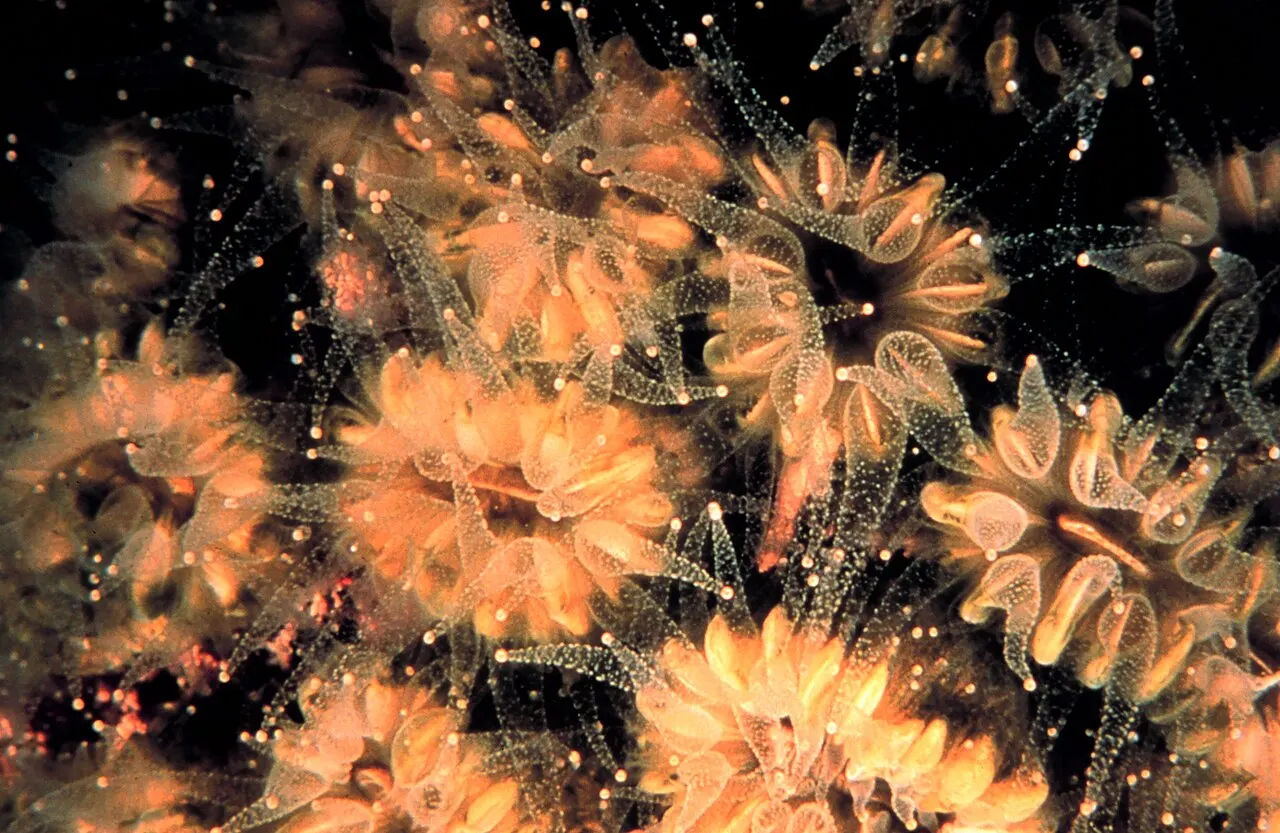
The smooth flower coral is a Caribbean reef-builder that forms low cream or yellow mounds of tube-shaped cups. It's the only species in its genus and lives from the Gulf of Mexico and Florida through the Caribbean islands. The IUCN Red List assessed it as Critically Endangered in 2022, with coral disease a leading threat.
How to recognise it
Colonies are low mounds of limestone skeleton, usually about 50 centimetres across, covered in tubular cups called corallites that typically sit in groups of one to three. The colour is cream, yellow or pale brown, sometimes with a green or pink tinge.
The polyps are large and widely spaced. By day they typically stay pulled back in the cups, and at night they extend translucent white tentacles to catch zooplankton and other small animals. Like most reef corals, the tissue also hosts symbiotic algae that supply extra energy through photosynthesis.
Where it lives
The IUCN assessment lists the species from more than 40 countries and territories in the western central Atlantic, including the Bahamas, Cuba, Jamaica, Mexico, Belize, Panama, Venezuela, the United States and most of the Lesser Antilles. It's a coral reef animal, found from about 1 to 65 metres deep, and it's reportedly most common between roughly 5 and 30 metres. It grows on both the back and front of reefs, sometimes tucked under larger corals.
Pins are Wikidata “endemic to” fields. Orange dots, when present, are GBIF occurrence tiles — survey bias included.
How it lives
Colonies release eggs and sperm into the water. The fertilised egg becomes a drifting larva that eventually settles on the seabed, turns into a polyp and builds a colony by budding.
Unusually for a reef coral, it matures early. Mote Marine Laboratory in Florida reported in 2024 that colonies it raised were spawning within about 22 months of settling, while many Florida boulder corals may need more than ten years. The same team calls the species notoriously difficult to settle, with low success rates.
Why it is in trouble
The main driver is stony coral tissue loss disease, which was first seen near Miami in 2014 and has since been reported across the Caribbean. A 2024 review in Frontiers in Marine Science lists the smooth flower coral among the highly susceptible species, whose relative abundance fell by 90 to 100 percent within months of the disease arriving in places such as Florida, Mexico and the US Virgin Islands.
The IUCN assessment estimates a population reduction of about 28 percent in the past and projects about 80 percent in the future, based on loss of reef habitat and quality. It also lists many smaller pressures, including temperature extremes, storms, sediment from land, coastal development, shipping lanes, tourism and small-scale harvest, and competition from algae such as Dictyota and Halimeda. The population isn't severely fragmented, according to the assessment.
What is being done
The IUCN assessment says it occurs in at least one protected area. Listed actions include site protection and management, habitat restoration, and captive breeding. Mote's International Coral Gene Bank received founder colonies in 2022 through the Florida Reef Tract Rescue Project and has raised a second generation. By 2024, 11 of about 45 settled young corals were carrying eggs or larvae, though the species hasn't yet been widely used in reef restoration.
Sources
Written for this catalog in our own words from the sources below, checked against them on 12 November 2026. Population figures are estimates and carry the year they were made. Status and assessment year: IUCN. 2026. The IUCN Red List of Threatened Species. Version 2026-1. iucnredlist.org.




