Critically Endangered
Thongaree's disc-nosed bat
Eudiscoderma thongareeae
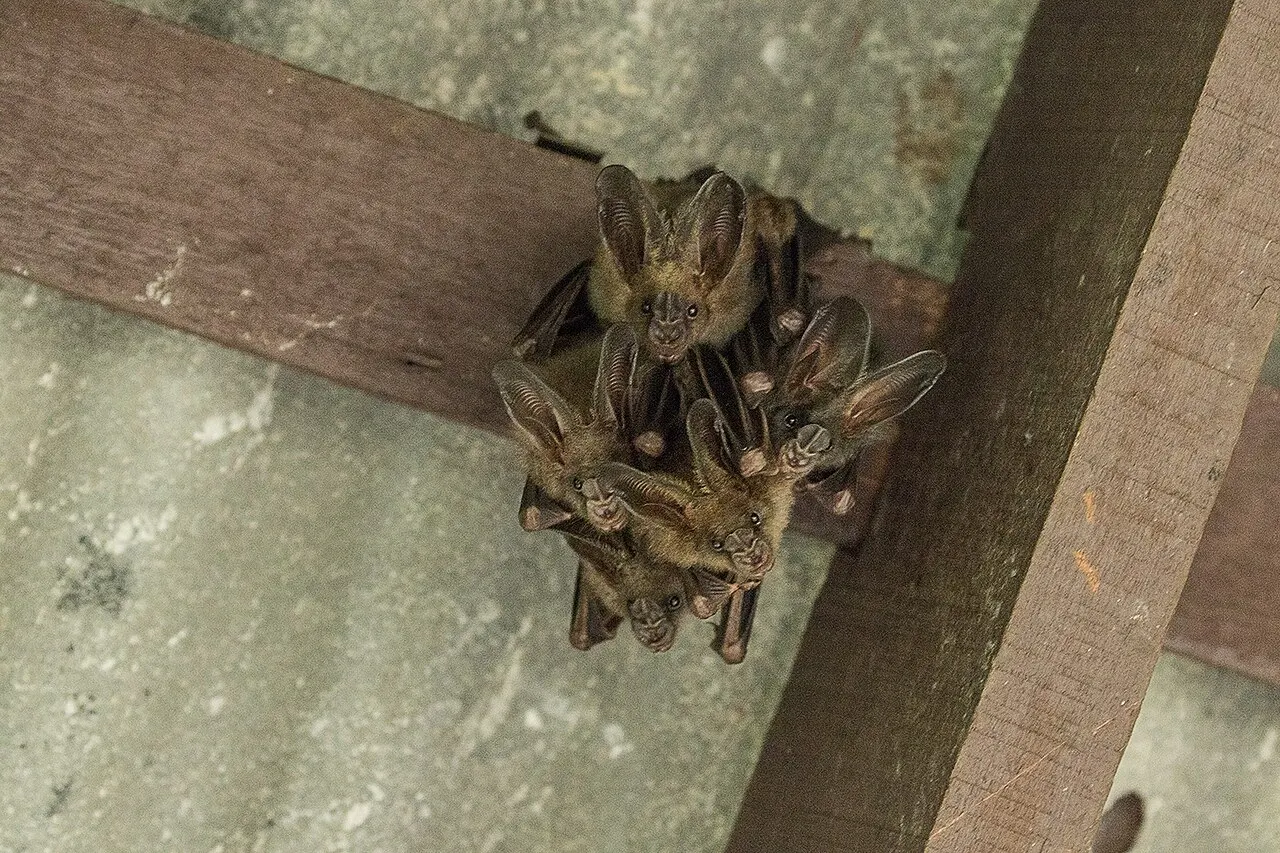
Thongaree's disc-nosed bat (Eudiscoderma thongareeae) is a large, big-eared false vampire bat known from just three specimens, all from the Bala Forest in southern Thailand. It was described in 2015 as a new genus and species. The Red List rated it Critically Endangered in 2017.
How to recognise it
It is a big bat. The forearm measures about 64 to 67 mm, and two females weighed 30.0 g and 36.2 g. The ears are very large and meet over the forehead, and the tragus is forked. The back is mid-brown with dark tips, the belly is paler, and the ears and wing membranes are dark brown.
It belongs to the false vampire bats (family Megadermatidae). It is the only species in its genus, and Eudiscoderma was erected for it because its skull, teeth and baculum set it apart from other members of the family. Its calls are multi-harmonic and low in intensity.
Where it lives
Everything known comes from the Bala Forest in Narathiwat Province, southern Thailand. The type locality is Sirindhorn Waterfall in Halabala Wildlife Sanctuary, at about 135 m. The three specimens came from between 135 and 150 m, in dense evergreen lowland rainforest near streams and forest edges.
The Red List counts one location, with an area of occupancy of about 4 square km, and records the species in a protected area. The Malaysian side of the border has been surveyed less, so the bat may live there too.
Pins are Wikidata “endemic to” fields. Orange dots, when present, are GBIF occurrence tiles — survey bias included.
How it lives
Few details are known. The first bat, an adult male, was caught on 11 April 2001 in a mist net about 2 m above a forest trail, after it was seen hunting a large beetle. A female was caught with a hand net in 2006 while sheltering in a building at the research station, and a post-lactating female was netted in October 2014. Beetle remains beneath a hollow-tree roost suggest large beetles are a regular meal. That roost was lost after strong winds damaged the tree.
Why it is in trouble
Only three bats turned up in about 15 years of surveys in southern peninsular Thailand, so it is either extremely rare or very hard to catch. Lowland rainforest in peninsular Thailand and Malaysia is disappearing quickly, and the 2015 description in Zootaxa considers the bat likely to be at risk. The Red List scores the single recorded threat, disturbance of unrecorded origin, as low impact, and records a continuing decline in habitat area.
What is being done
The Bala Forest lies inside a protected area, but no recovery plan exists and nothing in the assessment records specific action for this bat. The 2015 description calls it a top conservation priority. The species honours Siriporn Thongaree, former head of the Halabala Wildlife Research Station, who dedicated her career to wildlife in southern Thailand.
Sources
Written for this catalog in our own words from the sources below, checked against them on 12 November 2026. Population figures are estimates and carry the year they were made. Status and assessment year: IUCN. 2026. The IUCN Red List of Threatened Species. Version 2026-1. iucnredlist.org.




