Critically Endangered
Elaphrus viridis
Elaphrus viridis
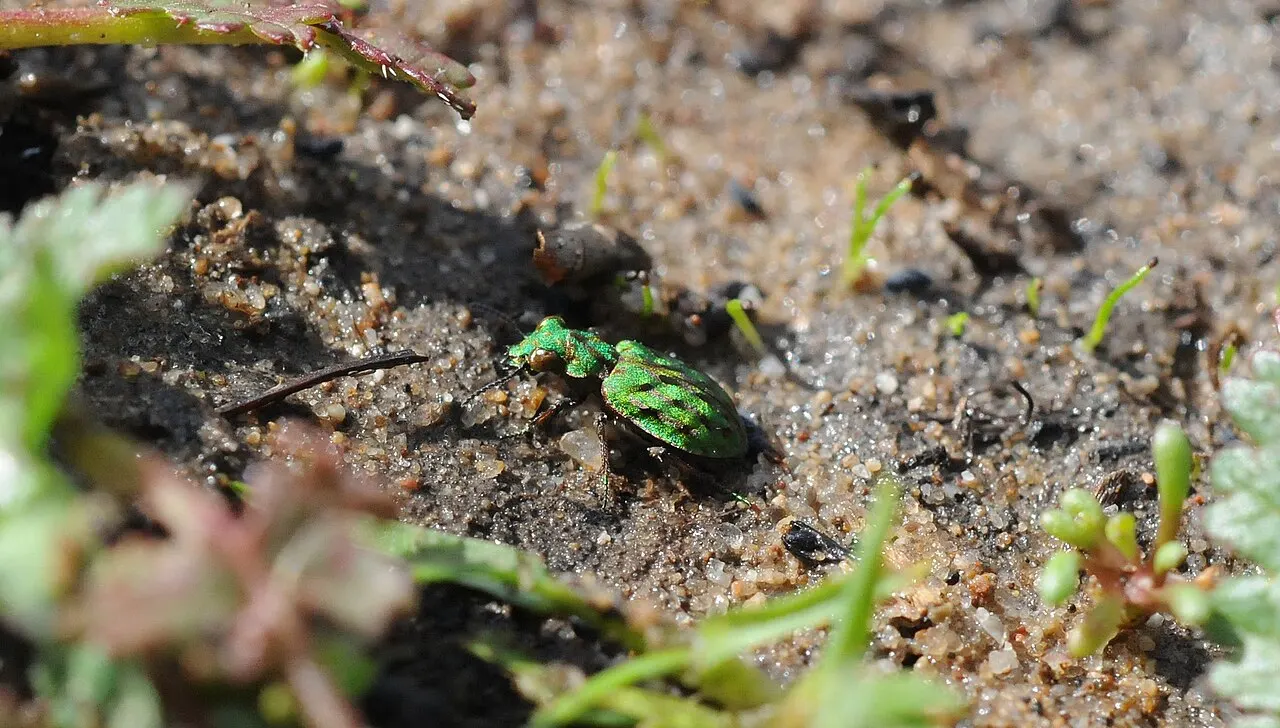
The Delta green ground beetle (Elaphrus viridis) is a metallic green beetle about 6 mm long, known today only from the vernal pool grasslands of Solano County, California. The IUCN Red List rated it Critically Endangered in 1996, and it has been federally listed as threatened in the United States since 1980.
How to recognise it
It is a small ground beetle, about a quarter inch (0.6 cm) long. Adults are usually metallic green and bronze, and most have bronze spots on the wing covers, though some are nearly plain metallic green.
The species name comes from the Latin word for green. George Horn described the beetle in 1878.
Where it lives
The beetle is currently known only from the Jepson Prairie region of Solano County, northeast of San Francisco Bay. Its former range is unknown, but it probably occurred across much of the Central Valley, and more populations may exist there.
It lives at the edges of vernal pools, seasonal wetlands in low, poorly drained clay soils that fill with winter rain and dry out in summer. Part of its range lies inside The Nature Conservancy's Jepson Prairie Preserve, south of Dixon.
Pins are Wikidata “endemic to” fields. Orange dots, when present, are GBIF occurrence tiles — survey bias included.
How it lives
Adults and larvae are predators of small, soft-bodied invertebrates. Springtails are believed to be the main food, and the beetle has also been seen eating midge larvae and other beetle larvae.
Adults emerge from dormancy once winter rain fills the pools, in January or late winter depending on the source. In the wet season they hide in soil cracks and under low plants, and they sun themselves on bare ground. There is one generation a year. Sources differ on the breeding months. As the pools dry in about May, adults go dormant, and larvae wait out the dry summer in soil cracks.
Why it is in trouble
Farming is the main cause of vernal pool loss, through tilling and drawing water from the pools for irrigation. Urban growth in some areas and poorly managed grazing add to the damage.
Introduced garden lippia forms dense mats that crowd out native plants and make hunting harder for the beetle. Drying of the pools under a changing climate is another concern, and a small population in a limited range adds risk. The population size is unknown, partly because the beetle's life cycle is poorly understood and individuals are hard to find.
What is being done
The U.S. Fish and Wildlife Service listed the beetle as threatened on 8 August 1980. A recovery plan, shared with the Solano grass, was issued in 1985.
The Jepson Prairie Preserve is largely protected. Other known sites are on private land, where protection depends on ongoing negotiation. The IUCN assessment dates from 1996 and gives no population trend, so the current status of the beetle on the Red List rests on old information.
Sources
Written for this catalog in our own words from the sources below, checked against them on 12 November 2026. Population figures are estimates and carry the year they were made. Status and assessment year: IUCN. 2026. The IUCN Red List of Threatened Species. Version 2026-1. iucnredlist.org.




