Critically Endangered
Edgbaston goby
Chlamydogobius squamigenus
The Edgbaston goby (Chlamydogobius squamigenus) is a fish under 5 cm long that lives in shallow, spring-fed pools in central Queensland, Australia. The IUCN Red List rated it Critically Endangered in 2019. Most of its natural range lies inside Edgbaston Reserve, a protected property run for its unique spring wildlife.
How to recognise it
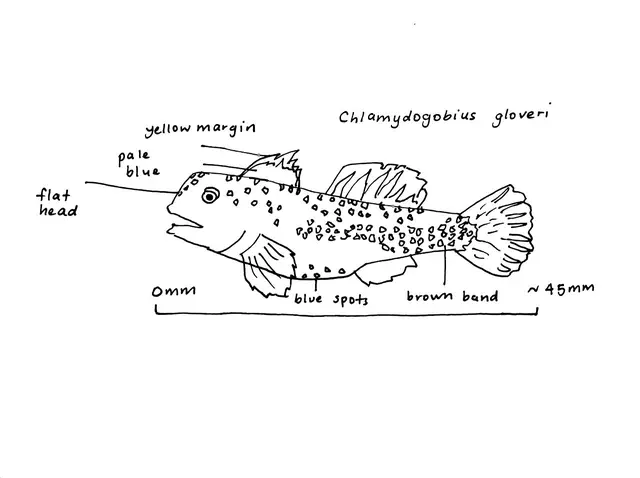
It's a small, mostly greyish-white to yellowish goby with grey edges on its scales. It reaches about 4.8 cm in standard length (around 6 cm including the tail). Mature males are darker, with a blackish dorsal fin marked by a yellow band and a blue stripe.
The species was described by Helen Larson in 1995. Its scientific name, squamigenus, comes from the Latin for scale and cheek. It refers to the smooth-edged scales on the cheek bone (the preopercle), which separate it from other Chlamydogobius species.
Where it lives
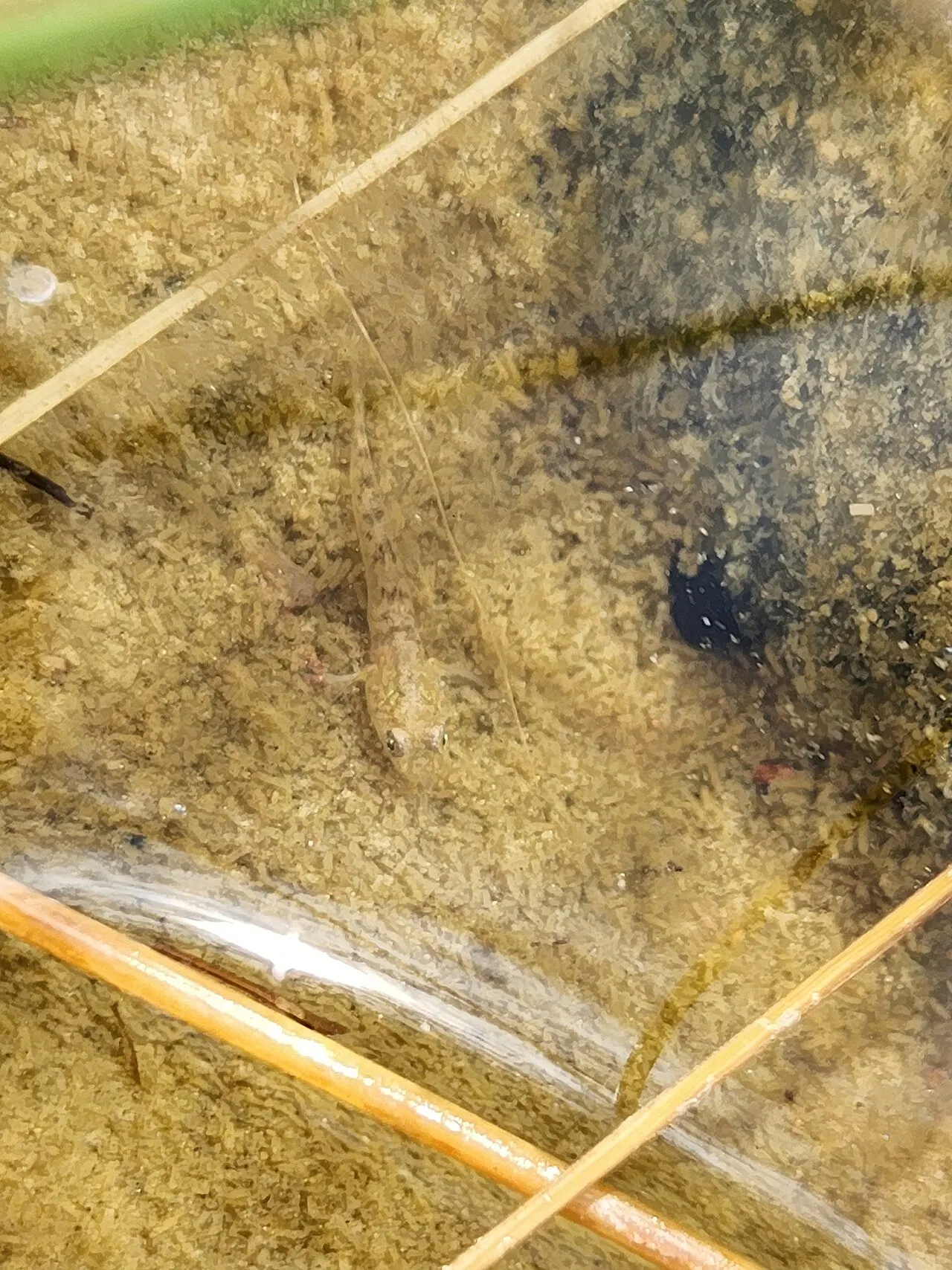
The goby lives in very shallow, spring-fed pools with clay bottoms, fringed by grassy tussocks. Its stronghold is Edgbaston Reserve, an 8,165 hectare property about 140 km northeast of Longreach, bought for conservation in 2008. The IUCN assessment puts its known area at about 16 square kilometres, treats the species as living in a single location, and estimates that 71 to 80 percent of the population is inside protected areas.
It isn't confined strictly to the original springs. A 2020 study by Adam Kerezsy found it in bore drains in the Aramac district, about 20 km from its native spring habitat. It has also been recorded in artesian bores and drains on Crossmoor Station and in a man-made bore drain at Ravenswood Station. Kerezsy suggested spring species may seek new habitat when floods open new routes.
Pins are Wikidata “endemic to” fields. Orange dots, when present, are GBIF occurrence tiles — survey bias included.
How it lives
By day the goby shelters among the tussocks, and at night it has been seen feeding away from cover. It's an omnivore that eats mostly algae, small aquatic invertebrates and insects. It tolerates temperatures from about 3 to 39 degrees Celsius for short periods.
Spawning takes place at night once the water is warmer than about 20 degrees Celsius. Females lay 40 to 100 eggs, and territorial males guard and fan them until they hatch after about a week to 10 days. Fish mature in 3 to 4 months and live about a year, so each generation counts. The IUCN assessment uses half a year as its generation length.
Why it is in trouble
The introduced eastern gambusia (Gambusia holbrooki), a small fish brought to Australia for mosquito control, is present in some Edgbaston springs. Bush Heritage Australia calls it the biggest threat to the reserve's native fish, and Kerezsy notes it is thought to push out small native fishes by competition. Cattle trampling and fouling of spring pools has also been recorded.
The 2019 assessment lists unspecified invasive species, groundwater abstraction and grazing or farming as ongoing threats, each rated low impact, and describes the trend as decreasing. Feral pigs can trample and churn up a spring in a single feeding session. Because the species has so few sites, one failure at a spring matters.
What is being done
Bush Heritage Australia bought Edgbaston in 2008, and the reserve was declared a Special Wildlife Reserve in 2024, Australia's highest level of protection. Work there includes barriers that keep gambusia out of key springs during floods, gambusia eradication in some springs, and captive breeding. The IUCN assessment records a recovery plan, a monitoring scheme, invasive species control and a captive population in place for the goby.
Much of the best-known recovery work has focused on the red-finned blue-eye that shares these springs. For the goby, Kerezsy recommends keeping populations in artificial springs or wetlands with gambusia excluded or removed.
Sources
Written for this catalog in our own words from the sources below, checked against them on 12 November 2026. Population figures are estimates and carry the year they were made. Status and assessment year: IUCN. 2026. The IUCN Red List of Threatened Species. Version 2026-1. iucnredlist.org.
- IUCN Red List assessment, Chlamydogobius squamigenus (2019)
- Fishes of Australia, Edgbaston Goby
- Kerezsy, Edgbaston goby in bore drains (Royal Society of Queensland Proceedings, 2020)
- Bush Heritage Australia, Edgbaston Reserve
- Yahoo News, Fight to save rare Aussie species at unique outback site (Aug 2025)
- Edgbaston goby (reference article)
- GBIF species record 2379258