Endangered
Dwarf loach
Ambastaia sidthimunki
The dwarf loach (Ambastaia sidthimunki) is a tiny, chain-patterned freshwater fish from western Thailand. The IUCN Red List assessed it as Endangered in 2011 and records a decreasing population. It is far better known in aquariums than in rivers, and most fish in the trade are reportedly farm-bred.
How to recognise it
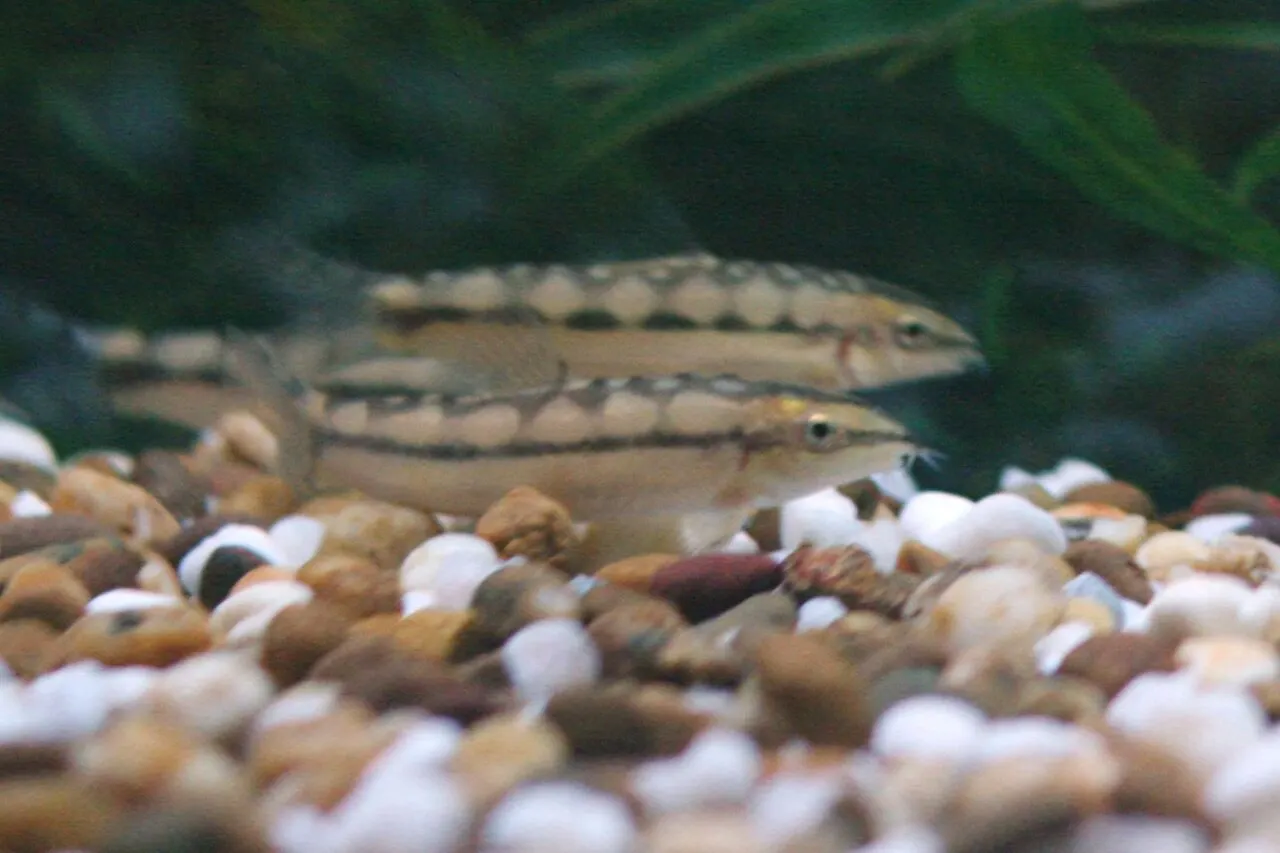
This is one of the smaller loaches, reaching about 5.5 to 6 cm. Adults carry a black stripe along the back and another along the flank that breaks into blotches toward the tail, giving the chain look behind two of its common names, chain loach and chain botia. Young fish show dots instead.
A close relative, Ambastaia nigrolineata, looks similar, and older records from the Mekong, Laos and Cambodia are now treated as that species rather than this one.
Where it lives
The species is known from the Mae Klong basin in western Thailand, including the Khwae Noi River, and from the Ataran River on the Thai and Myanmar border. The IUCN lists Thailand as the only country where it is certainly present and records Laos as uncertain. The 2011 assessment counted two locations, at roughly 30 to 60 metres above sea level, with an estimated area of occupancy of 100 square kilometres.
Photographs from the Ataran show slow, clear, forested headwaters with sand, rock, driftwood and leaf litter. FishBase also lists medium to large rivers and flooded fields.
Pins are Wikidata “endemic to” fields. Orange dots, when present, are GBIF occurrence tiles — survey bias included.
How it lives
Dwarf loaches are active by day and, unlike most loaches, often school some way above the bottom. In aquariums they are sociable and keep a dominance order, and keepers describe audible clicking sounds and fish shadowing one another. Small groups tend to go badly, so hobbyists are advised to keep at least five or six. The diet is mostly small aquatic invertebrates, with some soft plant matter taken too.
In the wild they are thought to be seasonal migratory spawners, which may be why home aquarists rarely breed them.
Why it is in trouble
The IUCN rates dams as the leading ongoing threat, with rapid declines across the species' whole range, and lists conversion and degradation of its river habitat among the stresses. Fishing in the past, with the reason unrecorded, is also listed, along with an ongoing agricultural pollution threat of unspecified type. A loach specialist site says the fish was once numerous in the Kwai Yai, Kwai Noi and Mae Klong rivers and reports no recent confirmed catches there.
Sources differ on how many wild fish remain. One aquarium reference says the species is still found in both the Mae Klong and Ataran systems, while another reports no recent confirmed catches in the Mae Klong rivers. No population estimate exists. The IUCN position is Endangered, with a decreasing population and continuing decline in habitat area.
What is being done
The Red List assessment calls for harvest management, site protection, habitat protection and captive breeding. The species is reportedly protected in Thailand. Farms spawn the fish at scale using hormones, and the method is described as a closely guarded trade secret. Breeding without hormones has rarely worked, though a UK keeper reported young from a group of 36 adults in 2007. Thai collecting localities are deliberately kept confidential.
Sources
Written for this catalog in our own words from the sources below, checked against them on 12 November 2026. Population figures are estimates and carry the year they were made. Status and assessment year: IUCN. 2026. The IUCN Red List of Threatened Species. Version 2026-1. iucnredlist.org.




