Endangered
Drepanosticta austeni
Drepanosticta austeni
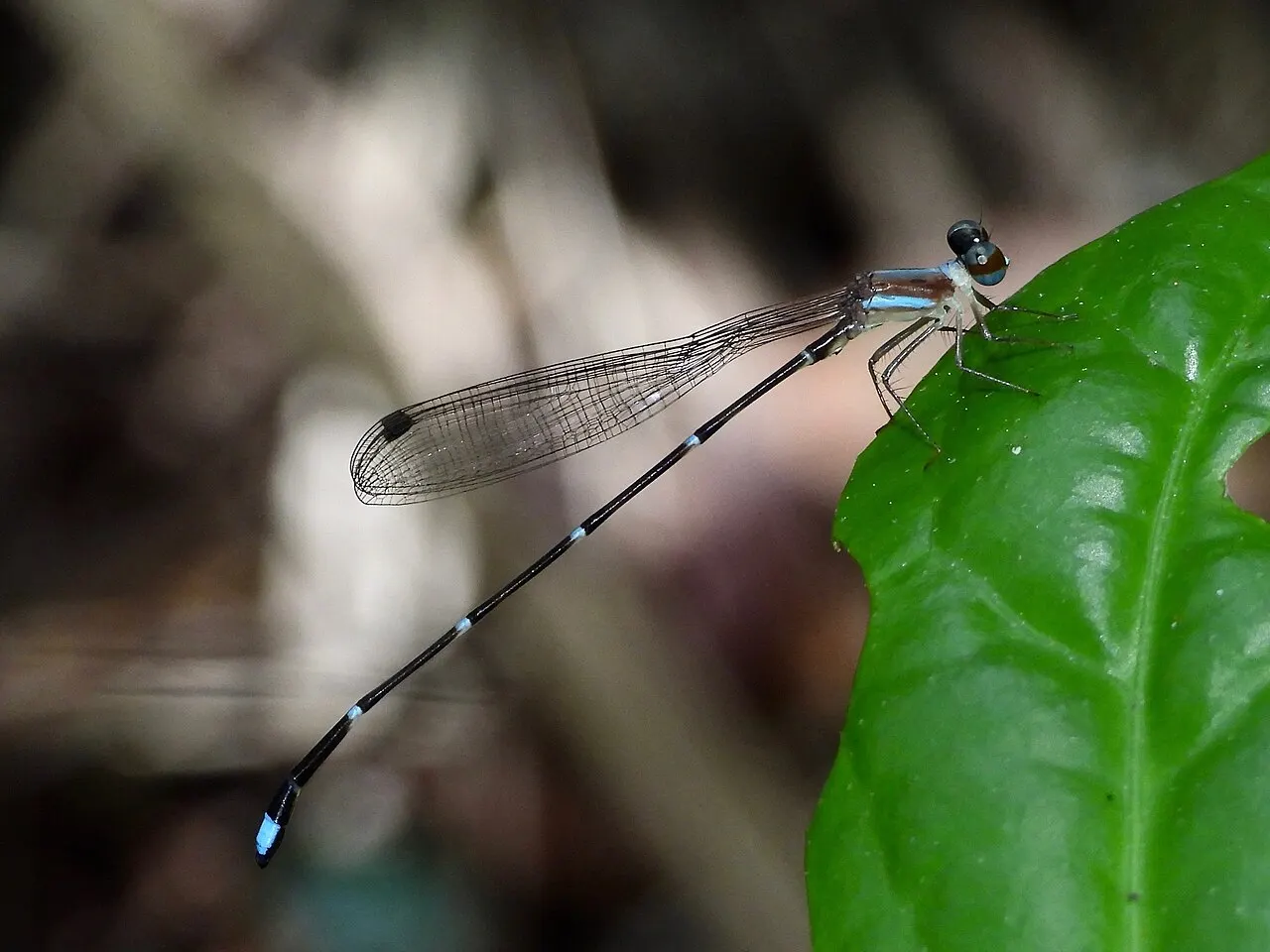
Austen's shadowdamsel (Ceylonosticta austeni, kept by some authors in Drepanosticta) is a forest damselfly found only in Sri Lanka, at scattered sites on the edges of the central hills. The IUCN Red List rated it Endangered in 2021, down from Critically Endangered in 2006, and describes a population that is still declining.
Naming and relatives
Maurits Lieftinck described the species in 1940. It sits in the shadowdamsel family, Platystictidae, a group of damselflies with narrow wings and long, slender abdomens that mostly live in shaded streams in tropical forest. Adults of the family seem to disperse poorly, and many species are known from a single place or a very small range.
The scientific name varies by source. The IUCN uses Ceylonosticta austeni, while other references still file it under Drepanosticta. The shadowdamsel family has 26 species in Sri Lanka, and all of them are found nowhere else on Earth.
Where it lives
Austen's shadowdamsel occurs nowhere outside Sri Lanka. Its records fall into three main clusters: the outskirts of the Knuckles range, the eastern hills around Badulla and Passara, and the southern to southeastern edges of the central hills. The IUCN counts more than 40 individual sites, though many lie close together, plus a few away from the main clusters.
The IUCN lists lowland moist forest, montane moist forest and permanent streams as habitat. It estimates the area the species actually occupies at 180 to 500 square kilometres, inside a wider range of about 3,010 to 5,816 square kilometres.
Pins are Wikidata “endemic to” fields. Orange dots, when present, are GBIF occurrence tiles — survey bias included.
When it flies
Adults are reportedly on the wing from March to November, according to the 2014 book Dragonfly Fauna of Sri Lanka as summarised on a Sri Lankan natural history blog. Highland Sri Lankan Ceylonosticta damselflies in general are seen for only a couple of months around the southwest monsoon, which makes shadowdamsels easy to overlook.
Why it is in trouble
The IUCN reports a decreasing population, a severely fragmented range and a shrinking area of occupied habitat. The threats it records are changes to the habitat and the abstraction of surface water. For an insect tied to shaded streams that it rarely leaves, losing forest cover or water flow can isolate a population for good.
What is being done
The species occurs in at least one protected area. The assessment names site protection and management, protecting habitat and resources, habitat restoration and awareness work among the relevant conservation actions.
Sources
Written for this catalog in our own words from the sources below, checked against them on 12 November 2026. Population figures are estimates and carry the year they were made. Status and assessment year: IUCN. 2026. The IUCN Red List of Threatened Species. Version 2026-1. iucnredlist.org.




