Critically Endangered
Diplommatina cacuminulus
Diplommatina cacuminulus
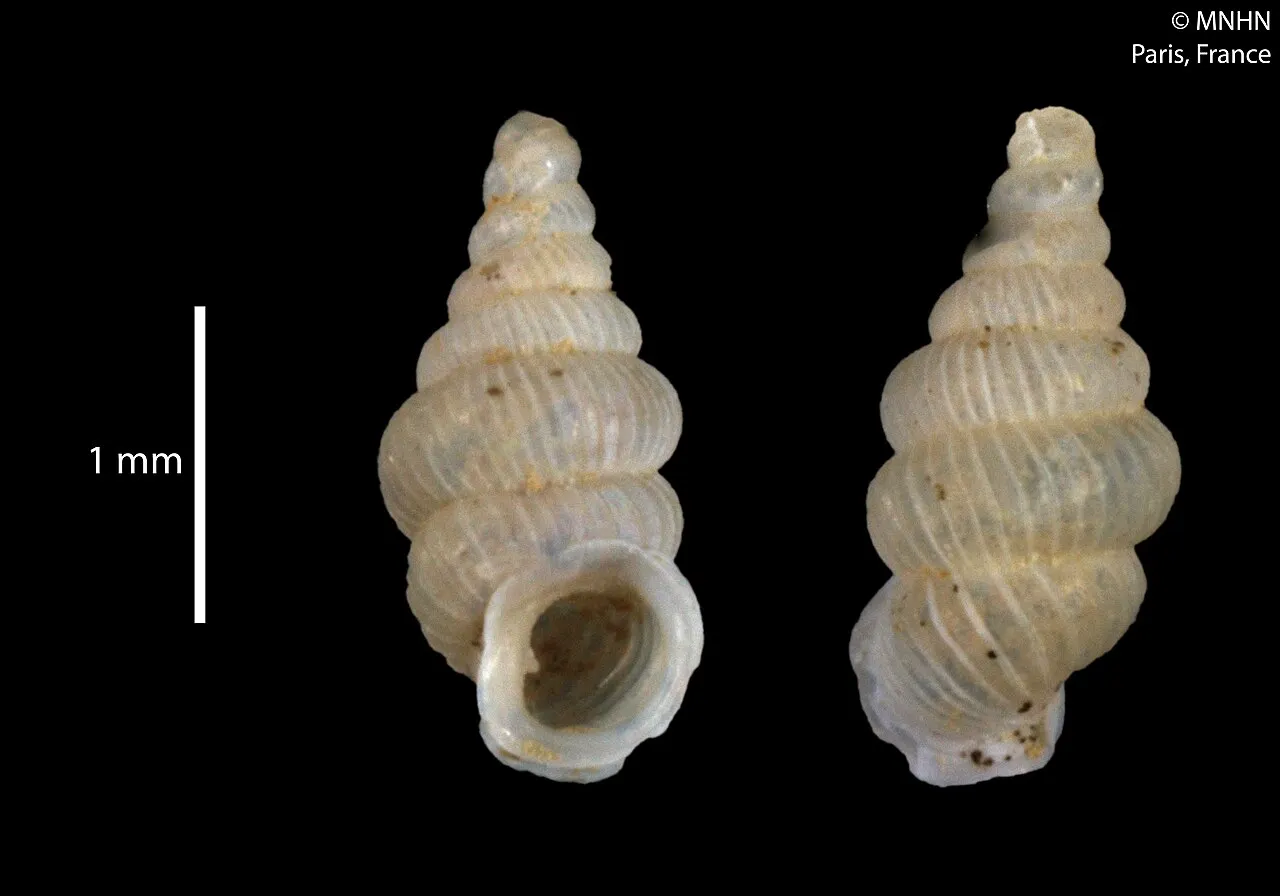
Diplommatina cacuminulus is a tiny land snail from Sabah, in Malaysian Borneo, known from a limestone hill called Gunung Baturong. It belongs to the family Diplommatinidae and has an operculum, a little lid that closes the shell. The IUCN Red List rated it Critically Endangered in 2004.
What it is
This is one of the many small, coiled land snails of the genus Diplommatina. Dutch malacologist Jaap Vermeulen described it in 1993, in a revision of the genus on Borneo that recognised 50 species and two subspecies, most of them found nowhere else on the island. Like its relatives it has an operculum, a plate that seals the shell opening. Within Malaysia it is found only in Sabah, and nowhere else in the world.
Shell measurements are hard to find in published summaries. Museum records show the holotype and several paratype lots, some with dozens of dry or air-dried shells.
Where it lives
Museum records point to one place, Gunung Baturong in the Tawau region of Sabah, about 50 km west-southwest of Lahad Datu. A collector's label describes it as a limestone hill covered with primary forest and surrounded by partly logged lowland dipterocarp forest. Paratypes were collected there in January 1982.
The IUCN lists the habitat as subtropical or tropical moist lowland forest, and the location as Sabah, Malaysia.
Pins are Wikidata “endemic to” fields. Orange dots, when present, are GBIF occurrence tiles — survey bias included.
Why it is in trouble
The IUCN assessed the species under criterion B2ab(iii), which applies to a very small area of occupancy with declining habitat quality. The population trend is listed as decreasing. The threat named is mining and quarrying, with ecosystem conversion and degradation as the stresses.
A snail known from a single limestone hill is exposed to quarrying, because taking away the rock takes away the habitat. Wider habitat destruction is also noted as a danger to it.
What is being done
The IUCN assessment records no conservation actions. The latest Red List assessment dates from 2004, and no more recent survey of the Baturong population turned up in the sources checked.
Sources
Written for this catalog in our own words from the sources below, checked against them on 12 November 2026. Population figures are estimates and carry the year they were made. Status and assessment year: IUCN. 2026. The IUCN Red List of Threatened Species. Version 2026-1. iucnredlist.org.




