Endangered
Dendrolagus notatus
Dendrolagus notatus
The ifola tree kangaroo (Dendrolagus notatus) is a marsupial that lives in the high central mountains of Papua New Guinea. The IUCN Red List rated it Endangered in 2016, citing past population loss from habitat decline and hunting. Until recently it was usually treated as a form of Doria's tree kangaroo.
How to recognise it
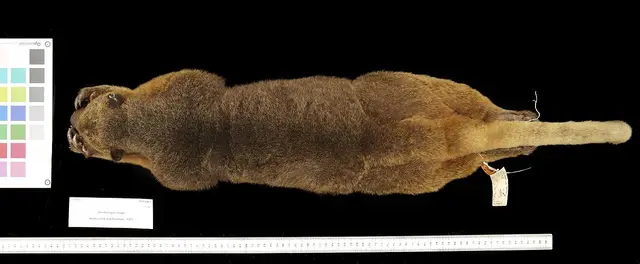
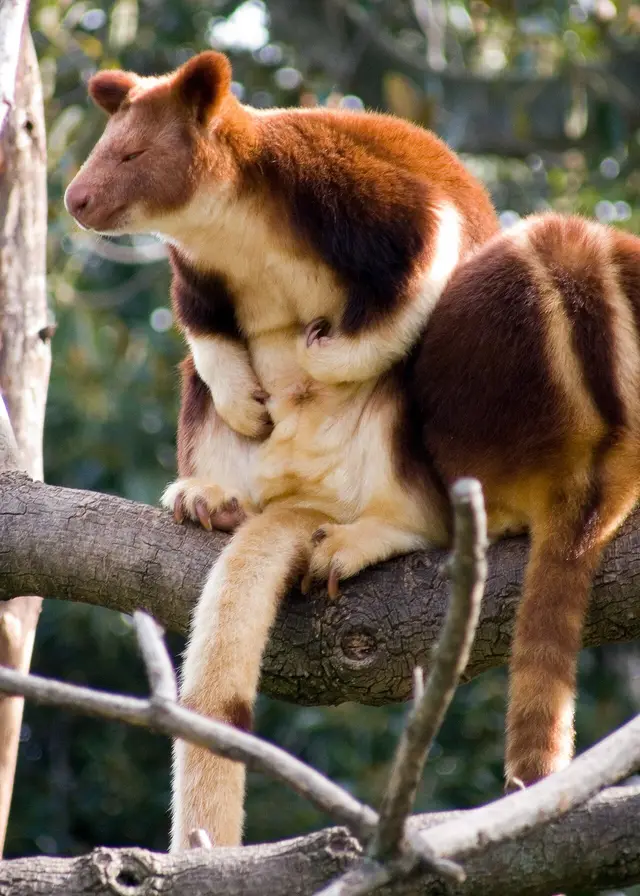
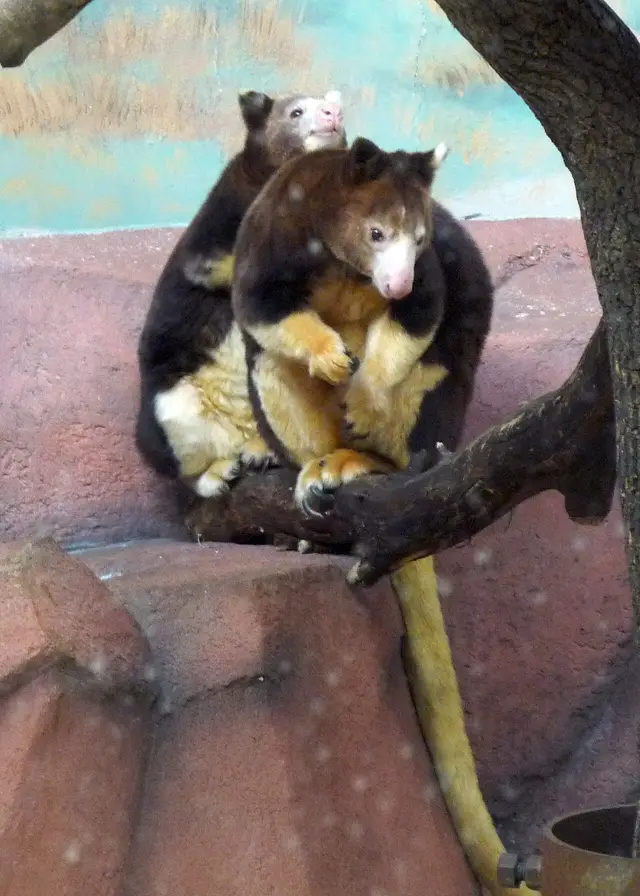
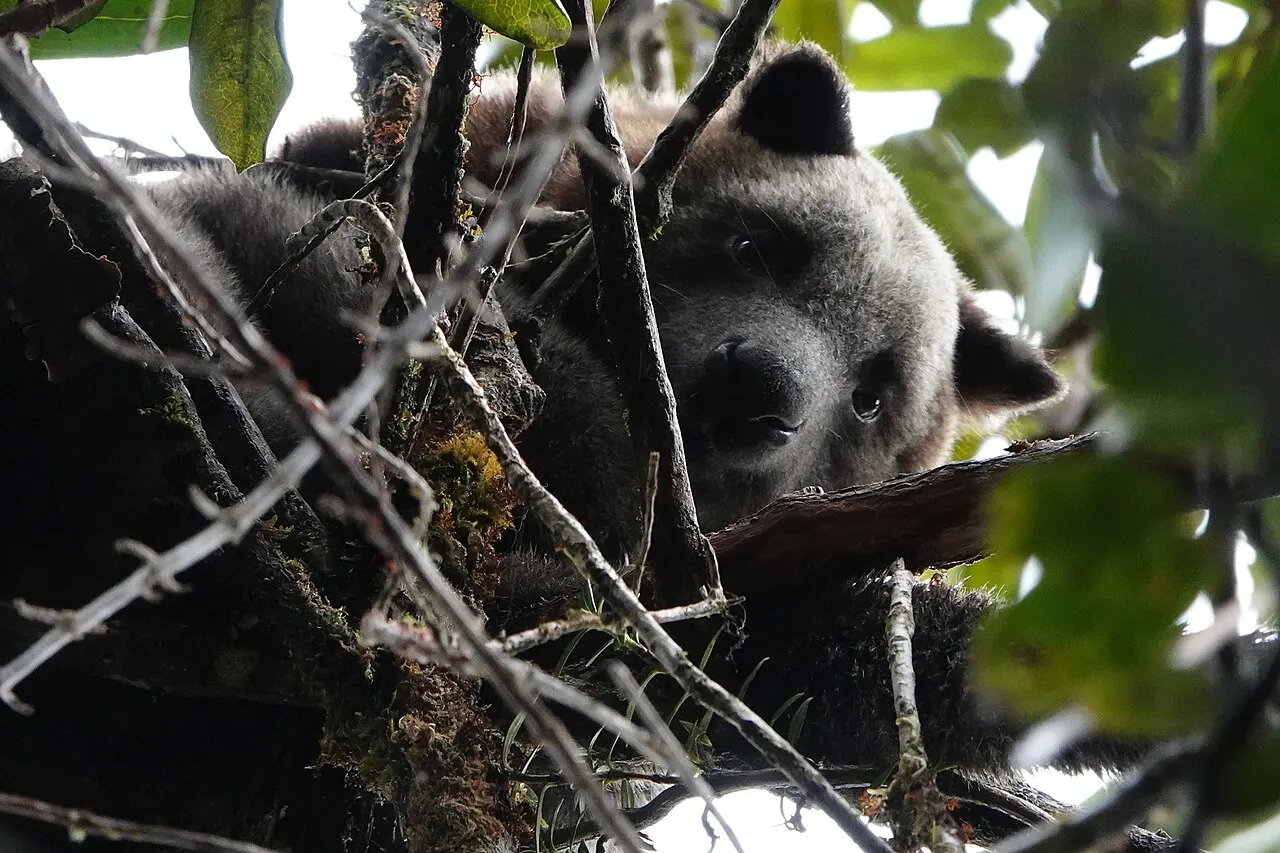
Tree kangaroos are stocky, long-tailed climbers of the rainforest canopy. The ifola has a very dark chocolate-brown coat with silvery-tipped hairs over the back and limbs, and a black-and-yellow tail with yellow rings near its base. Males average about 8.2 kg and females about 6.3 kg, according to a conservation group that works on tree kangaroos.
Matschie described the ifola in 1916 from the slopes of the Schrader Mountains in Madang Province.
Where it lives
The ifola is endemic to Papua New Guinea. The IUCN gives its habitat as subtropical or tropical moist montane forest, between about 900 and 3,100 m above sea level, in the central mountains. The Tenkile Conservation Alliance puts its potential range at about 40,000 square km, the largest of any tree kangaroo, and says it survives in several protected areas.
Its taxonomy has shifted. For decades it was treated as a subspecies of Doria's tree kangaroo. Helgen proposed in 2007 that it was a full species, and the Mammal Diversity Database credits a 2018 genetic study by Eldridge and colleagues with the split. A 2026 study in Records of the Australian Museum, using mitochondrial DNA, found it to be one of six distinct lineages in the Doria's group.
Pins are Wikidata “endemic to” fields. Orange dots, when present, are GBIF occurrence tiles — survey bias included.
Why it is in trouble
The IUCN assessment estimated a past population reduction of about 50 percent, based on declining habitat quality and on exploitation, and records the population as decreasing. It lists shifting agriculture and deliberate hunting of the animal itself, both ongoing and each scored as low impact. Hunting with dogs is reportedly the usual method.
The Tenkile Conservation Alliance says the ifola lives in one of the most densely populated regions on Earth, where it is taken for food and for bride-price, and that it has been hunted out of much of its range. The assessment gives a generation length of about 10 years.
The IUCN assessment says conservation sites have been identified across its whole range, but it lists no specific conservation actions. Research needs include its taxonomy, population trends, life history and the extent of hunting.
Sources
Written for this catalog in our own words from the sources below, checked against them on 12 November 2026. Population figures are estimates and carry the year they were made. Status and assessment year: IUCN. 2026. The IUCN Red List of Threatened Species. Version 2026-1. iucnredlist.org.