Critically Endangered
Delturus parahybae
Delturus parahybae
Delturus parahybae is an armoured suckermouth catfish found only in the Paraíba do Sul river basin of south-eastern Brazil, in Rio de Janeiro and Minas Gerais. The IUCN Red List assessed it as Critically Endangered in 2022, with a decreasing population and an area of occupancy of just 8 square kilometres.
How to recognise it
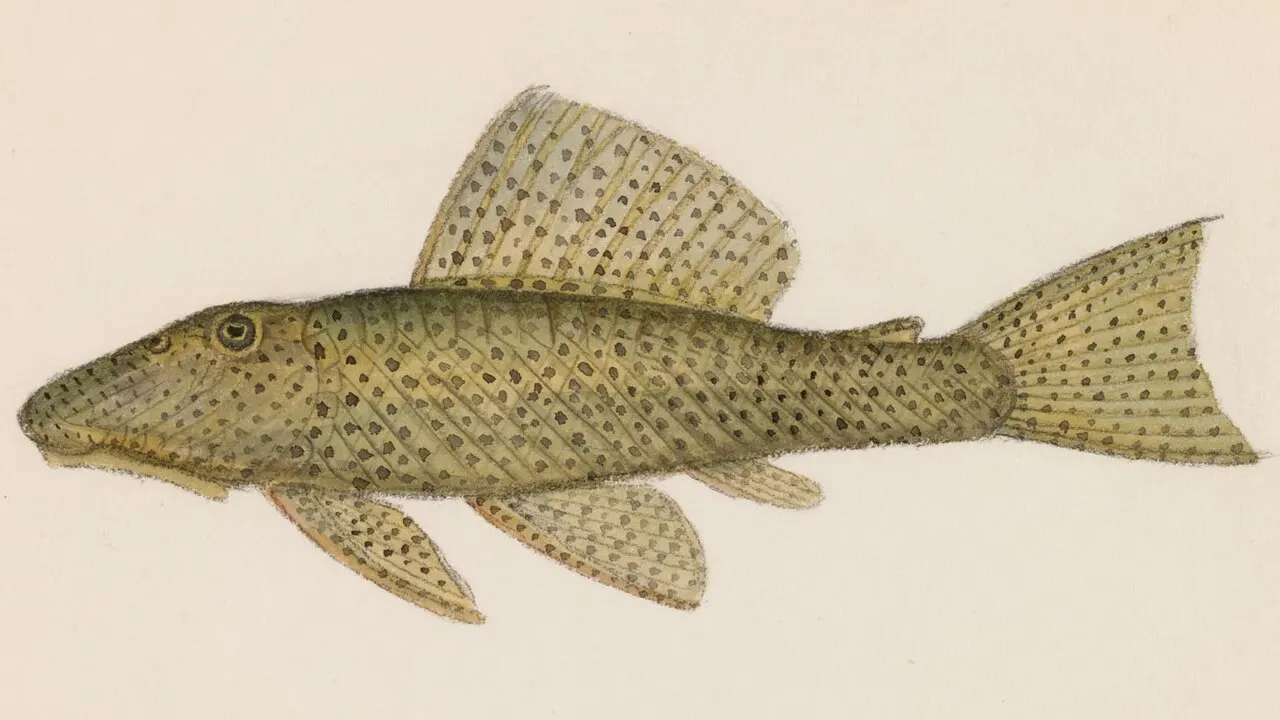
It is a bottom-living catfish with a sucker mouth, a member of the subfamily Delturinae. FishBase gives a maximum standard length of about 21 cm (8.3 inches). A South American catfish database lists a documented standard length of 238 mm and a total length near 28 cm, so sources differ a little.
Males have small tooth-like bristles called odontodes at the mouth. The species was described in 1889 by Eigenmann and Eigenmann.
Where it lives
It is endemic to Brazil, restricted to the Paraíba do Sul basin. Specimens in collections include two from the Rio Pomba, part of that river system, which were taken at night in the main channel over a rocky bottom in very strong current. The Red List treats it as a species of permanent rivers and streams, known from one location.
Pins are Wikidata “endemic to” fields. Orange dots, when present, are GBIF occurrence tiles — survey bias included.
How it lives
Little is known. FishBase says its ecology and habitat are poorly documented, and that only six specimens existed in collections when the entry was last edited in 2016. The catfish database lists it as mostly vegetarian but marks the exact diet as unknown, and breeding is unknown.
Why it is in trouble
The assessment lists several ongoing pressures on the river: large dams and dams of unknown size, sewage, garbage and solid waste, other ecosystem modifications, removal of surface water and threats of unrecorded type. The listed effects are ecosystem degradation and fish mortality. The area it occupies is still shrinking, and the population trend is decreasing.
No population size is published. The Critically Endangered listing rests on the tiny area, a single location and continuing decline.
What is being done
The assessment lists habitat and resource protection and habitat restoration as conservation actions, and calls for research on life history and ecology, population size and distribution, and population trends. It records that the species is not known from any protected area and that no conservation sites have been identified. The catfish database reports that it has been on Brazil's negative export list since 2020.
Sources
Written for this catalog in our own words from the sources below, checked against them on 12 November 2026. Population figures are estimates and carry the year they were made. Status and assessment year: IUCN. 2026. The IUCN Red List of Threatened Species. Version 2026-1. iucnredlist.org.




