Endangered
Delminichthys adspersus
Delminichthys adspersus
The spotted minnow is a small freshwater fish of the karst country of Croatia and Bosnia and Herzegovina, where it lives in springs, streams, lakes and the underground waters beneath them. The IUCN Red List assessed it as Endangered in 2024, with five known locations.
How to recognise it
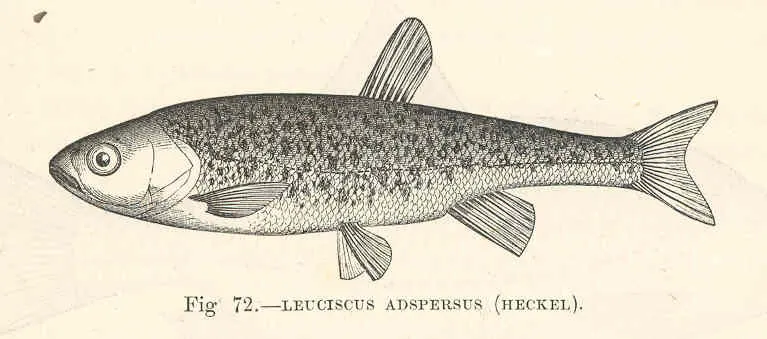
Delminichthys adspersus is a minnow in the family Leuciscidae, described by Heckel in 1843. It has gone by other names, including Phoxinellus adspersus, and in Croatia it is known as the imotska gaovica.
It is a small fish. The maximum recorded length is about 9 cm, and it reaches maturity at around 6 cm. It has a large eye, a conical snout and a mouth at the tip of the head. In the breeding season the adults develop thickened skin.
Where it lives
The species is native only to Bosnia and Herzegovina and Croatia. In Croatia it occurs in the Vrljika drainage, in Lake Crveno in the Imotsko polje, and in the Matica and Norin drainages. In Bosnia and Herzegovina it lives in the Tihaljina and Trebizat systems of the Neretva drainage.
The 2024 Red List assessment puts its extent of occurrence at about 1,500 square kilometres and counts five locations. It uses a mix of water types: permanent lakes and rivers, seasonal streams, lakes and marshes, and karst and other underground water systems.
Pins are Wikidata “endemic to” fields. Orange dots, when present, are GBIF occurrence tiles — survey bias included.
How it lives
It is a fish of clear water, from streams and springs to lakes. In winter or during droughts it retreats into subterranean waters, which is how a fish of seasonal karst streams gets through the dry months. The Red List records it as living in groups all year and not migrating. It is of no interest to fisheries.
Why it is in trouble
The assessment lists a long run of pressures, nearly all of them about water. They include droughts, small dams, and the pumping of surface and ground water, along with soil erosion and sedimentation, nutrient loads, sewage, and pesticides and herbicides. Competition from other species and some small-scale harvest are also recorded.
The area it occupies is still shrinking, according to the assessment, but whether the number of fish is rising or falling is listed as unknown.
What is being done
The species occurs in at least one protected area, and conservation sites have been identified over part of its range. The assessment records no recovery plan and no systematic monitoring scheme for it.
Sources
Written for this catalog in our own words from the sources below, checked against them on 12 November 2026. Population figures are estimates and carry the year they were made. Status and assessment year: IUCN. 2026. The IUCN Red List of Threatened Species. Version 2026-1. iucnredlist.org.




