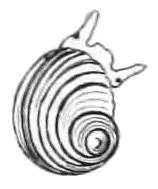
Endangered
Cremnoconchus syhadrensis
Cremnoconchus syhadrensis
Cremnoconchus syhadrensis is a small freshwater snail from the waterfalls of India's Western Ghats, the type species of its genus. It belongs to the periwinkle family. The IUCN Red List rated it Endangered in 2011, citing a small range and falling habitat quality.
An unusual periwinkle
William Thomas Blanford described the snail in 1863 under the name Cremnobates syhadrensis. It sits in the family Littorinidae, the periwinkles, which are otherwise marine. Cremnoconchus is the only freshwater genus in the family, and molecular dating based on fossils suggests it split from its last marine ancestor about 90 million years ago.
Species limits in the genus have been revised more than once. A 2008 study by Strong and colleagues recognised only 2 or 3 species, and in 2013 Reid and colleagues described six new ones, bringing the genus to about nine.
Where it lives
Snails of the genus Cremnoconchus live in the spray zones of waterfalls in the Western Ghats, not under the heavy flow itself, and most species are known from a single waterfall. The Red List lists the habitat of this species as permanent streams and rivers, in India, with 2 or 3 locations and an extent of occurrence of about 1,000 square kilometres.
The assessment names Karnataka, but museum specimens in GBIF come mostly from the northern Western Ghats, around Matheran, Khandala and the Bhor Ghat, near Mumbai and Pune in Maharashtra. Several of those records date from the 1860s and 1870s, and one specimen lot from Matheran was recorded in 1987.
Pins are Wikidata “endemic to” fields. Orange dots, when present, are GBIF occurrence tiles — survey bias included.
Why it is in trouble
The assessment lists roads and railways, renewable energy development, surface water abstraction for farming and for commercial use, and recreation as threats, all of which degrade the habitat. It records continuing decline in both the area occupied and the number of locations.
Heavy tourist foot traffic, accumulated waste and pollution upstream are also cited as threats to the genus as a whole. Because each species occupies so little space, one polluted or diverted stream can matter a great deal.
What is being done
Very little is in place. The IUCN notes that conservation sites have been identified over part of the range, but records no recovery plan, no monitoring scheme, no protected-area coverage, no captive population and no awareness programme. Its recommended actions include awareness work, site management, habitat restoration and site protection.
Sources
Written for this catalog in our own words from the sources below, checked against them on 12 November 2026. Population figures are estimates and carry the year they were made. Status and assessment year: IUCN. 2026. The IUCN Red List of Threatened Species. Version 2026-1. iucnredlist.org.




