Critically Endangered
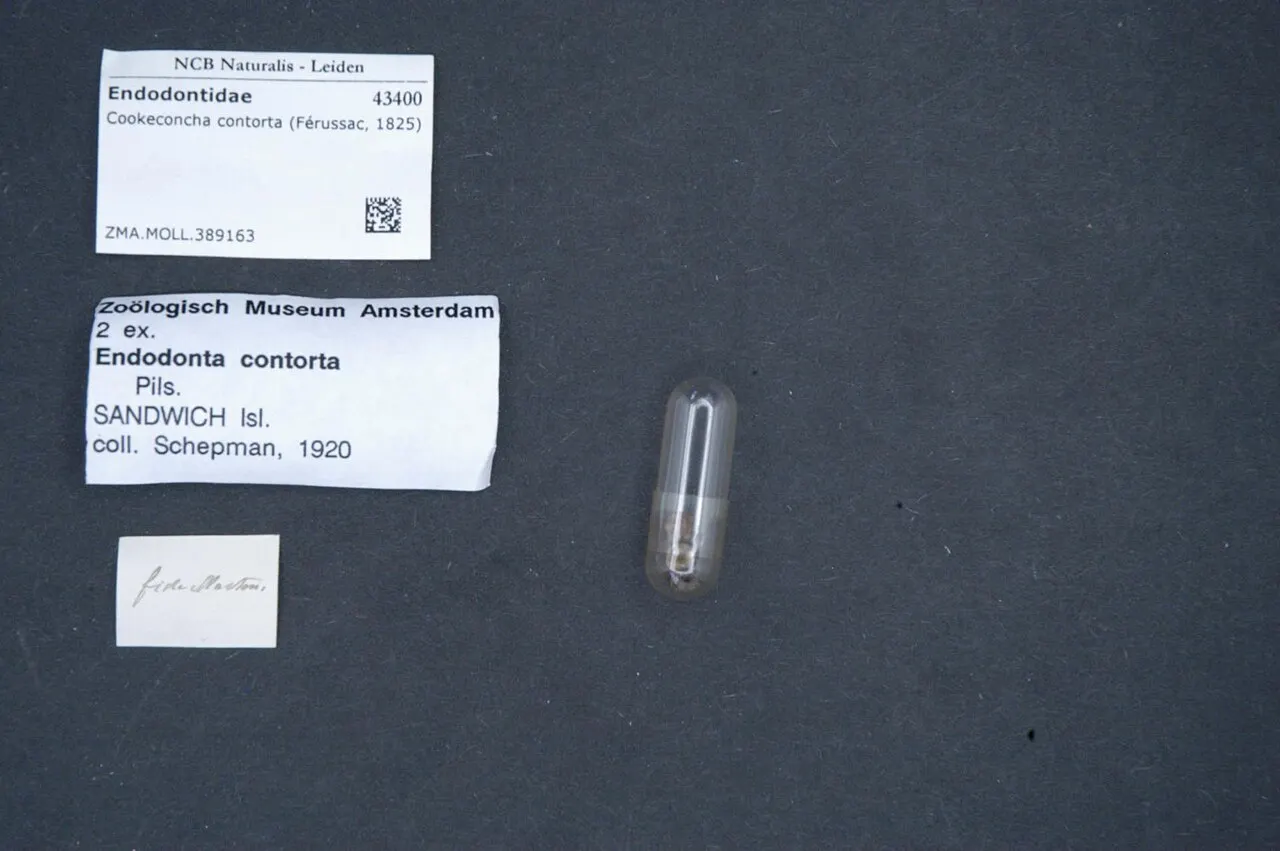
Cookeconcha contorta
Cookeconcha contorta
Cookeconcha contorta is a very small, air-breathing land snail from the Hawaiian Islands, in the family Endodontidae. The IUCN Red List rated it Critically Endangered in 2000, and that assessment records its presence in Hawaii as possibly extinct. Very little has been published about how it lives, and its taxonomic status is disputed.
What it is
Férussac first described the species in 1825 as Helix contorta, and it is now placed in the genus Cookeconcha. It is a tiny terrestrial snail that breathes air, a member of the family Endodontidae. Published descriptions of its shell are scarce.
Its naming is not settled. GBIF, the biodiversity data network, lists contorta as a synonym of another Hawaiian snail, Cookeconcha intercarinata, which Mighels described in 1845. The IUCN still treats it as a species in its own right.
Where it lives
It is found only in Hawaii. The Red List assessment records no habitat, elevation or population figures, and it lists the snail's presence in the Hawaiian Islands as possibly extinct. No recent confirmed sighting appears in the sources.
The wider picture is bleak. The Endodontidae include 33 described Hawaiian species, and Hawaii's state wildlife programme says almost the whole family has gone extinct there. Only three are listed as surviving today: two Cookeconcha species on Oahu and one Endodonta species on Nihoa, in the north-west of the chain. The state page does not name the two Cookeconcha, so it is unclear whether this one is among them.
Pins are Wikidata “endemic to” fields. Orange dots, when present, are GBIF occurrence tiles — survey bias included.
Why it is in trouble
The 2000 assessment lists one named threat, the little fire ant (Wasmannia auropunctata), an invasive ant, and scores its impact as low.
A January 2006 newsletter of the Mollusc Specialist Group, citing a 2004 review of mollusc declines, says endodontid snails appear to be reduced to sparse, highly localised populations on the Pacific islands where they once lived, with most species extinct.
What is being done
No conservation actions, protected sites or monitoring are recorded for this species in its assessment. In 2005, a University of Hawaii researcher found a Cookeconcha population in a gulch in the Waianae Mountains of Oahu, which The Nature Conservancy put at a few hundred animals and had begun monitoring. The species was unknown and possibly undescribed, so it should not be assumed to be Cookeconcha contorta.
Sources
Written for this catalog in our own words from the sources below, checked against them on 12 November 2026. Population figures are estimates and carry the year they were made. Status and assessment year: IUCN. 2026. The IUCN Red List of Threatened Species. Version 2026-1. iucnredlist.org.




