Endangered
Conorhynchos
Conorhynchos conirostris
The pirá is a large catfish found only in the São Francisco River basin of Brazil, where it's treated as a symbol of the river. The IUCN Red List assessed it as Endangered in 2021, after a decline blamed mainly on dams and fishing, though some Brazilian researchers dispute that it is truly threatened.
How to recognise it
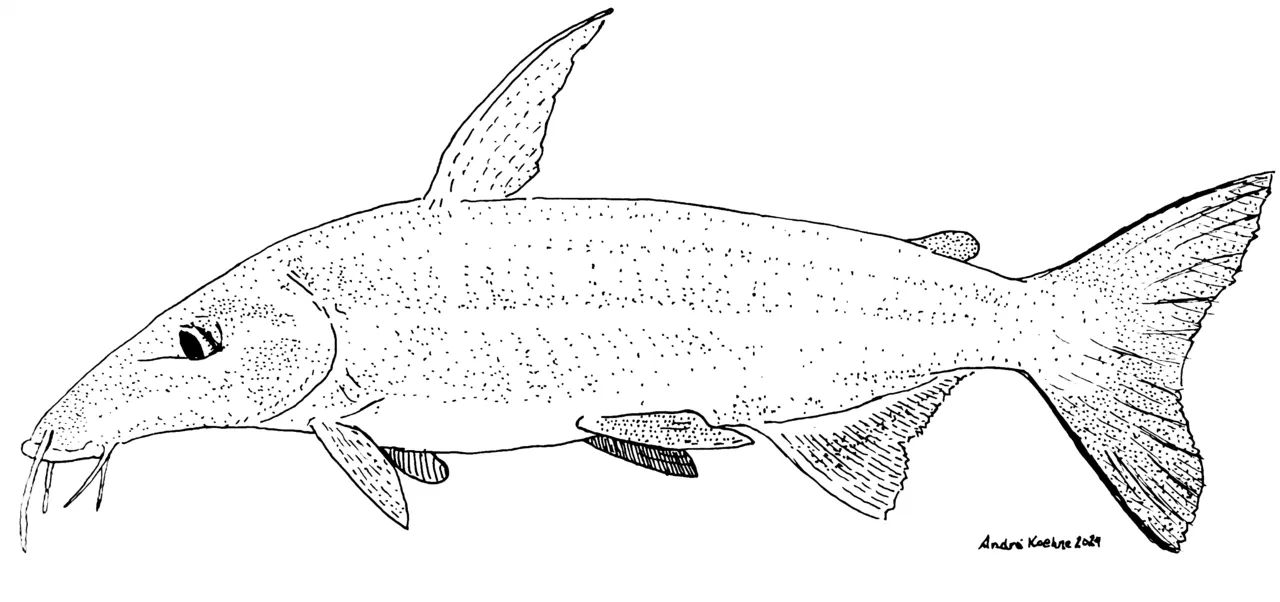
The scientific name refers to its conical snout. It's a big river catfish, reported at up to about 53.5 cm in standard length in some references, while a 2018 study in Neotropical Ichthyology gives about 100 cm in total length and 13 kg, making it the third largest fish in the basin.
It is the only member of its genus, and its place in the catfish family tree is unsettled. It has been placed in different families over the years, and today it's classed as incertae sedis, meaning its family is uncertain.
Where it lives
The species is endemic to the São Francisco, in the Brazilian states of Minas Gerais and Bahia, among others. It was once spread through the whole basin. Today it's most abundant in the middle river, rare in the upper river and rarer still in the sub-middle section. It has not been caught in the lower river since about the mid-1980s.
It lives in permanent rivers and streams, and the IUCN classes it as a migratory fish. Its spawning and nursery grounds are still largely unknown. Unlike other well-known migratory fishes of the São Francisco, it does not use the floodplain lakes as nurseries.
Pins are Wikidata “endemic to” fields. Orange dots, when present, are GBIF occurrence tiles — survey bias included.
Why it is in trouble
The 2021 assessment gives the population trend as decreasing, with an estimated reduction of about 51 percent over roughly three generations. It lists dams, renewable energy development and small-scale harvest as the threats. The 2018 study counts seven large dams on the main river. Fishery yields across the whole basin fell from about 16 kg per fisher per day in the mid-1970s to about 3 kg in the late 1990s, though the study found them back near late-1980s levels by 2008 and 2009.
Not everyone agrees on how bad things are. The same 2018 paper, by Alexandre and Hugo Godinho, found no evidence to justify calling the pirá threatened and recommended removing it from the Brazilian and Minas Gerais red lists. For the pirá itself, catch rates in the middle river showed no clear change from the late 1980s to the late 2000s.
What is being done
Fishing for the pirá is prohibited, although it remains an important catch, especially in the middle river. The IUCN assessment records a regional area-based management plan and lists habitat protection and control of problem species among the actions. Brazil's environment ministry reportedly lists it as threatened, a status researchers are still arguing over.
Sources
Written for this catalog in our own words from the sources below, checked against them on 12 November 2026. Population figures are estimates and carry the year they were made. Status and assessment year: IUCN. 2026. The IUCN Red List of Threatened Species. Version 2026-1. iucnredlist.org.




