Critically Endangered
Colophon primosi
Colophon primosi
Colophon primosi is a flightless stag beetle from the mountains of the Western Cape in South Africa, with museum records from the Seweweekspoort and Swartberg areas. The IUCN Red List rates it Critically Endangered, though the assessment dates from 1996. Collectors in Europe and Japan prize these beetles.
How to recognise it
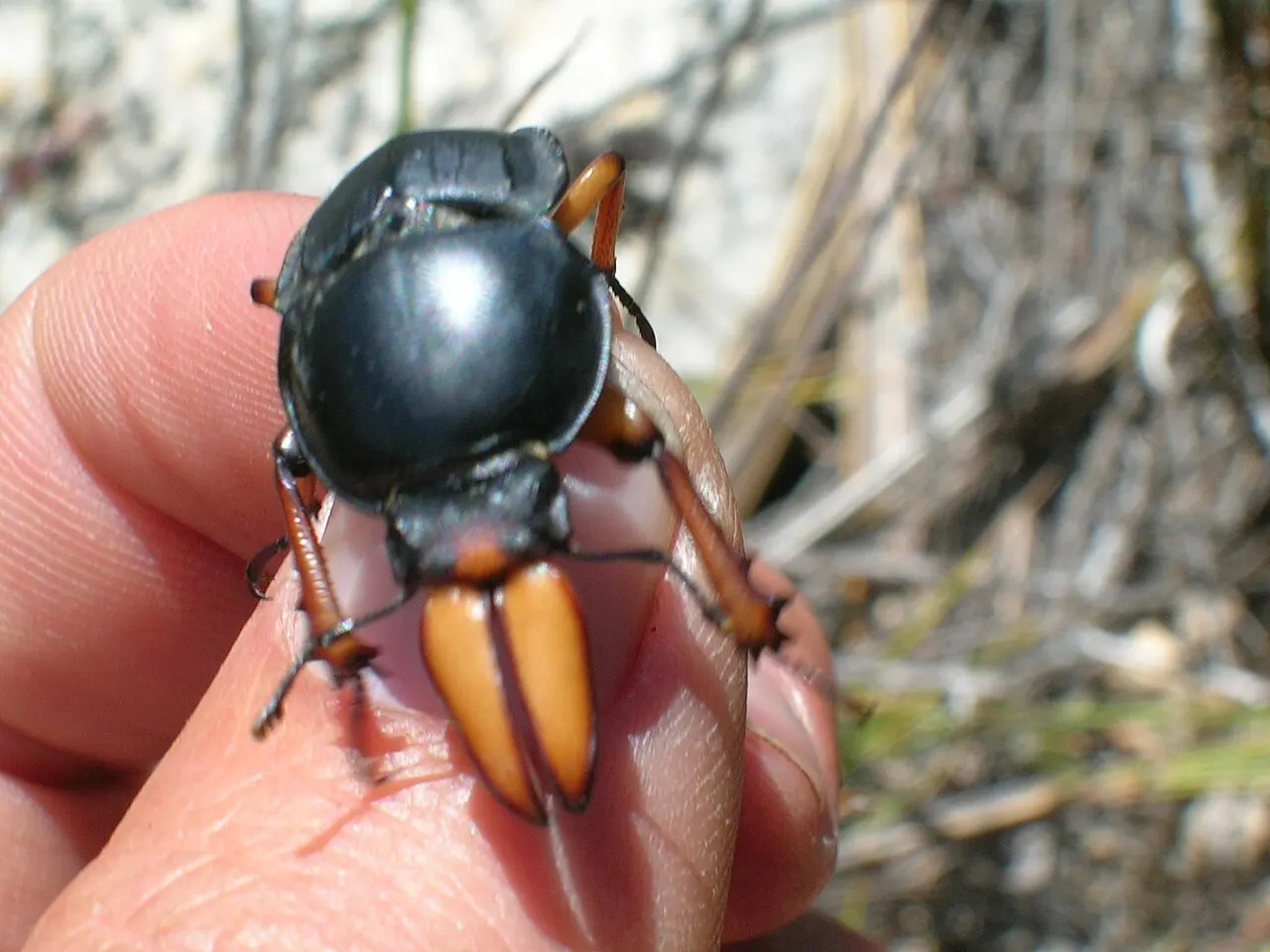
C. primosi belongs to Colophon, a small genus of stag beetles found only in South Africa. Genus members are medium-sized, roughly 10 to 30 millimetres long without the jaws. Males carry big, variably shaped mandibles, some flat, some curved inward or forked, and a swollen thorax with a head much smaller than it. Females look similar but their mandibles are small.
At a glance the adults can pass for dung beetles. The species was described by the zoologist Keppel Barnard in 1929, and the genus is sometimes called Barnard's stag beetles after him.
Where it lives
Each Colophon species is confined to its own mountain range, or even a single peak within one, mostly between 1,000 and 2,000 metres. For C. primosi, the 16 records in the GBIF database all come from South Africa, and two of them are DNA samples with no locality. Most of the rest are museum specimens collected in 1928 on the Seweweekspoort mountain near Ladismith, at roughly 1,700 to 2,100 metres, with further specimens from there in 1989 and 1992.
A 1930 specimen came from the Swartberg range, and the latest museum specimen is from 2007, at Swartberg Nature Reserve. The Red List gives no more detail on its range than the country.
Pins are Wikidata “endemic to” fields. Orange dots, when present, are GBIF occurrence tiles — survey bias included.
How it lives
Little is known of its life cycle or habitat needs. Because Colophon beetles cannot fly, a population hit by fire or other disturbance has a hard time being replaced from elsewhere. A trade identification guide to insects under CITES presumes that the genus reproduces very slowly, an inference from behaviour and from related stag beetles rather than direct study.
Why it is in trouble
Collecting is the pressure most often named. Colophon beetles are among the highest-priced stag beetles on the market, with European and Japanese buyers especially keen. A 2000 newspaper report, quoting a South African report to CITES, said fewer than 200 specimens of the genus had reached public museums since the first description in 1832, and quoted prices of up to 11,000 dollars for a specimen in the United States. The same report described weak enforcement of collecting permits.
How badly collecting hurts wild numbers has been disputed. A well-known collector argued that the beetles were plentiful, and prices reportedly fell after the market was flooded, while some scientists feared collectors had threatened their survival. Fire and habitat destruction are also given as threats to the genus.
What is being done
The Cape provincial authorities listed all Colophon species as endangered on 19 March 1992, restricting collecting and export without a permit. South Africa later agreed to a CITES Appendix III listing for the genus, effective 13 September 2000, which regulates international trade. The Red List assessment for C. primosi is old, from 1996, so it may no longer reflect the situation.
Sources
Written for this catalog in our own words from the sources below, checked against them on 12 November 2026. Population figures are estimates and carry the year they were made. Status and assessment year: IUCN. 2026. The IUCN Red List of Threatened Species. Version 2026-1. iucnredlist.org.




