
Endangered
Codringtonia parnassia
Codringtonia parnassia
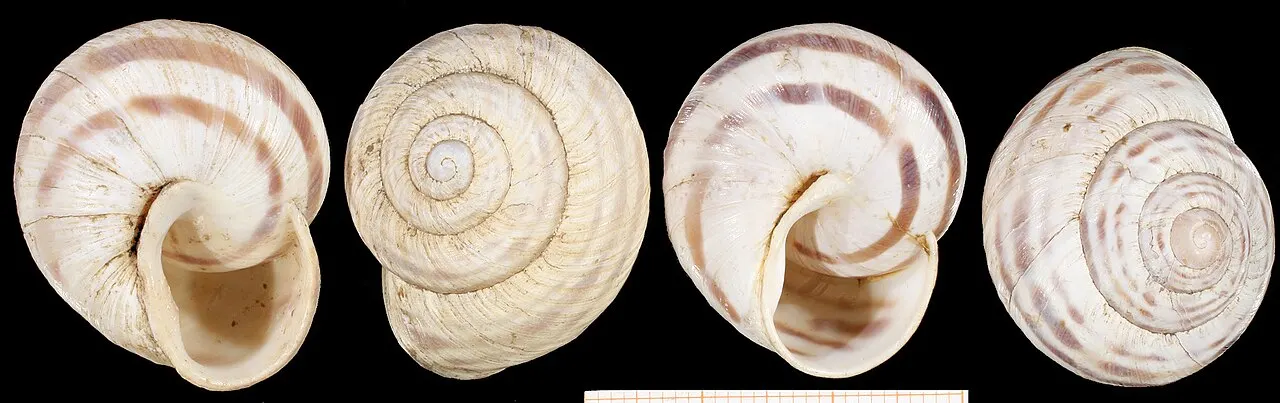
Codringtonia parnassia is a land snail found only in central Greece. The IUCN Red List assessed it as Endangered in 2023, after a Vulnerable rating in 2011. Its population and the area it occupies are both shrinking, and very little else about its life has been published.
What it is
J. R. Roth described the snail in 1855 as Helix parnassia, a name that points to Mount Parnassos. It later moved into Codringtonia, a genus of air-breathing land snails in the helicid family, named by Wilhelm Kobelt in 1898. Two names Kobelt published in 1879, Codringtonia oetae and Codringtonia pseudoparnassia, are treated as synonyms, so they refer to this same species.
Where it lives
It occurs only in central Greece, on the mainland. The Red List gives its habitats as temperate forest and rocky areas. Museum specimens in the GBIF database, which holds 108 occurrence records, include notes of limestone rocks and a limestone canyon. Localities include Boeotia and Fthiotis: near Distomo and Ano Tithorea (collected in 1988) and around the Parnassos ski centre above Arachova (collected in 1994). Older records also come from the Oeta (Iti) mountains.
Pins are Wikidata “endemic to” fields. Orange dots, when present, are GBIF occurrence tiles — survey bias included.
Why it is in trouble
The 2023 assessment lists a decreasing population, a continuing decline in the area it occupies, and extreme fluctuations. It uses criterion B1ab(i,ii,iii,v)c(iv), which applies to species with a small, shrinking range.
The threats named are habitat shifting and alteration, droughts, and intentional use, meaning the snail itself is the target of some use. The assessment doesn't say what kind. The stresses listed are ecosystem degradation, indirect ecosystem effects and direct mortality of the animals.
What is being done
The assessment lists site and area protection and national-level action as conservation measures, but records none as currently in place, and no recovery programme aimed at this snail is described. The change from Vulnerable in 2011 to Endangered in 2023 is a sign of concern, though a category change can also reflect better information.
Sources
Written for this catalog in our own words from the sources below, checked against them on 12 November 2026. Population figures are estimates and carry the year they were made. Status and assessment year: IUCN. 2026. The IUCN Red List of Threatened Species. Version 2026-1. iucnredlist.org.