Critically Endangered
Manx Shearwater Flea
Ceratophyllus fionnus
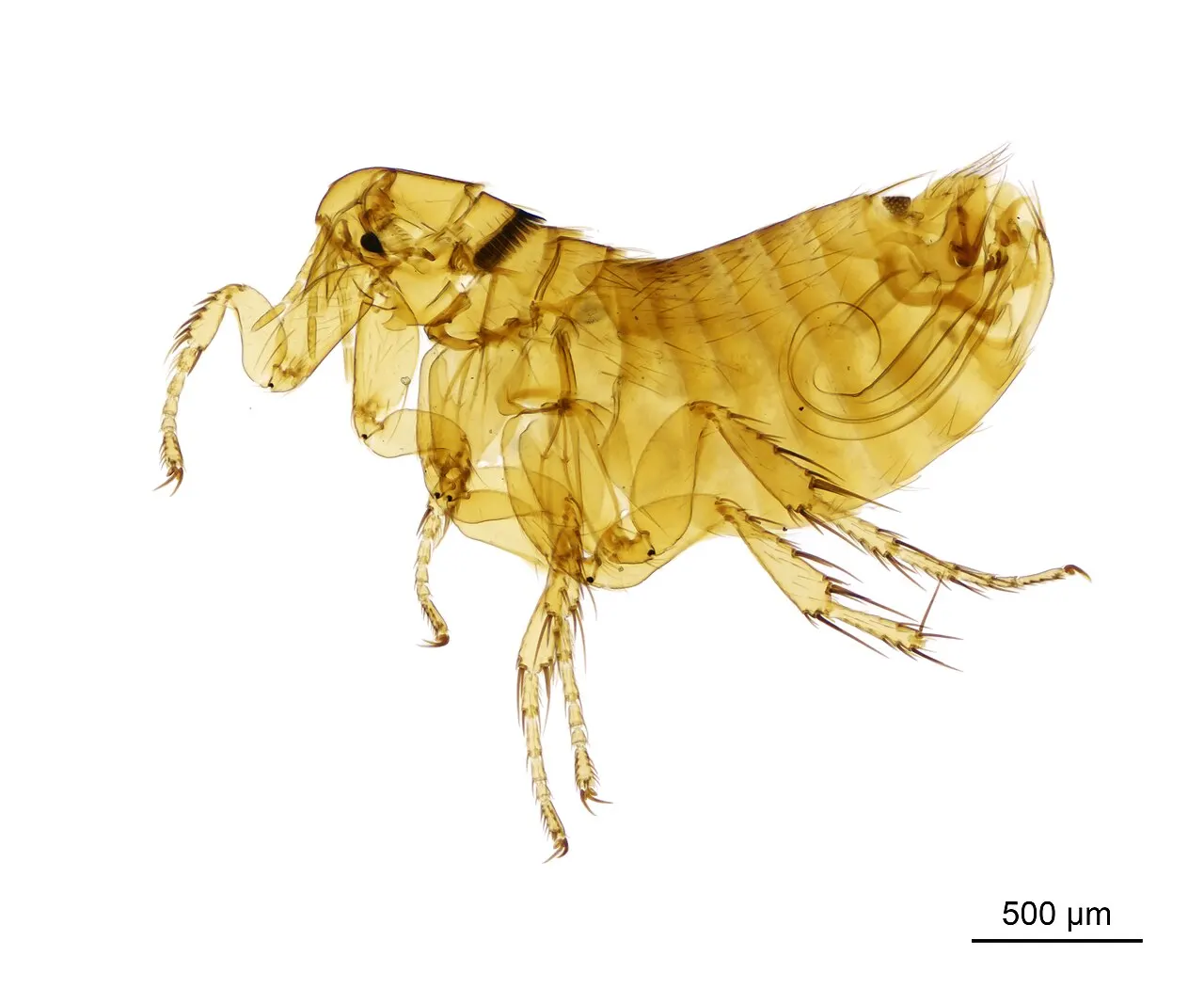
The Manx shearwater flea, Ceratophyllus fionnus, is a tiny parasite known only from the burrows of Manx shearwaters on the Isle of Rùm, off western Scotland. The Red List rated it Critically Endangered in 2022 because it occupies about 12 square kilometres at a single location.
What it is
Ceratophyllus fionnus is a flea in the family Ceratophyllidae, described by Usher in 1968. Its body is covered with rows of plates that look like armour. It is not known to bite people or carry disease, and its only known host is a seabird.
Where it lives
Everything known about this flea points to the Isle of Rùm. The Red List counts one location, with an extent and occupied area of about 12 square kilometres, at elevations from 650 to 722 metres, and says it is known from shearwater burrows on the mountain Hallival. A 2019 study by Mackenzie Kwak and colleagues described the whole population as sitting within less than a third of a mile.
The shearwater is the only host recorded, and the flea seems to depend on the bird almost completely to complete its life cycle.
Pins are Wikidata “endemic to” fields. Orange dots, when present, are GBIF occurrence tiles — survey bias included.
How little is known
Basic biology is poorly documented. Nobody has published a population size, and researchers have not worked out what conditions the flea needs to breed and survive. The Red List records the population trend as unknown, yet it also records a continuing decline in occupied area, which fits the narrow range.
Why it is in trouble
The flea's fate is tied to its host. Rùm holds one of the largest Manx shearwater colonies in the world, thought to be about a fifth of the global population, and that colony is believed to be declining. The Red List names two future threats. One is the brown rat, an introduced predator that takes shearwater eggs and chicks. The other is avian influenza: a dead shearwater on Rùm tested positive in August 2022, though no catastrophic impact on the colony had been seen. Kwak has also warned that climate change and plastic pollution could harm the colony.
If the host colony went, the flea would almost certainly go with it. Kwak's 2019 assessment, published in Acta Parasitologica, rated the species Vulnerable, and argued for surveys, study of its biology, management of the known population, and insurance populations created by moving fleas to other colonies.
What is being done
The Red List says 91 to 100 percent of the population lies inside a protected area and that invasive species control is in place, which for a rat-prone seabird island is the key safeguard. No recovery plan or monitoring scheme exists for the flea itself.
Sources
Written for this catalog in our own words from the sources below, checked against them on 12 November 2026. Population figures are estimates and carry the year they were made. Status and assessment year: IUCN. 2026. The IUCN Red List of Threatened Species. Version 2026-1. iucnredlist.org.




