Endangered
Canara pearlspot
Etroplus canarensis
The Canara pearlspot (Etroplus canarensis) is a small freshwater cichlid known only from the Kumaradhara and Netravati river system in southern Karnataka, India. The IUCN Red List listed it as Endangered in 2011. Unlike its relatives it stays out of brackish water, and aquarists prize it.
How to recognise it
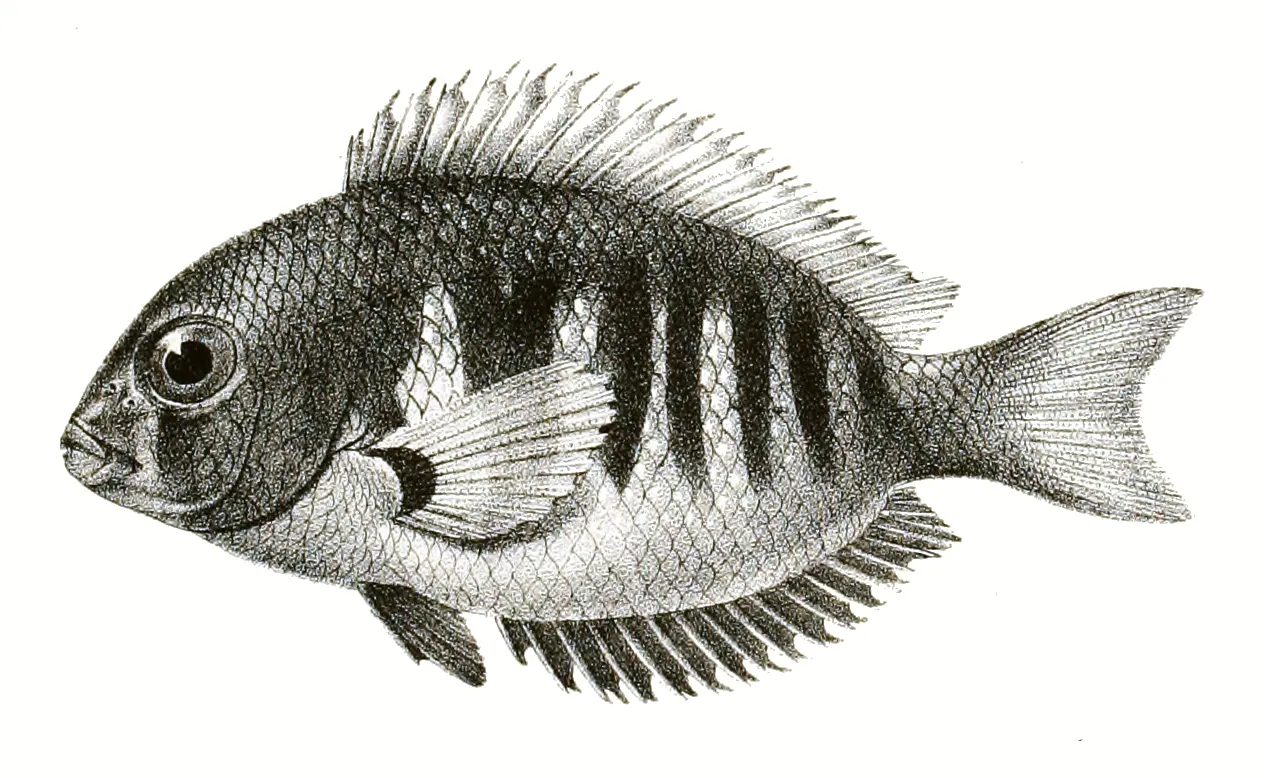
It is a compact, deep-bodied cichlid and the smallest member of its genus, reaching about 11.5 cm in total length. Francis Day described it in 1877. It is also called the banded chromide or Canara pearlspot cichlid. Aquarium keepers report a colour and pattern change when pairs spawn.
It belongs to Etroplus, a small Asian genus. Other Etroplus species can live in brackish water, but the Canara pearlspot is strictly freshwater.
Where it lives
The species is endemic to southern Karnataka, in the Western Ghats region. It was first thought to live only in the Kumaradhara, and was later found in the Netravati as well. The type locality, South Canara, probably refers to a spot near Uppinangady where the two rivers meet.
The IUCN assessment lists two locations and estimates the area it occupies at about 300 square km. It records the fish only from rivers and streams. It lives in oxygen-rich, soft water, and monsoons change depth, flow and turbidity sharply from season to season.
Pins are Wikidata “endemic to” fields. Orange dots, when present, are GBIF occurrence tiles — survey bias included.
How it lives
In the wild it is a generalist that grazes biofilm and filamentous algae from hard surfaces. Pairs form loose, temporary bonds, and both parents tend the eggs, which are stuck to rock. Wild breeding is probably in December and January, after the monsoon water drops, though little has been published.
Aquarists describe a placid, sociable fish that does best in groups of five or more, in soft, slightly acidic water. It eats mostly plant foods such as spirulina and blanched vegetables, with occasional small meaty foods, and it may graze soft-leaved plants down to stumps.
In tanks, both parents guard several hundred eggs, which hatch in about four days. Breeding takes very soft water and large, cool water changes that imitate the rainy season.
Why it is in trouble
The IUCN scores large-scale harvest as the highest impact, affecting the whole population. Mining and quarrying is rated a medium, ongoing impact over a minority of the range, and pesticides and herbicides are listed as a past impact likely to return. The assessment records use of the species as a pet and as human food, and notes that the area it occupies is still shrinking.
A January 2025 field record from the Netravati describes other pressures on the river: dumped construction debris, septic and toilet leakage near Uppinangady, litter and microplastics, sand mining that destabilises channels, and water diversion schemes that have cut flows in feeder streams. The IUCN describes the population trend as stable even as the habitat declines.
What is being done
The IUCN assessment says the fish is not known from any protected area, and no recovery plan or monitoring scheme was in place in 2011. Conservation sites had been identified over part of the range. It lists site protection, harvest and trade management and captive breeding among the actions in place or needed.
A freshwater sanctuary and no-take zone on the Kumaradhara has been recommended, though one hobby guide says it had not been put in place. Fish farms in Southeast Asia, Indonesia among them, breed the species, which gives hobbyists a captive-bred alternative to wild-caught stock.
Sources
Written for this catalog in our own words from the sources below, checked against them on 12 November 2026. Population figures are estimates and carry the year they were made. Status and assessment year: IUCN. 2026. The IUCN Red List of Threatened Species. Version 2026-1. iucnredlist.org.




