Endangered
Bullockia maldonadoi
Bullockia maldonadoi
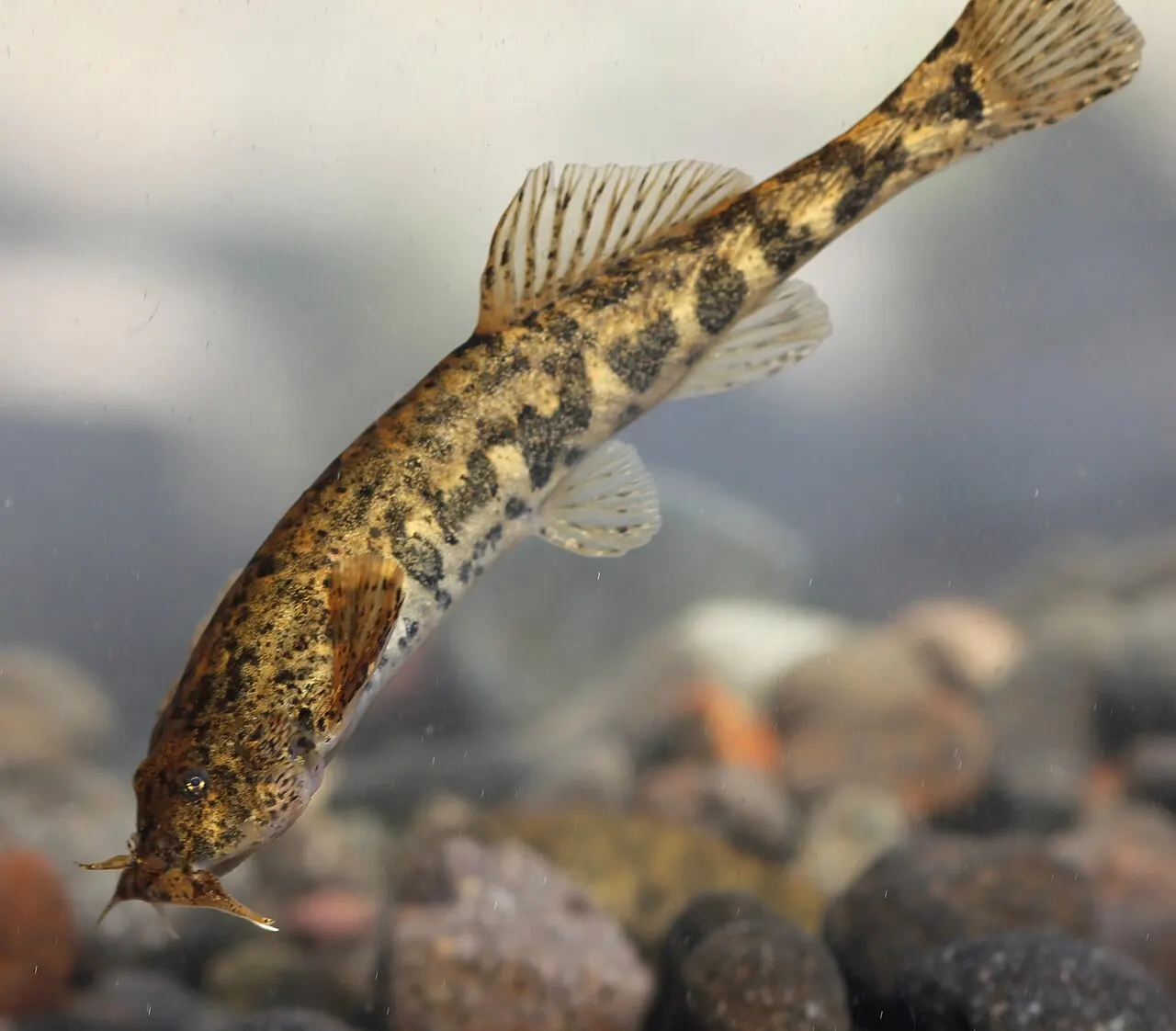
Bullockia maldonadoi is a tiny freshwater catfish found only in rivers of central Chile, reportedly between the Maule and Imperial rivers. It reaches about 7 cm and is the only member of its genus. The IUCN Red List rated it Endangered in 2024, with its population decreasing.
How to recognise it
It belongs to the Trichomycteridae, the pencil and parasitic catfishes. The adult is small, up to about 7 cm long.
Carl Eigenmann described it in the 1920s as Hatcheria maldonadoi (sources give 1920 and 1928). The genus Bullockia was later erected for it by Arratia and colleagues in 1978, and it's still the only species placed there. A recently described Trichomycterus catfish has been said to share some possible traits with it, though details are thin.
Where it lives
The species is native only to Chile, reportedly in rivers from the Maule to the Imperial. Its type locality, where the first specimens came from, is the lower Nonguen River near Concepcion. The IUCN assessment lists permanent rivers and streams as its only habitat.
An aquarium-oriented reference describes it over beds of silt, fine and coarse sand, gravel and boulders, feeding on the larvae of aquatic insects, small crustaceans called amphipods, and mites.
Pins are Wikidata “endemic to” fields. Orange dots, when present, are GBIF occurrence tiles — survey bias included.
Why it is in trouble
The 2024 assessment records a decreasing population, split into fragments, with a generation time of roughly 2 to 4 years. The Red List criteria used (A2bce+3ce+4bce) rest on observed or suspected declines.
The listed threats are dams, both large and small, which affect most of the population and are tied to rapid declines, along with sewage and nutrient loads that affect a smaller share and cause slower but significant declines. The aquarium reference also names introduced predatory species and sensitivity to pollution.
What is being done
Very little is documented. The assessment records no recovery plan and no systematic monitoring scheme in place. It names site and area protection, habitat protection and site management as the measures that are needed. No population estimate exists.
Sources
Written for this catalog in our own words from the sources below, checked against them on 12 November 2026. Population figures are estimates and carry the year they were made. Status and assessment year: IUCN. 2026. The IUCN Red List of Threatened Species. Version 2026-1. iucnredlist.org.




